Category: Uncategorized

  • AI Email Automation Tools That Turn Leads Into Buyers

    AI Email Automation Tools That Turn Leads Into Buyers

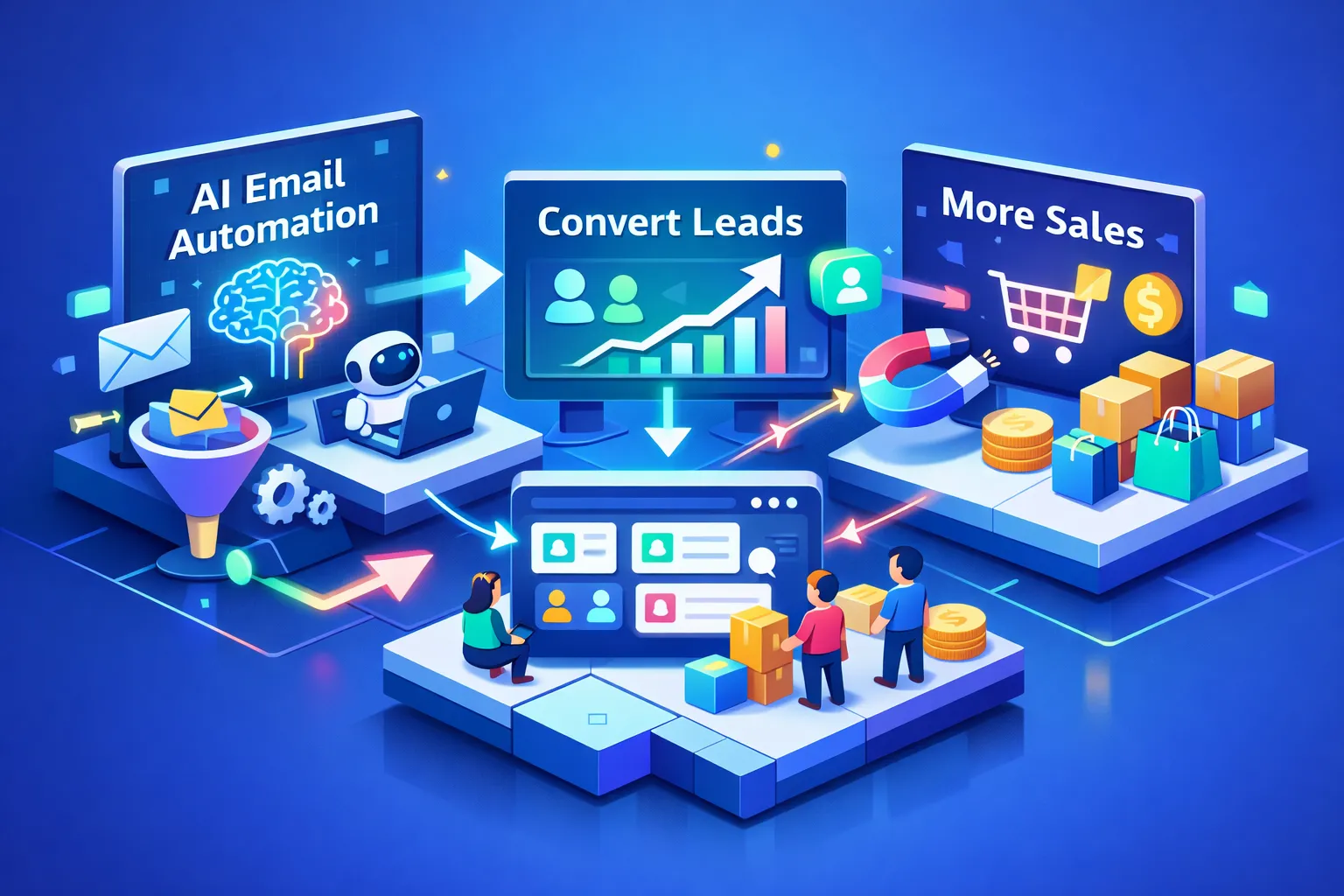
    AI email automation gives affiliate marketers something a broadcast list never can: a system that responds to what subscribers actually do, not just when you scheduled a send. Yet many affiliate marketers still build an email list and blast the same promotional message to everyone. That one-size-fits-all approach gets tuned out fast, and the commissions never materialize. AI-powered email tools change the equation by letting you build personalized drip sequences that respond to subscriber behavior rather than a fixed broadcast schedule.

    The data backs this up. Research consistently shows email delivers among the highest ROI of any marketing channel, and AI-optimized sequences push open rates 20, 122% higher than static campaigns. For affiliates, that math translates directly into commissions. Automated sequences also generate up to 320% more revenue than standard non-automated sends, because they reach people at the right moment instead of on a generic schedule.

    At InternetMoneyPro, connecting AI tools to a focused affiliate tracking workflow is built into the core system. You are saving time, yes, but more importantly, you are building a system that pays you. This article covers the best tools for affiliate marketers, how to structure a sequence that converts, and how to get your first workflow running without overcomplicating it.

    Why Affiliates Leave Serious Commission Money in Their Inbox

    The strategy many affiliates still rely on is remarkably similar to what was common a decade ago: get a subscriber, send a welcome email, follow up with a promotion every few days. That approach treats every subscriber the same regardless of what they clicked, what they read, or how warm they actually are. The result is a list full of disengaged people wondering why you keep pitching them.

    A broadcast list and a revenue-generating email system are two different things. A revenue engine segments subscribers by behavior, adapts messaging to where each person is in the buying decision, and sends the right follow-up at the right moment without you manually figuring out who needs what. Automated email workflows do exactly that, and AI makes segmentation faster and more accurate than manual rule-building.

    Traditional automation tools required manual setup of every rule and trigger. AI-driven platforms read behavioral signals like link clicks, time-on-page, and re-engagement patterns, then adjust the sequence accordingly. For an affiliate promoting a single offer, this means your drip sequence becomes smarter the more people interact with it, surfacing the right message before a subscriber goes cold.

    How AI Drip Sequences Are Built to Convert Subscribers

    A drip sequence is a series of pre-written emails sent automatically based on time delays or behavioral triggers. An AI-powered version layers on personalization, predictive timing, and dynamic content so the sequence feels one-to-one even when it is running at scale across hundreds or thousands of subscribers.

    The most effective affiliate drip sequences do not run on a timer alone. They respond to actions. When a subscriber clicks your affiliate link but does not convert, a well-configured automated sequence fires a follow-up that addresses the most common objections. When someone opens three emails in a row, the sequence escalates to a stronger call to action. Tools like Instantly AI can identify these patterns and adjust send timing and content automatically. Published benchmarks from AI-powered outreach platforms point to 40, 60% improvements in response rates for behavior-triggered sequences compared to static sends, though exact results vary by list and offer.

    Every high-converting affiliate sequence follows a recognizable arc: warm the subscriber to the problem, build credibility around the solution, introduce the offer, overcome objections, and create urgency to act. AI email assistants accelerate the drafting of each stage. They generate contextually relevant copy from a brief prompt and maintain a consistent brand voice across all emails. They also flag where sequences typically lose engagement. Your job becomes directing the arc, not writing every email from scratch.

    Best AI Email Automation Tools for Affiliate Marketers (2026)

    The tools that matter for affiliates are not necessarily the ones dominating general productivity rankings. You need email automation software that handles cold outreach, sequence automation, personalization at scale, and ideally connects to your affiliate tracking without requiring a developer to set anything up.

    Instantly AI is the strongest dedicated option for affiliates running outreach-based strategies. Its Copilot feature writes context-aware follow-ups, handles recurring task scheduling, and integrates campaign analytics and deliverability tools in one place. Plans start at $47 per month for 5,000 emails and scale to unlimited sends at $97 per month.

    SmartWriter handles bulk personalized content at scale with direct integrations into Gmail and LinkedIn, starting at $49 per month, practical for affiliates building cold subscriber lists.

    Snov.io rounds out this tier with AI email builders that include sentiment analysis for sequence optimization, giving you a data-informed view of which messaging angles are working.

    For affiliates managing their own inbox alongside campaigns, Sintra AI delivers AI summaries of email threads, smart filters by priority and intent, and can generate multiple email drafts from a single prompt with tone and length controls. Gemini for Gmail handles draft assistance and thread summarization natively for Google Workspace users. These tools function as AI email assistants rather than full sequence builders, but they reduce the manual work of managing replies, following up on warm leads, and maintaining list hygiene.

    What makes InternetMoneyPro different from piecing these tools together yourself is the affiliate tracking layer. The platform’s step-by-step training shows which AI email marketing tools to pair with your specific offer, how to map the sequence arc to your audience’s buying triggers, and how to read commission data to identify which emails in your drip sequence are actually generating revenue, turning your inbox automation into a diagnostic system, not just a scheduler.

    Pricing Tiers: What Affiliates Actually Need Versus What Is Overkill

    Entry-Level Options

    The email automation market ranges from free tools with basic AI to enterprise platforms charging hundreds of dollars per month. Most affiliates running a focused single-offer model need far less than the pricing pages suggest. For an overview of common platform pricing and where value tends to sit, see email marketing pricing guides.

    MailerLite’s Advanced plan at $18 per month includes full AI tools, unlimited emails, and unlimited contacts, a strong starting point for affiliates building their first drip sequence. Brevo starts at $9 per month for 5,000 emails with AI assist available on higher tiers. Both platforms handle automated follow-up sequences, list segmentation, and basic behavioral triggers without the complexity or cost of enterprise tools. If you are under 2,500 subscribers and running a single affiliate offer, either covers your actual needs without paying for features you will not use.

    When to Upgrade

    The upgrade to platforms like Instantly AI ($47 per month) or ActiveCampaign ($145 per month for 5,000 contacts) makes sense when you are running consistent cold outreach alongside your warm sequence, need deliverability tooling baked in, or want advanced behavioral segmentation. Per-user pricing models like Gmelius’s tend to add cost without proportional benefit for solo affiliates. Match your tool to your current subscriber volume and sequence complexity, not to where you hope to be in two years.

    Setting Up Your First AI Affiliate Drip Sequence

    A working sequence does not require a complicated tech stack. A focused five-email automated sequence with behavioral triggers will consistently outperform a twenty-email sequence written manually with no behavioral logic, because timing and relevance matter more than volume. Keep it simple until you have conversion data telling you what to optimize.

    A reliable affiliate drip sequence follows this structure:

    1. Email 1 (Day 0): Welcome and immediate value. Deliver what you promised on the opt-in and introduce yourself without pitching.
    2. Email 2 (Day 2): Problem-focused story. Describe the core pain your affiliate offer solves in concrete, relatable terms.
    3. Email 3 (Day 4): Solution bridge. Introduce the category of solution without naming the offer yet; build anticipation.
    4. Email 4 (Day 6): Offer introduction with social proof. Present the affiliate product directly, backed by a result or testimonial.
    5. Email 5 (Day 8): Objection-handling and urgency. Address the top reason people hesitate and include a clear call to action.

    Use your AI writing assistant to draft each email from a one-paragraph brief, then edit for your voice. The whole sequence can be written in an afternoon and loaded into your automation platform the same day.

    Every affiliate link in your sequence should carry a unique UTM parameter identifying which email drove the click. Use utm_campaign to name the sequence and utm_content to identify the specific email and call to action. When you know Email 4 converts at twice the rate of Email 5, you optimize around that. Without tracking, you are guessing.

    Deliverability and Compliance: The Things That Silently Kill Your Commissions

    None of this works if your emails land in spam folders. Deliverability is the silent variable most affiliate email guides skip entirely, and compliance mistakes can get your account banned before your sequence ever runs.

    Domain Warm-Up and Authentication

    New affiliate email domains need a warm-up period before sending at volume. A common starting point is 10, 30 emails per day for the first two weeks, increasing gradually over four to six weeks toward your full send volume, though the right pace depends on your domain age, list quality, and sending platform. Authenticate your domain with SPF, DKIM, and DMARC records before sending a single campaign email. AI-powered platforms like Instantly AI and Brevo flag deliverability issues in their dashboards, but the technical setup is your responsibility. A clean sender reputation built early protects every sequence you run afterward. For a practical, step-by-step approach to warming up a new domain, review this guide on how to warm up a domain.

    Compliance Basics

    Every affiliate email list must meet basic compliance requirements under laws like CAN-SPAM: an unsubscribe link in every email, your physical mailing address in the footer, and explicit consent from every subscriber before they enter an automated sequence. For affiliates targeting European audiences, GDPR requires documented consent at the point of opt-in, including timestamped logs and proof of affirmative action. Leading platforms like Snov.io and Dialzara support GDPR and CCPA compliance out of the box, but the opt-in mechanism and consent documentation remain your responsibility. Clean your list regularly by removing subscribers who have not opened an email in 90 days, though optimal inactivity thresholds vary by list and industry. Smaller, engaged lists deliver better inbox placement and higher commissions than bloated lists with dead weight. For a deep dive specifically on affiliate email compliance best practices, see this guide to email affiliate marketing compliance.

    Build the System, Then Let It Work

    AI-powered email automation is not about clearing your inbox faster. For affiliates, it is about building a system that qualifies leads automatically, delivers the right message at the right moment, and tracks exactly where commissions come from. That is a fundamentally different operation than sending a broadcast to everyone on your list every Tuesday.

    The tools exist at every price point, from MailerLite at $18 per month to Instantly AI at $47 and up. The sequence structure is straightforward. The compliance basics are not complicated once you set them up correctly. What separates affiliates who build income-generating email systems from those who just manage a list is the decision to connect all of it together into a single, trackable workflow.

    InternetMoneyPro is built to teach exactly that: how to run AI email marketing tools inside a focused affiliate system that produces commissions you can measure, diagnose, and scale. The tools are ready. The sequence structure is here. The only step left is building it.

  • AI Content Marketing Tools That Actually Drive Results

    AI Content Marketing Tools That Actually Drive Results

    Most marketers don’t have a tool problem. They have a clarity problem. There’s no shortage of AI content marketing tools in 2026, dozens of them promise to write your blogs, optimize your SEO, and generate social posts while you sleep. The real question is which ones actually move the needle and which ones just add another monthly subscription to your credit card statement.

    This guide cuts through the noise. You’ll find the tools worth your attention, what each one actually does, how they’re priced, and how to combine two or three of them into a workflow that produces real output. There’s also a section specifically for affiliate marketers, because content built to convert requires a different standard than content built to rank. Start with your use case. Work backward from there.

    What AI Content Marketing Tools Actually Do in 2026

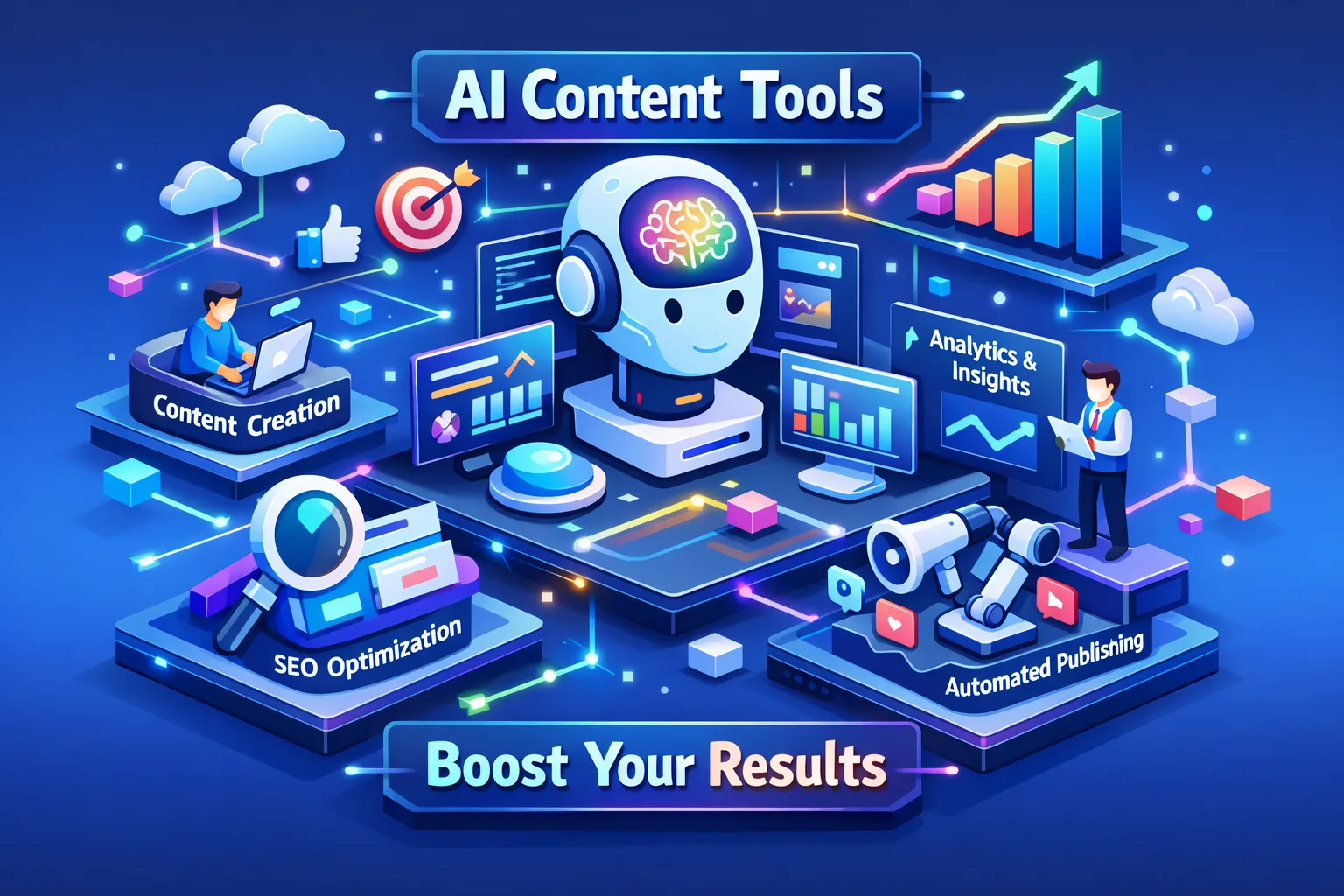
    The best AI content marketing tools fall into four functional categories: writing, SEO, video, and automation. Writing tools like Jasper, Writesonic, and ChatGPT handle long-form drafts, ad copy, and blog outlines. SEO tools like Surfer SEO and Semrush score and optimize content for search visibility, including the newer discipline of generative engine optimization (GEO), which targets how your content gets cited inside AI-generated answers from platforms like ChatGPT and Google Gemini. Video tools like Lumen5 and HeyGen convert scripts and blog posts into visual content. Automation layers like Zapier and Gumloop connect these tools so output moves through your workflow without manual handoffs.

    These categories overlap in useful ways. Jasper integrates directly with Surfer SEO, so you can optimize while you write. Writesonic pulls real-time Google data into its AI Article Writer, supporting GEO visibility alongside traditional search rankings. Understanding where one tool ends and another begins is what separates an efficient stack from an expensive mess.

    Single tools solve single problems. A blog-writing AI doesn’t distribute content. An SEO optimizer doesn’t produce the draft. Marketers getting real results from AI tools for content creators aren’t using one; they’re using two or three in sequence, with clear handoff points. Pick tools without a workflow in mind and you’re paying for capability you’ll never use consistently.

    AI Content Marketing Tools Worth Your Attention, by Use Case

    Blog writing and long-form content

    For long-form writing, Jasper, Writesonic, and ChatGPT are the tools that consistently come up. Jasper’s Canvas and Agents support on-brand, templated content at scale, making it the strongest choice for teams managing consistent brand voice across multiple formats. Writesonic’s AI Article Writer generates 5,000-word guides with real-time data integration and GEO optimization built in. ChatGPT with custom GPTs handles brand voice configuration, editing workflows, and multi-format content operations. Jasper’s Pro plan runs $59 per seat per month on annual billing, with custom Business pricing for enterprise teams. The right choice depends on your publishing volume and whether you need GEO support from day one.

    SEO optimization and content scoring

    Surfer SEO and Semrush own this space. Surfer (from $79 per month) gives you real-time content scoring during writing and tracks topical authority over time. Semrush is broader, keyword research, competitor data, CMS publishing, and AI visibility tracking for how your brand appears inside AI search results. Semrush’s Content Toolkit starts at $60 per month as a standalone add-on, while Semrush One bundles SEO and AI visibility tracking starting at $165.17 per month on annual billing.

    You need both only if you’re running a high-volume content operation that requires granular SEO scoring alongside comprehensive competitive intelligence. For most solo operators or small teams, Surfer handles the writing-side optimization while a lighter Semrush plan covers keyword research. Don’t pay for both at full tiers until your publishing volume justifies it.

    Video and social content creation

    Lumen5 and HeyGen both start at $29 per month and serve genuinely different purposes. Lumen5 converts blog posts into short-form videos, which makes it useful for repurposing written content without building a video production workflow from scratch. HeyGen produces avatar-based videos for product explanations or training content. Neither replaces a video strategy. What they do is accelerate production for teams that already know what they want to create and need to produce it faster.

    Pricing for AI Content Marketing Tools: What You’re Really Signing Up For

    Pricing across these tools follows a consistent pattern. Starter tiers are enough for a solo operator publishing at moderate volume. Team or business tiers become necessary once you’re managing multiple clients, brands, or publishing channels at scale. Semrush alone has two distinct plan structures: the traditional SEO Toolkit (Pro at $117.33 per month annually, Guru at $208.33, Business at $416.66) and Semrush One (Starter at $165.17 per month annually, Advanced at $455.67). Jasper’s Pro plan runs $59 per seat per month on annual billing, with custom Business pricing for enterprise teams. Costs escalate quickly once you add seats or require API access. For a recent look at Semrush subscription cost and pricing plans in 2026, see an independent overview of Semrush pricing.

    On the integration side, Airops connects to eight-plus CMS platforms including WordPress, Contentful, and HubSpot, and handles bulk publishing with workflow handoffs into Slack, Asana, and ClickUp. Yarnit integrates with Google Analytics 4, Mailchimp, LinkedIn Campaign Manager, and Google Ads via API. HubSpot Marketing Hub remains the all-in-one option: native CMS, CRM, email, social, and landing pages with built-in AI content creation. According to a 2024 Martech Alliance integration report, 42.7% of martech users report that AI tools integrate well with existing stacks, with B2B teams at 54%, primarily through API connections. If your stack is already built around HubSpot, staying inside that ecosystem costs less in integration overhead than assembling separate tools.

    The Limitations Nobody Includes in the Feature Comparison

    AI content tools have real, documented weaknesses. AI generates content by recombining existing material rather than producing original ideas, which means output can land below originality thresholds that affect search rankings. According to a 2024 Content Marketing Institute survey, 35% of content marketers don’t believe AI can deliver reliable creative or original storytelling, and that skepticism reflects consistent hands-on experience. Professional copywriters routinely describe AI output as technically correct but flat. It lacks brand voice nuance, struggles with technical vocabulary, and consistently misreads humor, sarcasm, and cultural context.

    AI tools handle first drafts. They do not handle final judgment. The same CMI survey found that 34% of content marketers say AI cannot match human domain expertise for in-depth research. Legal compliance, ethical assessments, cultural nuance, and brand voice approval all require human review. Organizations that skip this step face a specific cost: high-volume, low-quality output, which is worse than slower, more considered work produced by a person. Fact-checking, humanizing, and strategic direction are not optional polish. They are the actual work.

    Building a Lean, Functional AI Content Marketing Tool Workflow

    A practical three-tool setup covers the stages most content teams actually need: produce, optimize, and publish. Use Writesonic or Jasper for the long-form draft, Surfer SEO for optimization scoring before the piece goes live, and Airops or Zapier for CMS publishing and distribution automation. At entry tiers, this stack typically runs between $130 and $200 per month, a reasonable baseline for teams publishing eight to ten or more pieces monthly, and one that eliminates the manual handoffs that kill output consistency.

    The workflow matters more than the individual tools. A 2023 HubSpot State of AI report found that marketers using AI tools saved an average of 2.5 hours per day, with task completion running 25% faster overall and content creation up to 93% quicker compared to fully manual workflows. Those numbers don’t come from any single tool. They come from a process where tools hand off to each other predictably. Build the process first, then pick the tools that slot into it cleanly.

    Affiliate content creators need a different combination. General AI copywriting tools are built for volume. Affiliate content has a different requirement: it needs to convert, not just rank. A blog post for an affiliate marketer isn’t measured by impressions; it’s measured by clicks on a tracked link that turn into commissions. Tools built for brand journalism or SaaS thought leadership don’t automatically produce affiliate-optimized landing page copy or calls-to-action that test well. That gap is worth understanding before you default to a general-purpose stack.

    When You Need AI Built Specifically for Conversions

    General AI tools generate content. Affiliate-focused platforms generate content and then test it. That distinction matters because conversion copy behaves differently than informational copy. The marketing automation AI suite inside InternetMoneyPro is built to generate affiliate blog posts, social posts, and landing page copy aligned to a single offer for a defined audience, and includes A/B testing functionality to identify which version drives more clicks and commissions. That feedback loop is what’s missing from a Jasper-plus-Surfer setup. You produce content, but you don’t learn from it systematically.

    Platforms with built-in conversion testing demonstrate what’s possible when testing is native rather than bolted on: Verizon cut cost per conversion by over 50% through element testing on Instapage, and HubSpot’s Breeze AI generated a 2.3% lift in form completions through auto-generated copy variants. InternetMoneyPro applies a similar logic to affiliate-specific content, pairing AI generation with a structured diagnostic process to identify weak points in your funnel, rather than just producing more content and hoping the numbers improve.

    The decision framework is straightforward. If you’re a content team at a brand or agency, the three-tool stack covering writing, SEO, and publishing automation is the right direction. If you’re an affiliate marketer or solopreneur building a system around one offer and one audience, a platform with built-in conversion testing is more efficient than assembling separate tools that don’t share data. The goal is not to use more AI. The goal is to use less, with better results. Pick the tools that align with your specific content objective. Cut the rest. For more resources and ongoing insights, see our blog.

    The Bottom Line on AI Content Marketing Tools

    The best AI content marketing tools are not a shortcut. They’re an accelerant for a process you already understand. Jasper, Writesonic, Surfer SEO, Semrush, Lumen5, HeyGen, and specialized platforms like the AI content suite inside InternetMoneyPro all solve specific problems at specific price points. None of them replace editorial judgment or strategic direction.

    Start with your use case, then build a workflow around it rather than a collection of subscriptions. If you publish long-form content at volume, pair a writing tool with an SEO optimizer. If you’re in affiliate marketing, choose a platform that generates and tests conversion-focused content, not just general content. The marketers seeing real results from generative AI marketing tools in 2026 are the ones who used fewer tools, understood them better, and built repeatable systems around them. Pick two or three. Learn them completely. Then scale.

  • How to Choose an Artificial Intelligence Marketing Platform for Affiliates

    How to Choose an Artificial Intelligence Marketing Platform for Affiliates

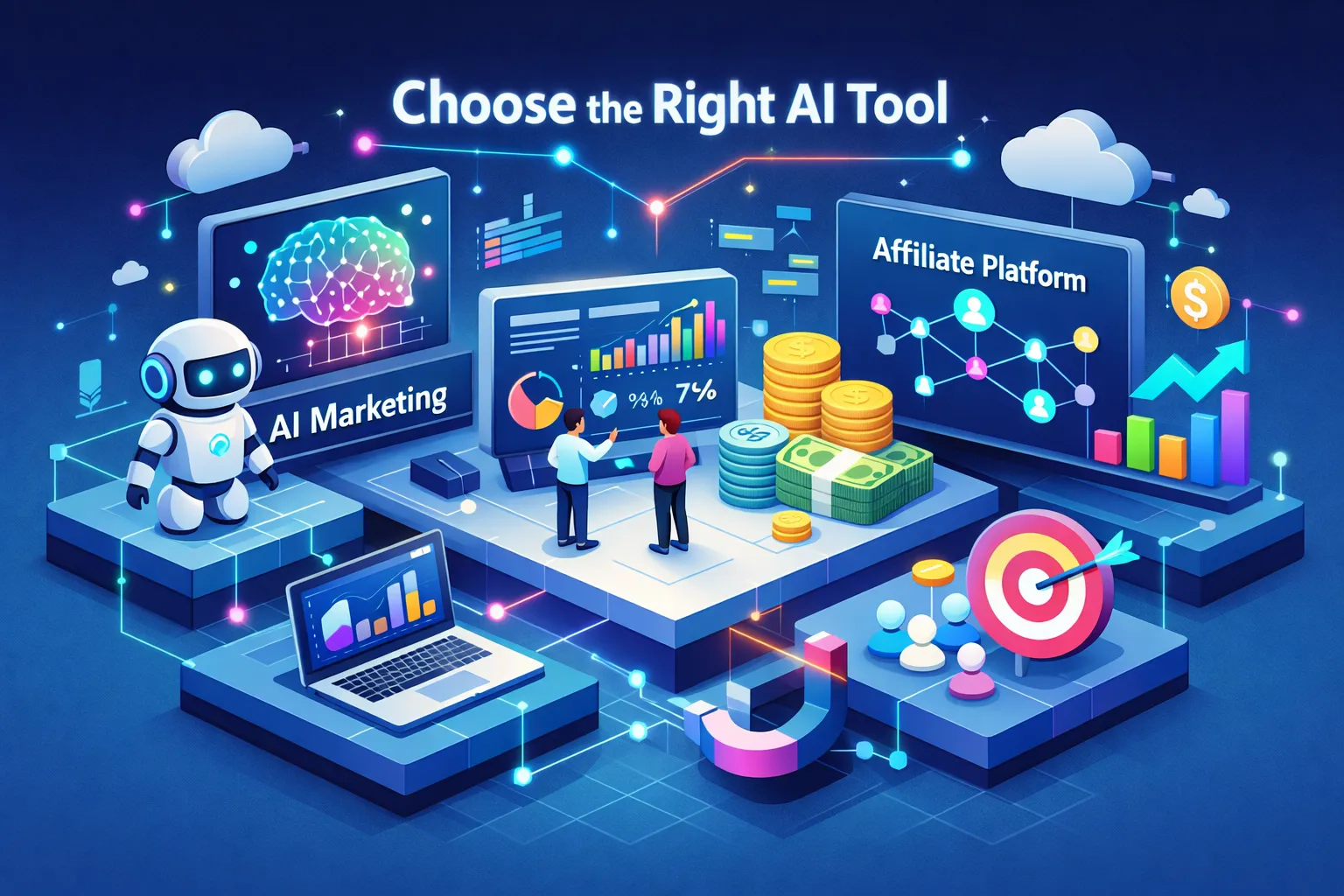
    <p>The affiliate marketing space now has a growing number of <strong>artificial intelligence marketing platform</strong> options, and most of them were built for brand owners running full marketing departments, not for individual promoters working on commission. Choosing the wrong one doesn’t just waste a subscription fee. It can cost you significant setup time, force you to customize dashboards never designed for your metrics, and kill your momentum at the exact point you need to be testing and moving fast.</p> <p><strong>InternetMoneyPro</strong> takes a different approach by building AI tools directly into the affiliate workflow, handling research, audience identification, and content drafts inside the same process rather than requiring a separate stack. That’s the key distinction this article is built around: tools designed for affiliate workflows versus generic martech platforms that happen to have AI features bolted on. Understanding that difference before you compare any platforms will save you real money.</p> <p>Here’s exactly what you’ll get from this article: a use-case framework to shortlist two or three platforms that match your actual operation, documented ROI benchmarks from real implementations, integration trade-offs that matter for affiliates specifically, and a pilot checklist you can run before committing to anything.</p> <h2>Why Affiliates Have Different Platform Needs Than Most Marketers</h2> <p>Most “best AI marketing tool” roundups are written for brand owners. They assume you control the product, the checkout page, and the CRM behind the offer. Affiliates control none of those things. That changes which metrics matter, which integrations you actually need, and which platform features are genuinely useful versus just impressive-looking on a sales page.</p> <h3>Your Performance Metrics Don’t Match the Platform’s Default Reports</h3> <p>Affiliates track CPL (cost per lead), EPC (earnings per click), and commission rate. Most AI marketing platforms are built around ROAS, CAC, and revenue attribution tied to a store or SaaS product. Understanding this mismatch upfront prevents you from buying a platform and then spending weeks customizing dashboards to reflect numbers that were never the default. The tool isn’t broken. It was just built for someone else.</p> <h3>Lean Operation vs. Enterprise Marketing Stack</h3> <p;�>An affiliate running solo or with a small team has no use for an enterprise CDP with bidirectional API flows or a platform that requires a developer to set up basic integrations. The platform that fits your operation connects quickly, produces output fast, and doesn’t demand a lengthy onboarding process. Bloated enterprise tools create friction before they deliver value, and that friction is what kills affiliate momentum early.</p> <h3>What an AI Platform Actually Needs to Do for You</h3> <p>For affiliates, an intelligent marketing platform needs to do one of these things well: generate and optimize paid traffic, produce content at scale, score and nurture leads, or provide clean attribution reporting. Identifying your primary need before comparing tools eliminates most options immediately. It keeps the evaluation focused on what actually drives commissions rather than what looks good in a demo.</p> <h2>How to Evaluate an Artificial Intelligence Marketing Platform for Your Use Case</h2> <p>The platforms that lead on ad optimization are categorically different from the ones that lead on content creation, which are different again from analytics tools. Picking a platform that doesn’t match your primary channel is the most expensive mistake affiliates make. It happens because the comparison was based on feature lists rather than use-case fit.</p> <h3>Ad Optimization for Affiliate Traffic Campaigns</h3> <p>Google Performance Max uses machine learning to optimize across Search, Display, YouTube, Gmail, and Maps simultaneously, finding converting audiences and placements automatically. Meta Advantage+ automates creative testing and audience targeting across Facebook and Instagram, with documented results showing 12% lower cost per purchase compared to manually managed campaigns. StackAdapt is a self-serve programmatic DSP suited to mid-market and larger affiliate operations running CPM-based campaigns. These platforms suit affiliates whose primary channel is paid traffic and who need automated bid management rather than manual campaign adjustments. Each functions as a focused AI advertising platform with native optimization built into its core, not added on top. For a side-by-side look at how these optimizers compare in practice, see this Performance Max vs Advantage+ comparison.</p> <h3>Content-First Tools for Organic Sites and Email Campaigns</h3> <p>Jasper ($59/month on the annual Pro plan) produces structured blog content, ad copy, and email sequences with brand consistency features. Copy.ai focuses on sales-marketing alignment and includes content agents that learn from your examples over time. Writesonic adds Generative Engine Optimization tracking across ChatGPT, Gemini, and Perplexity, which matters directly for affiliates building organic content strategies in an AI search environment. These tools suit affiliates whose primary channel is SEO content, review sites, or email sequences rather than paid traffic. Effective marketing automation with AI starts here, at the content layer, before you layer in more complex systems. See current Jasper pricing when evaluating cost versus output for content-first pilots.</p> <h3>Analytics and Attribution Tools That Reflect Commission-Based Results</h3> <p>Triple Whale provides AI-powered attribution modeling designed for multi-channel DTC campaigns. HubSpot’s AI layer spans CRM and pipeline forecasting with predictive audiences; note that entry-level Starter plans begin around $20/month, though more advanced AI features typically require higher tiers. Google Analytics 4 includes AI Insights for cross-platform attribution at no additional base cost, though certain advanced export functions may carry associated infrastructure costs depending on your setup. Affiliates running traffic across multiple channels need attribution clarity before scaling spend, and these platforms provide that foundation without requiring enterprise-level contracts.</p> <h2>What the ROI Data Actually Shows</h2> <p>The performance numbers for AI marketing software are striking, and they’re also cherry-picked. The 187% organic traffic growth and 128% conversion rate lift examples that appear in vendor case studies reflect real results from specific implementations. They don’t reflect average results from average implementations. Pricing both the ceiling and the realistic floor into your evaluation prevents you from buying a platform based on a headline metric that required 18 months and a dedicated analyst to achieve.</p> <p>Documented results that hold up across multiple <a href=”https://hashmeta.com/blog/ai-marketing-roi-case-studies-data-analysis-proving-business-impact/” target=”_blank” rel=”nofollow”>case studies</a> include:</p> <ul> <li>A SaaS company using AI SEO tools achieving 187% organic traffic growth and a 41% drop in cost per MQL over 18 months</li> <li>A DTC brand hitting $18 CAC against a $25 target with an 8.3% add-to-cart rate</li> <li>A landing page optimization project lifting conversion rate from 8.2% to 18.7% using AI-generated variations</li> </ul> <p>Ad automation platforms have separately documented 15, 20% ROAS lifts with 90% reductions in operational management time.</p> <p>Three factors consistently separate the exceptional results from the flat ones: unified data infrastructure feeding clean signals to the AI model, genuine human oversight of automated decisions, and a focused single-channel test before scaling. <strong>Affiliates who try to automate everything simultaneously tend to amplify inefficiencies rather than eliminate them.</strong> Attribution windows of 6, 18 months are realistic for organic and content-driven campaigns. Paid traffic plays with AI bid optimization tend to show signals within 30, 60 days.</p> <h2>Integration Trade-Offs That Determine Whether a Platform Actually Works</h2> <p>A platform’s feature list means nothing if it can’t connect cleanly to the tools you already use. For affiliates, the critical integrations are narrower than what enterprise marketers need, but getting them wrong still breaks the operation at the data layer, and that’s exactly where AI optimization decisions happen.</p> <p>The non-negotiable connections for most affiliate setups are: Google Ads and Meta Ads via server-side APIs for accurate conversion tracking, Google Analytics 4 or a basic CRM for the attribution layer, and affiliate network compatibility so that ClickBank, Impact, or ShareASale can pass conversion data back to your analytics stack. Most AI platforms support GA4 and ad platform integrations natively. <strong>Direct native connectors for affiliate networks are less common.</strong> Many affiliates use Zapier or a dedicated attribution platform like Cometly to bridge ClickBank and similar networks, particularly where no out-of-the-box integration exists.</p> <p>Data silos are the most documented failure mode in AI marketing implementation. When your ad platform, landing page tool, and affiliate network can’t share data in real time, AI optimization decisions run on partial information. A lead-scoring model trained on incomplete behavioral data will misfire on targeting. Attribution gaps mean you can’t accurately measure which campaigns drive commissions, which turns scaling decisions into guesswork. Fix the data connections before you expect the AI features to perform.</p> <h2>Risks to Factor In Before You Commit</h2> <p>AI marketing platforms have real limitations that most sales pages don’t highlight. HubSpot’s 2025 State of Marketing report identifies data privacy concerns as the top disadvantage of AI in marketing, cited by 42% of marketers. Affiliates operating in health, finance, or high-compliance niches face stricter requirements around data collection and behavioral targeting under GDPR and <a href=”https://secureprivacy.ai/blog/ccpa-compliance-checklist-for-digital-marketing-agencies-2025″ target=”_blank” rel=”nofollow”>CCPA</a>. Before committing to a platform, confirm its data handling practices align with the regulations that apply to your audience geography, particularly if you’re running AI-driven personalization or retargeting campaigns across EU traffic.</p> <p>Model bias is the other risk worth pricing in. AI models are only as accurate as the data feeding them. Platforms trained on historical data reflecting narrow demographic patterns will reinforce those patterns in targeting. For affiliates in competitive niches, AI-driven audience targeting may underperform manual segmentation early on, until the model has enough clean first-party data to calibrate against your actual converting audience rather than a generic proxy.</p> <p>Automating a broken funnel makes it fail faster and at higher volume. Over-relying on AI chatbots for complex lead nurturing produces rigid, generic responses that increase churn rather than reducing it. AI performs best when applied to a process that already works at a small scale. It’s not a fix for a <a href=”https://internetmoneypro.com/blog/why-affiliate-marketing-isnt-working” target=”_blank”>fundamentally broken campaign structure</a>.</p> <h2>A Step-by-Step Pilot Checklist Before You Spend Your Budget</h2> <p>The fastest way to evaluate an artificial intelligence marketing platform without overcommitting is a scoped pilot: four weeks, one channel, one primary metric. Anything broader produces ambiguous results that don’t support a clear buy-or-reject decision.</p> <ol> <li><strong>Define your use case and the single metric that decides success.</strong> Pick one function: ads optimization, content generation, lead scoring, or attribution reporting. Assign one metric: CPL, organic traffic, conversion rate, or EPC. Multi-metric pilots obscure whether the platform actually moved the needle.</li> <li><strong>Run a narrow test campaign with a real budget.</strong> Allocate a defined budget to a single campaign or content cluster using the platform’s AI features. Keep a control baseline running in parallel so you have a direct comparison. Many vendors offer trials, Blaze runs a 7-day free trial and Jasper has entry-level plan options, so evaluate whether the trial window is long enough to test your specific use case before the clock starts.</li> <li><strong>Evaluate results against your baseline before scaling.</strong> At the end of the pilot period, compare the AI-assisted result against your baseline on the single metric you defined. If the improvement is meaningful and the platform’s integrations worked without friction, that’s a buy signal. If results are flat and setup required significant manual work, a different platform or a different use case is the answer, not a longer trial.</li> </ol> <h2>The Decision Comes Down to One Question</h2> <p>Choosing an artificial intelligence marketing platform as an affiliate comes down to this: does this tool solve the specific problem in your funnel, and can it connect to the systems you already use? The affiliates getting real ROI from these platforms started narrow, measured clearly, and expanded only after the model had real data to work with. The 128% conversion lifts and 187% traffic growth numbers are real. They’re just not automatic.</p> <p><strong>InternetMoneyPro</strong> is built around that same principle. Rather than pointing affiliates toward a separate stack of AI tools to stitch together, it integrates AI capabilities directly into the <a href=”https://internetmoneypro.com/blog/affiliate-marketing-system-that-works” target=”_blank”>affiliate workflow</a> at the process level, covering research, audience identification, and content drafts within a single, structured system. One offer, one audience, measurable steps. That’s the focus that produces results instead of complexity. Learn more on the <a href=”https://internetmoneypro.com/blog” target=”_blank”>InternetMoneyPro blog</a>.</p> <p>Pick the artificial intelligence marketing platform that matches your primary use case. Test it on one campaign. Let the data tell you whether to scale. That’s the whole framework, and it works regardless of which tool you start with.</p>
  • AI Advertising Tools That Identify and Fix Failing Ads

    AI Advertising Tools That Identify and Fix Failing Ads

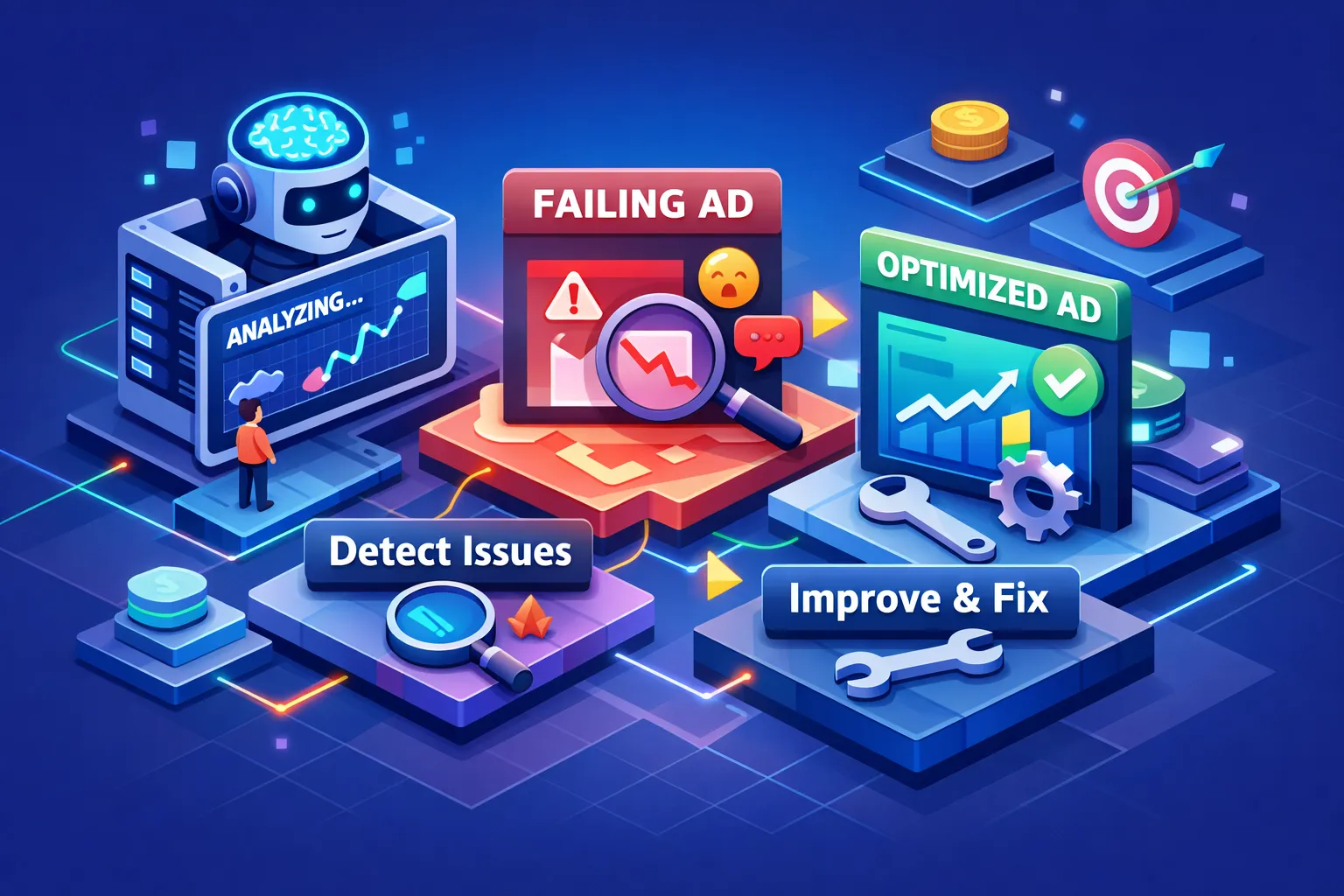
    Many affiliate ad campaigns don’t fail because the offer is bad. They fail because no one caught the failing creative in time, and without the right AI advertising tools in place, that window closes fast. Budgets bleed quietly while click-through rates slide and cost-per-acquisition climbs. By the time a human notices, hundreds or thousands of dollars have already been served to the wrong signal, depending on your spend level.

    AI advertising tools change this dynamic by doing what manual management can’t: scoring, flagging, and swapping underperforming creatives in real time, without waiting for a weekly report or a gut feeling. This isn’t a feature dump of fifteen platforms. This is a focused guide to how these tools work diagnostically, which ones fit which use case, and how to implement one with a clear measurement plan from day one.

    Affiliates in particular need this edge. You’re running paid traffic to someone else’s offer, which means every wasted impression costs you margin you can’t recover on the back end. The tools covered here address that problem directly.

    Why ad creatives bleed your budget before you notice

    Many advertisers check campaign performance weekly, or only when something looks obviously wrong. By then, a creative has already served thousands of impressions at a poor CTR or an inflated CPA. The gap between when a creative starts underperforming and when a human notices it is exactly where money disappears.

    Consider a common affiliate scenario: you’re running a single static creative to cold traffic on Meta, and the algorithm is optimizing toward link clicks rather than purchases. The CTR looks acceptable on the surface, but your CPA is climbing every day. Nothing in your dashboard flags it as a crisis. A week later, you’ve burned through your testing budget on the wrong signal.

    The signals your data is already sending

    There are four specific signals that indicate a creative is failing: declining CTR, rising CPA relative to your baseline, frequency creep without a corresponding engagement lift, and low thumb-stop rates on video. These aren’t abstract metrics reserved for media buyers with analytics teams. They’re the exact inputs that AI ad tools use to make automated decisions.

    Declining CTR means your audience has seen the creative enough times to stop responding. Rising CPA means you’re paying more for each conversion while the creative loses relevance. Frequency creep above 3.5, a commonly cited benchmark, though the threshold can range from 2.5 to 4.0 depending on platform and audience, is a reliable sign of ad fatigue when conversions aren’t keeping pace. A weak thumb-stop rate on video tells you the first three seconds aren’t earning attention. Each of these signals appears in your data before performance fully collapses.

    Why manual campaign reviews miss the window

    Automated ad optimization tools flag underperforming creatives within 48 to 72 hours of accumulating sufficient data, sometimes faster when CTR drops 15 to 20% below a 7-day average. Manual reviews don’t operate on that timeline. By the time a weekly report surfaces a weak creative, the ad spend is already gone.

    Manual audits also tend to focus on campaigns as a whole, not individual creative variations. Most affiliates don’t have the infrastructure to monitor 10 to 20 creative variants daily across Meta, Google, and TikTok simultaneously. That’s the case for automation. Not convenience, margin.

    How AI advertising tools catch and fix underperforming creatives in real time

    AI ad tools work differently from manual campaign management in one fundamental way: they ingest performance data continuously, not periodically. Each creative gets scored against a rolling baseline, and when performance dips below a defined threshold, the tool either flags it for human review or triggers an automated swap. The shift from rule-based bidding to predictive creative scoring is what separates these platforms from a simple alert system.

    Automated creative scoring: what replaces the gut check

    AdCreative.ai uses historical performance data to assign a score to each creative before it even goes live. This predictive scoring prioritizes which variations to serve first based on likely performance, not aesthetics or personal preference. The platform claims over 90% accuracy in performance prediction, treat that as a vendor figure worth testing against your own results, not a guarantee, which means the likely winning variation gets served first while weaker alternatives are tested at lower spend levels.

    For affiliates testing multiple creative angles on a single offer, this matters. You’re not waiting five days to find out which hook performs. The tool front-loads impressions toward the most probable winner and flags the others early.

    Real-time optimization loops versus static A/B testing

    Traditional A/B testing waits for statistical significance, which can take days or weeks depending on your traffic volume. Real-time AI optimization shifts budget toward better performers within hours. That distinction is what “real-time” actually means in the context of AI ad creative tools: not faster reporting, but faster budget allocation.

    Albert.ai‘s autonomous campaign management illustrates this clearly. The platform pulls live ROAS data from Meta, Google, and TikTok simultaneously, then moves budget from the lower-performing channel to the higher one without manual input. In a published Harley-Davidson case study, Albert.ai generated a 2,930% increase in leads, a ceiling-performance example worth anchoring your expectations to, not a baseline guarantee.

    Top AI advertising tools broken down by use case

    The right tool depends on what you’re trying to do, not on what has the best marketing page. Here’s how the leading platforms map to specific affiliate use cases.

    High-volume static and social ad creatives

    AdCreative.ai is the go-to for affiliates who need to test multiple creative variations at scale. Starting at $29 per month, it generates static and video ad creatives from a URL or prompt, scores them against historical performance data, and includes a competitor analysis feature that shows what’s working in your niche. The URL-to-creative generation alone saves significant research time when you’re testing several angles on a single affiliate offer.

    Video ad production for short-form and social placements

    HeyGen handles avatar-based personalized video ads, starting at $29 per month, and works well for affiliates who want talking-head style creative without hiring a spokesperson. Lumen5 converts scripts or text into video ads and ranges from $29 to $199 per month depending on output volume and brand controls. Both tools are suited to TikTok, Instagram Reels, and YouTube pre-roll placements, where video frequently outperforms static creative on engagement metrics, particularly on short-form platforms where attention is scarce.

    If your offer converts better through demonstration or explanation than through a static image, these tools give you production capability without a production budget. That’s the practical case for adding them to your creative stack.

    Autonomous cross-channel optimization at scale

    InternetMoneyPro is built for advertisers running multi-platform campaigns who want the AI to manage budget allocation, media buying, and creative testing without constant human input. Pricing is custom, typically 3 to 10% of ad spend, which makes this an agency or mid-to-large affiliate operator tool, not a beginner option. If you’re spending less than $10,000 per month across platforms, the overhead doesn’t justify the cost. Above that threshold, the 15 to 25% ROAS uplift cited in Albert.ai’s published client data represents a meaningful return, though results will vary by vertical and campaign structure.

    Matching AI advertising tools and platforms to your budget and setup

    The most common mistake is buying a tool built for an agency when you’re a solo affiliate, or staying on an entry-tier tool when your volume demands professional-level automation. Understanding what each pricing tier actually delivers prevents both errors.

    Pricing tiers decoded: what you actually get at each level

    Entry tier ($0 to $100 per month) gives you basic automation, template-based creative output, and access to one or two platforms. This is where you validate ROI before committing real budget. Professional tier ($100 to $500 per month) unlocks full AI creative generation, multi-platform integration, and meaningful output volume, typically 25 to 75 creative assets per month based on current vendor pricing guides. Enterprise tier ($500 and above) adds unlimited output, predictive analytics, and custom onboarding, structured for high-volume operations running across many campaigns simultaneously.

    Watch for per-seat and per-creative pricing models at the professional tier. These can catch early users off guard if they assume a flat monthly fee covers unlimited generation. Read the fine print before you commit, especially if you’re testing aggressively.

    Platform integrations that matter for affiliate campaigns

    Meta, Google Ads, and TikTok are the three platforms most affiliates run on. Tools like Unified.to, Supermetrics, and Revealbot offer native API connections to all three, with Supermetrics extending to 500 additional data sources for unified reporting. HubSpot adds CRM integration for lead-based affiliate models, and Metricool connects ad performance to social scheduling in one view.

    Integration depth matters most when you’re running multi-channel campaigns and need unified performance data without manually pulling reports from three different dashboards. If you’re on a single platform, basic integrations are sufficient. If you’re cross-channel, invest in a tool with proper API connections from the start.

    Running a cross-channel diagnostic before you scale ad spend

    Before you invest in any AI ad tool, you need to know which part of your funnel is actually broken. Scaling with AI on top of a broken creative strategy doesn’t fix the strategy. It automates failure faster, at higher volume, with a monthly subscription cost attached.

    What a proper ad audit actually uncovers

    A proper diagnostic maps each active creative to its platform, audience segment, and funnel stage, then measures CTR, CPA, and conversion rate per creative at each stage. Many affiliates who run this process discover the problem isn’t the ad itself. It’s the mismatch between the creative angle and the audience segment. The offer is fine. The creative is targeting the wrong awareness level, or the landing page doesn’t match the promise the ad makes.

    Identifying that disconnect before committing more budget is the highest-leverage step you can take. It surfaces the actual problem, not the symptom.

    Using a diagnostic framework to fix creatives first

    This is where InternetMoneyPro fits the diagnostic step specifically. The platform’s diagnostic output is what makes the generative step productive rather than repetitive.

    The sequence matters: run the diagnostic first, identify what’s broken, then use the right AI advertising tool to build the replacement creative. Skipping the diagnostic and going straight to a new tool means generating more of the same kind of creative that wasn’t working. InternetMoneyPro’s diagnostic output is what makes the generative step productive rather than repetitive.

    How to trial and implement your chosen AI ad tool

    Once you have diagnostic clarity and know which tools fit your use case, the implementation path is straightforward. The goal in the first two weeks is data collection, not profit.

    Your first 30 days with an AI advertising tool

    Start by using the cross-channel diagnostic to identify one underperforming creative. Generate three to five replacement variations with your chosen AI advertising tool, based on the diagnostic output. Set up a real-time monitoring rule or automated alert for CTR and CPA thresholds. Then let the tool optimize for the first two weeks before you review results, and resist the urge to intervene during that window. You need clean data, and interference corrupts it.

    The metrics that tell you if it’s working

    Define three benchmarks before you start. Target a 15 to 30% CTR lift versus your baseline creative. Target a 10 to 20% CPA reduction versus the previous creative. Track ROAS trend over 30 days rather than week-over-week fluctuations. Published benchmark data from a Proxima.ai case study shows Janessa Leoné’s campaign achieved a 73% CTR lift and 67% CPA drop with AI-driven optimization. That’s a realistic ceiling for what’s possible with a well-structured setup, not a guaranteed outcome, and it gives you a concrete reference point for evaluating your tool’s performance against real-world results.

    The takeaway

    AI advertising tools are not magic. They’re faster diagnostic and optimization systems. The affiliates who get results from them are the ones who understand what’s broken first, then use the right tool to fix it at scale.

    The use-case matching is clear: AdCreative.ai for volume creative testing on static and social, HeyGen and Lumen5 for video placements where demonstration outperforms image, and Albert.ai for autonomous cross-channel management at higher spend levels. Pricing fit and integration depth matter more than brand recognition when you’re making this decision.

    The best next step is not buying a tool. It’s running the diagnostic first. Start with InternetMoneyPro’s diagnostic framework to surface what’s actually broken in your current campaigns, then let your chosen AI advertising tool do its job on a foundation that’s already solid. Build the right base, and the tools work. Skip it, and you’re just spending faster on the same problem. Learn more about what an affiliate marketing system that works looks like.

  • Semrush AI Reviewed: Features, Accuracy, and Real Use Cases

    Semrush AI Reviewed: Features, Accuracy, and Real Use Cases

    Semrush AI sounds like a major upgrade. The marketing is confident, the feature list is long, and the screenshots look impressive. But most affiliates running content campaigns have no clear idea which features actually move the needle, which numbers to trust, and which parts of the toolkit are directional signals versus hard data.

    This article gives you a straight breakdown of what Semrush AI includes, how it calculates the metrics you’ll be reporting on, where the data gets shaky, and how to use it practically to audit and fix affiliate campaigns. At InternetMoneyPro, we’ve built a diagnostic mindset into every step of our affiliate system, and the platform fits neatly into that framework when you know exactly what it measures and what it doesn’t.

    If you’re running affiliate campaigns in 2025 and ignoring your AI search visibility, you’re likely competing blind against marketers who aren’t. Industry data and Semrush’s own research suggest that AI-generated answers are increasingly intercepting buyer-intent searches before users reach organic content. That shift is the real stakes here.

    What Semrush AI actually includes

    The first confusion point for most users is treating “Semrush AI” as a single feature. It’s not. There are at least two distinct toolkits, and conflating them leads to misreading what the data is telling you.

    The AI Toolkit is built around brand monitoring and competitive intelligence inside AI environments. It includes Business Landscape reports (AI market share and visibility by category), Brand and Marketing reports (sentiment analysis), Audience and Content reports (query themes), AI-generated recommendations, and competitor analysis for up to 50 brands. The job of this toolkit is diagnostic: it shows you where your brand or the offer you’re promoting stands in AI-generated conversations.

    The AI Visibility Toolkit is different. It focuses on tracking SEO performance specifically in AI-generated search results. Its components include Visibility Overview, Prompt Research (with AI Topic Volume, intent, topic difficulty, competing brands, and related topics), Brand Performance with Share of Voice and sentiment tracking, Position Tracking with three-month projections, the Keyword Strategy Builder, and the AI Search Site Audit. This toolkit is more predictive and action-oriented.

    One important caveat on access: these tools are bundled in Semrush One plans, not the standard Pro, Guru, or Business SEO subscriptions. Semrush One Starter begins at $199.95 per month. Standard plan subscribers can add the AI Visibility Toolkit for approximately $99 per month, though the billing model, per user or per domain, varies by plan. Because Semrush’s plan structure has been evolving, verify the exact inclusions on their pricing and plans before you commit.

    Using Semrush AI Writer for affiliate content

    Semrush AI Writer is a separate but connected part of the ecosystem. It offers a library of content templates, multilingual support across 30-plus languages, and pulls from Semrush’s competitive SEO data rather than generating content in isolation. That last part is its real differentiator as an AI content generator: the output is grounded in keyword and competitive data, not just a generic language model response.

    Two things affiliates should know upfront: there’s no built-in plagiarism checker, and there are no explicit factuality controls. The tool grounds content in Semrush’s SEO data, which limits some hallucination risk, but it doesn’t verify facts independently. For affiliate content where accuracy affects trust and conversions, that gap matters.

    How the integrated dashboard works

    Semrush One consolidates these toolkits into a single dashboard. For affiliates managing multiple campaigns across different niches or offers, this matters more than it might seem. Instead of jumping between separate reports for prompt data, competitor metrics, and visibility scores, everything feeds into one view. The consolidation reduces friction in the audit workflow, which we’ll cover in detail below.

    How Semrush calculates AI Visibility and what the score actually means

    The AI Visibility score is a proprietary 0, 100 metric. The score aggregates three raw inputs: Monthly Audience (the volume of topics that mention a brand), Mentions (the count of AI answers that feature the brand), and Cited Pages (the specific domain pages that LLMs actually source when generating answers). These three components combine into a visibility score relative to Semrush’s benchmark sample. Understanding what it actually measures prevents you from over-interpreting the number in either direction.

    A score of 40 does not mean you’re visible to 40% of AI users. According to Semrush’s own documentation on its Prompt Database, it means you score 40 relative to a curated dataset of 2,500-plus prompts. The data source is Semrush’s own Prompt Database, not a neutral third-party crawl of LLM outputs. You’re benchmarking against a sample, not the full universe of AI-generated search responses.

    AI Share of Voice explained: why it matters for affiliate campaigns

    AI Share of Voice is calculated by dividing a brand’s mentions by total mentions across all analyzed brands. Semrush uses 10% as the low watermark: below that, a brand needs content and structural improvements to appear in AI-generated answers. Above 15% signals strong positioning in that AI search environment.

    For affiliates, this number has a direct revenue implication. If the offer you’re promoting has a low AI Share of Voice in its category, your content is likely not surfacing in AI-generated answers to buyer-intent queries, and those are exactly the searches that convert. A weak score is a signal to audit the content and structure behind your campaign, not just a vanity metric to monitor.

    Where Semrush AI data gets unreliable

    The toolkit is a directional tool. It identifies trends, surfaces opportunities, and flags competitive gaps. It is not a source of ground truth for precise traffic or citation data, and treating it as one will lead to bad decisions.

    Semrush traffic estimates frequently run 2, 10 times higher than actual Google Search Console data. Keyword detection rates also fall behind Ahrefs for smaller or niche sites. Cross-referencing with GSC for traffic validation is non-negotiable if precision matters to your campaign decisions.

    The accuracy of Semrush AI Visibility scores carries its own set of limitations. No independent benchmark study has yet compared these scores against actual measured citation frequency in ChatGPT or Google AI Overviews. The correlation between the score and real-world AI citation counts remains unverified outside Semrush’s own research. Treat the score as a directional signal, not a confirmed audit trail.

    User-reported bugs and the paraphrasing problem

    There are known issues worth factoring into how you interpret the data. One analysis of Semrush’s AI-generated outputs, referenced in Semrush’s own research materials, reports a similarity score of only 0.53, 0.54 between AI responses and their original source content, with alignment between AI outputs and actual user prompts sitting at just 0.04, 0.05. Those are low numbers. In practice, the tool blends and paraphrases from multiple sources rather than citing them precisely.

    For affiliates using AI-cited content as a quality benchmark, this matters. A page that gets surfaced as a cited source may not actually be the best-answer content in that space. The AI is synthesizing, not quoting, and the engagement signals on cited posts are often weaker than you’d expect: posts with fewer than 20 upvotes frequently get surfaced over higher-performing alternatives. Use the citation data as directional input, not a quality endorsement.

    How to audit your affiliate campaigns with Semrush AI

    The practical value of these AI SEO tools for affiliates comes from a three-step workflow: find where you’re invisible, understand why, then fix it. Each part of the AI Visibility Toolkit handles one step of that process.

    The AI Search Site Audit handles step one. It checks whether major AI crawlers, ChatGPT-User, OAI-Searchbot, Google-Extended, Perplexity bots, and others, can access your site. It flags missing llms.txt files, weak internal linking, non-descriptive anchor text, broken links, duplicate content, and structural issues that reduce how well LLMs can parse and retrieve your content. For affiliates, the most actionable output is the list of pages that could rank in AI answers but currently don’t, paired with specific recommendations to fix them.

    Using Prompt Research to find content gaps

    Prompt Research is where the competitive intelligence becomes actionable. You filter by “Missing” topics: prompts where competitors are being mentioned in AI-generated answers but your content isn’t. The tool surfaces AI Topic Volume, intent, topic difficulty, competing brands, and related topics for each gap.

    For an affiliate in personal finance, software tools, or health products, this reveals exactly which sub-topics competitors are winning in AI-generated answers. That’s faster and more targeted than traditional keyword gap analysis because it shows where AI answers are already being served to buyers, not just where organic traffic exists.

    Brand Performance tracking for affiliate offers

    The Brand Performance suite tracks sentiment, narratives, and recommendations around a specific brand or product. For affiliates, this is more than a monitoring tool. If the offer you’re promoting is generating negative AI sentiment patterns, that can suppress conversions even when your SEO traffic looks healthy. A content strategy that doesn’t account for negative brand narratives in AI search environments is leaving a hole in the funnel.

    Turning Semrush AI insights into real SEO fixes

    Data without action is just overhead. Once the audit identifies gaps, the workflow moves to content creation and campaign restructuring.

    The connection between Prompt Research and AI Writer is the platform’s practical strength here. Take the gaps identified in Prompt Research, feed the topic and intent signals into AI Writer’s template system, and produce content structured around the factors LLMs cite: clear headings, semantic HTML, entity clarity, and E-E-A-T signals. The Keyword Strategy Builder then clusters these topics into a campaign structure rather than leaving you with a disconnected list of individual content pieces.

    Many users who adopt these tools stop at the reporting stage, they have the data but no system for acting on it. The result is dashboard screenshots that don’t change anything downstream. You don’t need to become an SEO analyst to use Semrush AI effectively, but you do need a repeatable process that turns findings into campaign fixes.

    When Semrush AI is actually worth the cost

    The pricing is significant. Semrush One Starter runs $199.95 per month, and access to the full AI Visibility Toolkit as a standalone add-on starts at approximately $99 per month on top of a base plan. That’s a real cost to justify, and the honest answer is that it’s not justified for every affiliate.

    The tool earns its cost when you’re managing multiple content campaigns simultaneously, tracking AI search visibility across several competitors, or running campaigns for a brand with meaningful AI Share of Voice to protect or grow. At that scale, the competitive intelligence and audit capabilities compound across campaigns in ways that make the price defensible.

    Who gets real value from Semrush AI features

    The affiliate who benefits most is intermediate to advanced: already generating some traffic, running content-heavy campaigns, and needing structured competitive intelligence in AI search environments. If you’re managing a portfolio of affiliate sites or scaling a single authority site, the toolkit gives you a real signal layer that would otherwise require manually monitoring multiple AI platforms.

    Who should start somewhere simpler

    Why Affiliate Marketing Isn’t Working for You (And the Real Fix) running a single-offer campaign with no existing content base don’t need this yet. Paying for a tool you can’t act on is worse than not having the data. A focused system paired with free or lower-cost AI SEO tools covers the same essential ground with far less complexity. Build the foundation first, then add the signal layer when you have campaigns worth analyzing.

    The bottom line on Semrush AI

    Semrush AI gives affiliates a real lens into AI search performance, with a clear caveat: it’s a directional tool, not a ground-truth oracle. The AI Search Site Audit and Prompt Research are where the practical value sits. Use them to find where your campaigns are invisible in AI-generated answers, use AI Writer to close the content gaps, and cross-reference with Google Search Console for any traffic numbers that matter to your decisions.

    The tool is only as good as the process behind it. If you’re at the stage where you need a system that makes Semrush AI data actionable without requiring expert-level interpretation, The Blog | Real Answers for Real Affiliate Marketers‘s diagnostic affiliate framework was built exactly for that: identify the broken component, apply a targeted fix, measure the output. That’s the loop that turns AI visibility data into affiliate revenue.

  • The Best AI Tools for Affiliate Marketing in 2026

    The Best AI Tools for Affiliate Marketing in 2026

    If you’re searching for the best AI tools for marketing, the first thing worth knowing is this: most affiliates don’t have a tool problem. They have a too-many-tools problem. The average affiliate marketer is paying for five or six AI subscriptions and getting consistent results from exactly none of them. That’s not a budget issue. It’s a focus issue. Tools without a workflow are just expensive distractions.

    This guide covers the strongest AI marketing tools across four specific functions: content creation, SEO, paid ads, and analytics. Each one is evaluated on what it actually delivers inside an affiliate workflow, not what it looks like on a product page. By the end, you’ll have a clear 2, 3 tool shortlist to trial based on where you are right now and what your workflow is actually missing.

    One thing worth naming upfront: a stack of tools is not a system. The affiliates generating predictable commissions are using fewer tools, not more. They have a process. The tools serve that process. Keep that in mind as you read.

    Best AI Tools for Marketing: Content Creation That Produces Affiliate-Ready Copy

    Content is where most affiliates spend the majority of their time, and it’s where AI delivers the most obvious leverage. The question isn’t whether to use AI copywriting tools. It’s which one fits the type of content you’re actually producing.

    Jasper AI is the strongest option for affiliates writing long-form product reviews and comparison posts. It comes with 100+ marketing-specific templates, brand voice customization, and a structured approach to promotional copy that generic tools don’t match. The limitation is real though: without sharp, specific prompts, Jasper defaults to generic output. It rewards affiliates who know their audience and product well. It doesn’t compensate for vague direction. Pricing starts at $59/month on annual billing, with a 7-day free trial available.

    ChatGPT works best as a research and drafting assistant, not a publish-ready content engine. Use it for ideation, outlining, and first-pass drafts. The hallucination risk is significant in affiliate contexts specifically: ChatGPT will confidently generate incorrect product specs, outdated pricing, and fabricated feature comparisons. Any AI-generated product claim needs manual verification before it goes live. Broken trust with your audience kills conversions faster than any algorithm update.

    For affiliates who need volume on a tighter budget, eesel AI generates SEO-optimized blog posts from a single keyword, and Copy.ai handles headlines, CTAs, and short-form ad copy efficiently. Neither replaces Jasper for nuanced review content, but both hold up well for supporting pages and campaign copy.

    AI SEO Tools That Tell You Exactly What to Write and Rank For

    Ranking affiliate content is how passive commissions happen. The best AI tools for marketing in this category take the guesswork out of what to write and how to structure it to compete against established pages. If you’re serious about organic traffic, AI SEO tools belong in your stack.

    Surfer SEO: Real-Time Optimization for Competitive Niches

    Surfer SEO is the clearest choice for affiliates optimizing review-style content in competitive niches. It scores your draft in real time against top-ranking pages, flagging keyword density, content gaps, heading structure, and entity coverage. It also includes a built-in AI writing assistant and auto-optimization features, which makes it practical for affiliates producing content at volume. Plans start around $89/month on annual billing. For most solo affiliates, the cost pays for itself once the content starts ranking consistently. For a direct feature comparison with Clearscope, see Surfer SEO vs Clearscope comparison.

    Clearscope and MarketMuse: Building Topical Authority

    Clearscope and MarketMuse both focus on topical authority rather than individual post optimization. Clearscope suits affiliates in niches where ranking one post isn’t enough and you need to build out a content cluster that signals depth to search engines. MarketMuse maps those clusters and identifies gaps in your coverage over time. Both are premium-priced, with Clearscope starting at $170/month. They make more sense for affiliates with an existing content base who are trying to compound their rankings, not for those just starting out.

    Free tools still have a place here. Google Analytics 4 includes predictive AI features that most affiliates ignore, including purchase probability scores and high-converting audience segments. Ahrefs’ free tier covers basic keyword discovery. These don’t replace a dedicated SEO tool at volume, but they’re worth using before you commit to a paid subscription.

    AI Ad Optimization Tools for Automating and Scaling Paid Traffic

    Affiliates running paid traffic face a specific challenge: creative fatigue and manual bid management eat time that should go toward scaling. These AI ad optimization tools address that directly.

    AdCreative.ai: Speed-to-Creative for Multi-Variant Testing

    AdCreative.ai generates ad visuals and copy variants optimized for click performance across Facebook and Google display formats. Its strength is speed for multi-variant testing, which matters when you’re promoting one offer across multiple audience segments. Plans start at $29/month, making it accessible early in a paid traffic journey. The limitation is worth noting: it performs best when you give it a defined audience brief. Feed it a blank prompt and the output is generic. Feed it specific audience pain points and offer details and it produces usable creative fast.

    Gumloop: Workflow Automation Without the Technical Setup

    Gumloop is the tool for affiliates who want to automate repetitive campaign tasks without writing code. Its drag-and-drop builder connects to GPT-4, Claude, and Grok without requiring separate API keys, which eliminates the technical setup that stops most beginners. Pricing starts at $97/month for the full automation suite. Use it to automate pulling ad performance data, briefing new creatives, or routing campaign reports. It’s not an ad platform. It’s the connective tissue between your tools that removes manual work from your weekly process. Read a practical example of how Gumloop accelerates GTM.

    Persado and Phrasee both use data-driven copy testing to refine ad language based on performance patterns. These are more relevant for affiliates with existing ad spend and historical data to train the models on. Both are enterprise-tier in pricing and suited to affiliates managing larger budgets. If you’re early in your paid traffic journey, start with AdCreative.ai and Gumloop, then layer in copy testing tools once you have baseline data to work from.

    Analytics Tools That Show You What’s Actually Working

    Most affiliates fly blind on attribution. They know their commissions. They don’t know which content, traffic source, or creative is actually driving them. These tools fix that. See a set of AI marketing case studies showing real ROI for examples of measurable impact.

    Brand24 tracks mentions, sentiment shifts, and media coverage across social platforms and the broader web. For affiliates in trust-sensitive niches like health, finance, or software, reputation signals directly affect conversion rates. Knowing when sentiment shifts around a product you’re promoting gives you time to adjust your positioning before it hits your commissions.

    Atlas AI builds multi-touch attribution models that connect top-of-funnel content to bottom-of-funnel commissions. It removes the guesswork on which channel actually deserves your next budget increase. For affiliates running multiple traffic sources, that clarity is worth more than another content tool.

    GA4’s predictive AI features remain underused across the board. The built-in purchase probability scores and predictive audience segments let you identify your highest-converting traffic without adding a third-party analytics subscription. If you’re not using these features inside GA4 already, start there before paying for an additional analytics layer.

    Why Tools Without a System Still Leave Money on the Table

    Here’s the pattern that keeps affiliates stuck: they add tools reactively. A new AI marketing automation platform launches, promises to automate results, and lands on the stack. Six months later there are five subscriptions running, fragmented data across three dashboards, and no clear picture of what’s actually working. This is tool fatigue. It’s common and it’s expensive. This pattern is covered in detail in Why Affiliate Marketing Isn’t Working for You (And the Real Fix) | InternetMoneyPro.

    AI marketing automation doesn’t compensate for a broken affiliate workflow. Tools execute a system. They don’t replace one. An affiliate who knows exactly which audience they’re targeting, which single offer they’re promoting, and where their workflow breaks down will get more from two tools than a scattered affiliate gets from ten. That’s how it works in practice.

    That’s the gap What an Affiliate Marketing System That Works Actually Looks Like | InternetMoneyPro was designed to address: a diagnostic affiliate system that identifies exactly where your workflow breaks down, whether that’s at the content stage, the traffic stage, or the conversion stage, and then integrates AI tools at precisely those points. Instead of running five disconnected subscriptions, you run two or three tools inside a repeatable process that builds toward predictable commissions. The system tells you what to fix. The tools do the work of fixing it faster.

    Building your shortlist works like this: pick one content tool, one SEO or analytics tool, and one automation or ad tool. Map your choices to your current stage:

    • Beginners (no existing content or audience): ChatGPT for drafts, Surfer SEO for optimization, Gumloop for automating repetitive tasks
    • Affiliates with some content but inconsistent traffic: Jasper for content quality, Surfer SEO for ranking strategy, GA4 predictive features for traffic analysis
    • Affiliates running paid traffic: AdCreative.ai for creative testing, Atlas AI for attribution, Gumloop for workflow automation

    The stack size is not what drives commissions. The clarity of the process is.

    The Affiliates Winning in 2026 Aren’t Using More Tools

    They’re using the right tools inside a focused system. Generative AI for marketing has made genuinely strong options available in every category covered here. Content tools, AI SEO tools, ad optimization tools, and analytics tools all have solid picks right now. The problem was never the options. It was the absence of a process that tells you which ones to use, when to use them, and how to know they’re working. For a wider industry roundup, see Campaign Monitor’s best AI marketing tools comparison.

    The four categories covered here, content creation, SEO, ad optimization, and analytics, cover every meaningful leverage point in an affiliate workflow. Your 2, 3 tool shortlist should address the stage where you’re currently losing commissions. One gap, one fix, one tool at a time.

    The best AI tools for marketing only move the needle when they’re deployed inside a system that’s already clear on its goals. If you want the framework that tells you exactly how to use these tools inside a working affiliate workflow, that’s what InternetMoneyPro is built to deliver. A focused process, a diagnostic framework for fixing what’s broken, and AI integration at every stage that actually moves the number. No guesswork. No random stacking. Start with the system.

  • Best AI Advertising Platforms for Affiliate Campaigns

    Best AI Advertising Platforms for Affiliate Campaigns

    Most advertisers pick an AI advertising platform the wrong way. They compare dashboards, watch demo videos, and sign contracts for tools that weren’t built for how they actually run campaigns. If you’re running a single-offer affiliate campaign, your needs are narrow: automated bidding that doesn’t waste spend, and audience optimization that finds buyers instead of browsers. Everything else is secondary. That’s not a universal rule, it’s the framework that consistently separates profitable tests from expensive ones.

    This comparison covers the platforms worth knowing about in 2026, evaluated through that specific lens. It also covers what you’ll actually pay, which channels each platform covers, and how to build a shortlist of three to five tools that match your goals. The framework comes directly from the single-offer system taught at InternetMoneyPro, where choosing the right AI ad platform is a deliberate step in a repeatable process, not a guessing game.

    Why single-offer campaigns need a different evaluation lens

    Many AI advertising platforms are built for brand advertisers managing dozens of products across multiple campaigns. Single-offer affiliate campaigns have a simpler goal and a tighter operating margin. That gap matters when you’re choosing an AI ad platform, because a tool optimized for catalog-scale advertisers will often behave in ways that actively hurt a focused campaign.

    Platforms built for big budgets tend to spread spend across audience segments and placements to maximize data collection. For a single-offer campaign, that diffusion kills efficiency early. You need an AI advertising platform that concentrates spend where signals are strongest, not one that’s learning across fifty variables simultaneously while your budget bleeds out.

    Creative volume is a popular selling point in AI-powered ad software. For single-offer campaigns, it’s mostly irrelevant. What matters is the platform’s ability to identify and converge on a specific buyer segment without requiring enormous data inputs or a prolonged warm-up period. That’s the criterion. Everything else is noise.

    The six AI advertising platforms worth serious attention in 2026

    The AI advertising space has consolidated around a handful of platforms that consistently appear in practitioner analyses and documented campaign results. Here’s where each one fits, without the vendor spin.

    Meta Advantage+ and AdStellar AI are the two strongest starting points for affiliate marketers focused on social channels. Meta Advantage+ automates creative testing and audience targeting across Facebook and Instagram, with particular strength in shopping and lead campaigns. AdStellar focuses specifically on Meta campaign creation, testing, and scaling, with a reported 10x workflow acceleration through historical data integration. Both are built for the social channels where a large share of single-offer affiliate campaigns run, and where the targeting infrastructure is mature enough to support rapid buyer discovery.

    Google Performance Max and Albert.ai cover cross-channel autonomous bidding for advertisers who aren’t locked into social. Performance Max runs across Search, Display, YouTube, Gmail, and Maps using machine learning to find converting audiences and placements automatically. Albert.ai operates as a fully autonomous AI marketing platform across paid search and programmatic without manual audience setup, making it a serious option for advertisers who want hands-off optimization across multiple channels at once.

    Omneky and Smartly.io lead on generative ad creative and variation testing at scale across Meta, Google, TikTok, and LinkedIn, operating effectively as creative automation platforms for multi-channel advertisers. They’re better suited for advertisers who treat creative testing as their primary optimization lever, rather than audience discovery. If your constraint is creative production volume, they’re worth evaluating. If your constraint is finding the right buyer segment, they’re not your first stop.

    How each AI advertising platform handles automated bidding

    Automated bidding sounds similar across platforms in marketing copy. In practice, the depth of automation and the speed of adjustment vary in ways that matter when you’re running a lean budget.

    Real-time bidding vs. campaign-level optimization

    Albert.ai and AdStellar both offer genuine cross-channel real-time bidding, reallocating spend autonomously based on live performance signals. AdStellar’s Budget Optimizer and AI Marketer work together to shift spend without manual intervention. Albert.ai handles programmatic and paid search simultaneously under one autonomous system. Meta Advantage+, by contrast, optimizes at the campaign level and does not operate in the same real-time programmatic mode as a dedicated DSP with AI. That distinction is easy to miss in a feature comparison, but it has a direct effect on how quickly your budget stops going to the wrong places.

    For a focused affiliate campaign, real-time reallocation matters more than it might seem. Spending money on an underperforming audience segment longer than necessary is a direct hit to your return on ad spend. Platforms with genuine real-time bidding close that gap faster, which compresses the learning phase and protects your margin during the period when you can least afford to lose it.

    Audience optimization tools that find buyers, not just clicks

    Audience optimization is where AI platforms either earn their keep or fall flat. Getting traffic is easy. Getting traffic from people likely to convert on a specific single offer is the actual job, and not every AI advertising platform approaches it the same way.

    Meta Advantage+ applies AI-driven targeting that has demonstrated a 10% reduction in cost per qualified lead in lead generation campaigns, according to Meta’s own performance data. Albert.ai discovers high-value audiences autonomously without requiring manual segment configuration, which reduces setup time considerably. AdStellar’s Audience Launcher is a strong fit for single-offer affiliate campaigns specifically: it’s designed to test multiple segments rapidly and identify which groups respond to a specific offer, with transparent leaderboards ranking audiences by ROAS, CPA, and click-through rate so you can see what’s working and replicate it.

    Some platforms encourage broad audience expansion as a default AI behavior. For single-offer campaigns, that expansion often pulls in unqualified traffic before the system self-corrects, and you pay for the correction. Platforms that allow tighter initial segment constraints, while still automating within those constraints, produce faster and more predictable results. That’s not a minor UX preference; it’s the difference between a short learning phase and a drawn-out one that burns through your test budget before you have reliable data.

    Pricing models and what they actually cost a lean advertiser

    How these platforms charge matters as much as what they do. The pricing structure affects your effective cost at every spend level, and some structures that look reasonable at scale become genuinely expensive at smaller budgets.

    Smartly.io uses a percentage-of-media-spend model, typically 1, 5% of total ad spend, which scales predictably with budget but creates a high effective cost at lower spend levels. Enterprise-focused tools like Smartly and Hunch often have entry thresholds starting around $2,500 to $3,000 per month before platform fees. Meta Advantage+ and Google Performance Max carry no separate platform fees beyond ad spend itself, making them the lowest-friction starting point for budget-conscious affiliate marketers. That’s a real advantage when you’re testing a new offer.

    Albert.ai, Omneky, and AdStellar operate with custom pricing that typically requires minimum spend commitments. If you’re running a lean single-offer campaign with a test budget under $5,000 per month, native platform AI tools are the practical starting point. Third-party platforms make more sense as you scale, when the percentage-based fee becomes proportionally smaller and the cross-channel optimization capabilities justify the overhead.

    One platform worth flagging for lower-budget campaigns is AdRoll. It offers a more accessible entry point with pay-as-you-go CPM pricing and daily minimums as low as $10, which makes it worth considering for marketers testing retargeting on a limited budget. It doesn’t offer the same depth of autonomous audience discovery as Albert.ai or AdStellar, but the cost structure removes the barrier to entry while you’re still proving your offer converts.

    Building your shortlist and the AI toolkit that ties it together

    Picking a platform without a clear shortlisting method leads to analysis paralysis. Three questions cut through the noise quickly and get you to a working decision without weeks of vendor evaluation.

    • Which channel does your single offer convert best on? If it’s social, start with Meta Advantage+ or AdStellar. If you need cross-channel reach, Albert.ai or Google Performance Max.
    • What’s your monthly ad budget? Under $5,000, stay with native platform AI tools and avoid percentage-based fees. Over $10,000, evaluate third-party platforms where the additional capabilities justify the cost.
    • Is your primary constraint creative production or audience discovery? Creative-heavy campaigns benefit from Omneky or Madgicx. Audience-first campaigns point toward Albert.ai or AdStellar.

    One note on tracking: many mainstream AI ad platforms lack native integrations with affiliate networks like ClickBank or ShareASale. You’ll need a conversion tracking layer, a tool like AnyTrack or Cometly, to feed real conversion data back into the platform’s optimization engine. Without that feedback loop, the AI is optimizing for proxy signals instead of actual commissions, and the bidding logic drifts from what you actually care about.

    Choosing the right platform is one step in a larger system. The affiliate marketing training at InternetMoneyPro includes a dedicated AI advertising toolkit built specifically for single-offer campaigns. It covers how to set up automated bidding parameters, structure audience testing for a focused offer, connect your tracking so the platform optimizes on real conversions, and measure ROAS against a baseline before scaling spend. The toolkit works alongside any of the platforms compared here and provides the operating layer that most advertisers skip entirely when they jump straight from platform selection to campaign launch.

    The decision comes down to two things

    There is no single best AI advertising platform for every campaign. There is a best fit for your offer, your channel, and your budget. The comparison above gives you the criteria to make that call without relying on vendor marketing or feature lists that don’t translate to results in the real world.

    For single-offer affiliate campaigns, the evaluation should start and end with two things: how the AI advertising platform handles automated bidding in real time, and how it finds and concentrates on a defined buyer segment. Platforms that do both well, at a price that fits your current spend level, belong on your shortlist. Everything else can wait until you’ve proven the offer converts.

    If you want the full operating system behind this approach, including how to deploy an AI-powered ad platform inside a repeatable affiliate marketing process, the training and AI toolkit at InternetMoneyPro are built exactly for that. It works at $500. It works at scale. The process is the same either way.

  • AI Marketing Automation: What Actually Works in 2026

    AI Marketing Automation: What Actually Works in 2026

    Most affiliate marketers approach AI marketing automation in one of two ways: ignoring it completely, or downloading every new tool the moment it trends on Twitter. Both approaches tend to produce disappointing results. The problem isn’t the technology. The problem is the lack of a system to plug it into.

    At InternetMoneyPro, the approach we teach is deliberately narrow: pick one offer, define your audience, and automate the parts of your marketing that eat the most time without producing proportional results. AI fits that model well, but only in specific places. The three that matter most for affiliate marketers are email drip sequences, social scheduling, and ad targeting. This article covers each one, with real ROI benchmarks and a straightforward way to start.

    What AI marketing automation actually does differently

    Traditional marketing automation runs on if-then logic. If someone opens an email, send the next one. If someone clicks a link, tag them. These rules work until they don’t, and when your list grows or your audience behavior gets unpredictable, the whole thing falls apart. The rules don’t adapt, you have to go back in and rebuild them manually, which defeats the purpose.

    AI-powered marketing automation removes the static rule problem by replacing predefined conditions with machine learning. The system reads behavioral patterns across your entire audience, identifies what’s working, and adjusts campaigns in real time without you touching anything. Predictive marketing automation adds another layer: instead of waiting for someone to signal obvious buying intent, AI forecasts who’s likely to convert before they do, so your messaging reaches them at the right moment rather than after the window closes.

    The efficiency gain is measurable. According to a 2023 Salesforce State of Marketing report, AI-assisted campaign workflows reduce launch time by 75 to 84 percent when handling content generation, audience segmentation, and scheduling. For affiliate marketers with no team and limited time, that gap between what you can manually manage and what your marketing actually needs to do is where AI earns its keep.

    Email drip campaigns without the endless tweaking

    Email is where AI marketing automation delivers the most immediate, visible impact for affiliate marketers. A standard drip sequence, built once with fixed timing and generic subject lines, performs fine at first and then plateaus. Most people don’t notice the plateau until they check conversion numbers six months later and wonder what changed. Nothing changed. That’s the problem.

    AI solves this by treating your sequence as a dynamic system rather than a static document. The platform analyzes open rates, click behavior, and the specific points where subscribers drop off, then resequences emails based on individual engagement rather than a preset calendar. Send-time optimization means each subscriber gets your emails when they’re personally most likely to open them, not at 9 AM Tuesday because that worked on average. Subject lines, content blocks, and CTAs shift based on what each subscriber has already engaged with. That’s automated personalization, a fundamentally different outcome than swapping in a first-name token and calling it personalization.

    The AI automation module inside InternetMoneyPro is built around this workflow. It handles sequence setup with minimal input, so you’re not spending weeks configuring logic rules before your first campaign goes live. The focus stays on what actually matters: the offer and the audience. A single focused drip campaign, built to convert and running without constant maintenance, is the version of email automation that consistently produces results. For a sense of the broader landscape of tools that make this possible, see a comparison of the best AI marketing tools.

    Tools like ActiveCampaign and Klaviyo handle the mechanical side well, but the system behind the sequence determines whether AI optimization has anything meaningful to work with. Without a defined offer and a clear audience, you’re just automating noise faster.

    What to set up first

    Before configuring any AI marketing tools for email, nail down your audience segment and the single conversion action you want each email to drive. Every optimization the AI runs traces back to those two inputs. Fuzzy inputs produce fuzzy results regardless of how sophisticated the platform is.

    Social media scheduling that doesn’t need a babysitter

    Daily social media management is one of the most time-consuming, low-leverage activities in marketing. You’re posting, checking engagement, adjusting timing, and repeating the cycle every single day. AI removes most of that friction by analyzing platform-specific engagement windows and scheduling posts at peak times automatically. For affiliate marketers promoting a single offer, this means consistent distribution across channels without the daily management overhead.

    The more useful capability is content variation. AI generates multiple versions of the same post using different angles, hooks, and formats, then rotates them to test what resonates with your specific audience. Weaker content gets deprioritized automatically as performance signals feed back into the system. Platforms like Blaze AI handle multi-channel scheduling at scale, though the real value isn’t the scheduling itself. It’s the feedback loop that tells you which content is actually worth creating more of. For practical advice on scheduling workflows and best practices, consult the best drip email marketing apps and scheduling guides that outline how to prioritize distribution without daily oversight.

    Scheduling AI works best when the offer and audience are already defined. If you haven’t locked in what you’re promoting and who you’re talking to, automation just scales the confusion. Get those two things clear first, then let the tools handle distribution and variation testing.

    Ad targeting that adjusts itself in real time

    Broad demographic targeting burns budget. Most affiliate marketers know this, but without a better alternative they default to age ranges and interest categories and hope the algorithm figures it out. AI predictive targeting takes a different approach: it analyzes behavioral data to identify the micro-audiences most likely to convert, not the broadest possible group that might be interested.

    Dynamic ads extend this further. Creative elements, copy, images, and CTAs, shift based on who’s viewing the ad and where they are in the funnel. Someone who clicked your landing page last week sees different messaging than someone encountering your offer for the first time. InternetMoneyPro’s AI automation module covers dynamic ad setup as part of the broader system, which helps members running paid traffic alongside organic channels spend less time on manual creative testing.

    What the performance data shows

    Real campaign results are worth knowing before you commit budget. According to Advolve’s published case studies, its AI-driven ad platform reduced operational work by 90 percent and increased ROAS by 15 percent for campaigns managing multi-million-dollar budgets. Industry research on generative AI for ad creative reports ROAS lifts of 15 to 20 percent and production time cuts from weeks to days. For a high-level industry perspective on how these automation approaches are being applied in enterprise marketing, see IBM’s overview of AI marketing automation.

    These numbers reflect mature campaigns running on clean data, not day-one results from a fresh account. Start smaller and expect incremental gains before compounding returns.

    What ROI from AI marketing automation actually looks like

    The numbers from real deployments are genuinely strong, and they’re worth reviewing so you can calibrate expectations honestly. One e-commerce case study on AI-powered omnichannel automation documented a 25 percent increase in conversion rates, a 30 percent reduction in customer acquisition costs, and 300 percent ROI within six months. A separate 12-month implementation tracked a 31 percent improvement in conversion rates for recommended products and a 17 percent overall revenue uplift.

    In a third example, an influencer marketing campaign using AI for discovery and performance analysis turned a $190,000 investment into $720,000 in revenue uplift, a 324 percent return. These cases span different channels and budgets, which suggests the underlying pattern holds across contexts rather than being a single outlier.

    For beginners, the realistic timeline looks different. The first stage is efficiency gains: time saved on manual tasks, faster campaign launches, and lower cost-per-click from smarter targeting. Revenue uplifts follow once the system has enough behavioral data to optimize against. Industry data on first-time implementations suggests a payback period of two to six months, with year-one ROI ranging from 3.2x to 4x in areas like content production and ad management.

    Set a 60 to 90-day window before judging AI automation performance. This aligns with the same timeline InternetMoneyPro builds into its commission milestone framework: the system needs enough cycles to learn and adjust. Cutting the experiment short at week three because results aren’t dramatic yet is how people end up concluding that AI doesn’t work, when the actual problem is impatience.

    How to start without making it complicated

    AI tools are only as good as the inputs they work with. Before adding any automation layer, you need clean first-party data: email engagement history, click behavior, and audience signals from your niche. You don’t need a massive list. You need behavioral signals from the right audience, even if that’s a few hundred engaged subscribers rather than thousands of cold contacts.

    Start with one channel. Email automation is the right first move for most affiliate marketers because it has the clearest feedback loop and the most direct connection to commission activity. Get that producing results before layering in social scheduling and paid ad automation. Adding complexity before the foundation is solid doesn’t speed things up, it makes it harder to diagnose what’s actually working.

    Many people struggle with marketing automation with AI not because the tools don’t work, but because they’re deploying features without a coherent system behind them. The InternetMoneyPro affiliate marketing system is built around the opposite approach: one focused audience, one offer, and AI tools layered in once the foundation is in place. If you’re still troubleshooting why your campaigns underperform, read Why Affiliate Marketing Isn’t Working for You (And the Real Fix) for common diagnosis and fixes. The AI automation module handles drip campaign setup and dynamic ad configuration with minimal technical input, making it accessible to beginners who are still learning the ropes, not just marketers who already have technical chops.

    The actual takeaway

    AI marketing automation isn’t about using every feature on every platform. It’s about identifying where automation removes the most friction for your specific situation and letting the system improve from there. For affiliate marketers, those places are email, social scheduling, and ad targeting. Everything else can wait.

    The technology is real and the ROI benchmarks are legitimate. But the results belong to people who have a system to plug the tools into, not people who are still experimenting with tactics. If you want a structured starting point with AI marketing platforms built in from day one, an affiliate marketing system that works, and the broader InternetMoneyPro blog, are worth a close look. The platform is designed specifically for affiliate marketers who want predictable results without spending months on technical setup.

  • Best AI-Powered Marketing Tools for Affiliates in 2026

    Best AI-Powered Marketing Tools for Affiliates in 2026

    <p>AI marketing tools have multiplied faster than most affiliates can evaluate them. New platforms launch every week, each promising to automate something that already works fine without automation. The real problem isn’t finding <strong>AI-powered marketing tools</strong> for your affiliate campaigns. It’s knowing which ones actually move the needle and which ones just add another monthly charge to your credit card statement.</p> <p>At <strong>InternetMoneyPro</strong>, we’ve tested and integrated AI-powered marketing tools across every stage of the affiliate funnel, from first draft to final conversion. What we’ve learned is consistent: the tools matter less than the system you put them in. This article covers four core functions where AI delivers measurable results for affiliates, content creation, analytics, campaign automation, and ad optimization. It also covers the ROI data, the risks most marketers skip past, and why running too many tools is costing you more than it’s saving.</p> <h2>AI-Powered Marketing Tools for Affiliate Content Creation</h2> <p>Not all AI writing tools are built for affiliate content. General-purpose tools produce general-purpose copy, which is a problem when your job is to connect a specific audience to a specific offer with language that converts. The AI content creation tools below earn their place because they solve a real affiliate workflow problem, not because they have the longest feature list.</p> <h3>Jasper for on-brand affiliate copy at scale</h3> <p>Jasper is the strongest option for affiliate teams or solopreneurs producing high-volume content across multiple formats. Its Brand Voice feature learns your tone from uploaded samples and applies it consistently across ads, emails, and blog posts. The Studio feature lets you build custom agentic workflows, so the tool doesn’t just write copy, it executes structured content pipelines with minimal input from you. With more than 100 templates and a starting price of $69 per month for the Pro plan, it makes sense for anyone writing enough content that consistency and speed are real bottlenecks.</p> <h3>ChatGPT and ContentShake AI for research-first drafts</h3> <p>ChatGPT works best as a fast ideation and drafting layer. It’s versatile, responds quickly to detailed briefs, and handles outline generation and angle exploration better than most dedicated tools. ContentShake AI is the better choice when SEO optimization and keyword intent are the priority. It pulls directly from Semrush’s database of over 26 billion keywords, generates topic ideas with search volume and intent data, and exports finished drafts to WordPress or Google Docs. For affiliates running content-driven SEO campaigns, ContentShake reduces tool-switching by combining research and writing in one workflow. For affiliates who need fast drafts they’ll refine manually, ChatGPT’s Plus plan at $20 per month gets the job done.</p> <h3>What to look for beyond the feature list</h3> <p>AI content creation tools are only as good as the brief you give them. A writing tool without a clear audience and offer focus produces generic copy that sounds fine but doesn’t convert. This is the part most tool reviews skip. The tool isn’t the variable, your input is. If you don’t know exactly who you’re writing for and what action you want them to take, no AI writing tool fixes that gap.</p> <h2>Analytics Platforms That Show You Where the Money Is</h2> <p>Traffic numbers are vanity metrics for affiliates. What you need is conversion data tied to specific content, keywords, and traffic sources. The AI marketing platforms worth your attention are the ones that close the gap between what’s generating clicks and what’s actually generating commissions.</p> <h3>Semrush for keyword intelligence and content gaps</h3> <p><a href=”https://www.semrush.com/blog/best-ai-content-marketing-tools/” target=”_blank” rel=”nofollow”>Semrush</a>’s Keyword Magic Tool remains the most practical starting point for affiliates building content strategies around search intent. When paired with ContentShake AI, it creates a direct line from keyword data to published content without requiring a separate SEO tool for each step. That efficiency matters when you’re operating as a one-person shop or a small team. The added value of seeing competitor content performance while building your own briefs is something general-purpose analytics platforms don’t replicate well.</p> <h3>HubSpot’s AI analytics for campaign-level insight</h3> <p>HubSpot’s AI-powered campaign reporting, contact scoring, and predictive insights are genuinely useful, but they’re built for scale. The free tier covers basic functionality. The Professional tier starts around $800 per month for the Marketing Hub, which puts it in the range of teams running significant campaigns with budget to match (<a href=”https://www.eesel.ai/blog/hubspot-ai-pricing” target=”_blank” rel=”nofollow”>see HubSpot AI pricing</a>). Its value is highest when used as part of a connected stack where marketing, sales, and contact data live in the same system. As a standalone analytics layer for a solo affiliate, the cost-to-output ratio doesn’t hold up.</p> <h2>Campaign Automation: AI for Email Marketing and Funnel Management</h2> <p>Email automation is where affiliates either compound their results or leak conversions. Behavior-triggered sequences, lead nurturing flows, and purchase-based segmentation are all achievable without a developer. The two platforms below suit different affiliate profiles, one built for complex multi-offer funnels, the other optimized for e-commerce buyer behavior.</p> <h3>ActiveCampaign for behavior-triggered email sequences</h3> <p>ActiveCampaign’s visual workflow builder handles complex multi-step funnels without requiring technical knowledge. It supports over 75 native triggers, predictive sending, and more than 900 integrations, which means it connects to most affiliate tools you’re already using. The built-in CRM add-on matters specifically for affiliates who want to track the full path from lead acquisition to commission. Deliverability rates run around 92%, which is meaningfully higher than the category average. Starting around $29 per month for up to 500 contacts, it scales affordably for most affiliate operations. For a side-by-side look at <a href=”https://www.activecampaign.com/compare/klaviyo” target=”_blank” rel=”nofollow”>ActiveCampaign vs Klaviyo</a>, the vendor comparison highlights the areas each platform prioritizes.</p> <h3>Klaviyo for e-commerce affiliate campaigns</h3> <p>Klaviyo is the stronger choice for affiliates promoting physical products, subscription boxes, or e-commerce brands. Its predictive lifetime value scoring, purchase-history segmentation, and native SMS-email coordination are built specifically for buyer behavior patterns. A free tier supports up to 250 contacts, giving new affiliates room to test before committing. Where it gets expensive is at scale, and it’s less flexible than ActiveCampaign for non-e-commerce funnels.</p> <h3>Setting up automation without a developer</h3> <p>Both platforms are designed for non-technical users. The learning curve is real but manageable. The more important point is this: marketing automation AI is only as smart as the data going in. If your audience segmentation is vague or your lead source tracking is incomplete, the automations produce mediocre results regardless of how sophisticated the platform is. Audience clarity and clean data are the actual inputs. The tool executes what you set up.</p> <h2>How AI-Powered Marketing Tools Improve ROI: What the Data Actually Says</h2> <p>The performance benchmarks from AI marketing implementations are worth knowing before you make any commitments. They’re also worth reading honestly, without the hype layer most tool vendors apply.</p> <h3>Numbers worth knowing before you commit</h3> <p>A UK retailer documented ROAS improving from 1.8:1 to 4.2:1 over six months using AI ad optimization tools, alongside a 133% revenue increase and customer acquisition cost dropping from £37 to £18 (as reported by Smart Insights, 2024). According to McKinsey’s 2023 personalization research, e-commerce personalization campaigns have yielded ROI above 600% over 12-month periods. AI-optimized ad campaigns have pushed click-through rates up 85% year over year while reducing cost per click by 33%, per WordStream’s industry benchmarks. An influencer platform case study published by Influencer Marketing Hub reported $720,000 in additional revenue on a $190,000 investment, a 324% ROI. These are real outcomes from real implementations, but they reflect best-case conditions, not averages.</p> <h3>Why most affiliates don’t hit these numbers</h3> <p>The tools don’t fail. The implementation does. The most common failure points are clean data, audience targeting, and campaign structure. An AI ad optimization tool can’t improve targeting if the audience definition is too broad. An AI email platform can’t personalize sequences if the segmentation logic hasn’t been set up. The technology is sound. The gap is almost always in how it’s configured and what strategy it’s attached to.</p> <h2>The Real Cost of Running Too Many AI Tools at Once</h2> <p>Here’s a pattern that shows up repeatedly among affiliates who aren’t getting results: they’re not using too few tools. They’re using too many.</p> <h3>Tool sprawl kills focus and burns budget</h3> <p>When your content tool, analytics platform, email system, and ad manager don’t connect to each other, you lose data continuity and optimization leverage at every handoff. You also spend more time evaluating and switching tools than mastering any single one. The cost compounds fast: subscription fees for tools you’re underusing, fragmented data that prevents accurate attribution, and the cognitive load of managing multiple platforms simultaneously. Fewer tools, used well, consistently outperform a bloated stack used poorly.</p> <h3>Privacy risks and failure modes that don’t get discussed enough</h3> <p>According to HubSpot’s 2023 State of AI report, 42% of marketers cite data privacy as a top AI disadvantage. That number exists for a reason. AI-generated content without human review creates plagiarism risks and potential SEO penalties from similarity scores that Google flags. Hallucinated data in automated campaigns, where the AI fabricates statistics or makes claims that aren’t true, damages trust and conversion rates in ways that take time to recover from. <a href=”https://skillsmatrixacademy.com/gdpr-ai-regulation-for-marketers/” target=”_blank” rel=”nofollow”>GDPR compliance</a> is a real operational requirement for any affiliate promoting to EU audiences, and assuming your AI vendor handles compliance on your behalf is a common and costly mistake. These aren’t reasons to avoid AI-powered marketing tools. They’re reasons to use them inside a system with guardrails and human oversight built in.</p> <h2>Why a Focused System Beats a Bloated Tech Stack</h2> <p>The affiliates getting real results from AI-powered marketing tools aren’t using more platforms. They’re using fewer, connected to a clear strategy, and that distinction is what separates consistent performers from <a href=”https://internetmoneypro.com/blog/why-affiliate-marketing-isnt-working” target=”_blank”>affiliates stuck in tool-evaluation mode</a>.</p> <h3>The case for consolidating your AI workflow</h3> <p>A focused system where copywriting, analytics, and automation all serve one offer to one defined audience is what produces the kind of numbers in the benchmarks above. High ROI results don’t come from affiliates who found a better tool. They come from affiliates whose tools are embedded in a structured campaign process with a clear audience, a clear offer, and consistent follow-through. The tools are the execution layer. The system is what drives the results.</p> <h3>How InternetMoneyPro builds AI into a repeatable affiliate system</h3> <p><a href=”https://internetmoneypro.com/blog/how-to-use-ai-for-affiliate-marketing” target=”_blank”>InternetMoneyPro’s training platform</a> integrates AI-powered marketing tools for research, drafting, and audience analysis directly into a structured affiliate system. Students don’t just learn which tools exist, they learn where each tool fits in a step-by-step process designed to generate first commissions within 60 to 90 days. The tools covered in this article are already mapped to specific stages in that system. Jasper for content production. Semrush for keyword research and content gaps. ActiveCampaign or Klaviyo for automated follow-up sequences. That mapping is what separates using AI from using it well. No technical background required, no existing audience needed, and no guesswork about which tool belongs where.</p> <h2>The Tools That Matter Are the Ones That Fit Your System</h2> <p>The best AI-powered marketing tools for affiliates in 2026 are the ones you can actually integrate into a working campaign process. Jasper for content at scale, Semrush for keyword intelligence, ActiveCampaign or Klaviyo for email automation, and HubSpot for analytics at the enterprise level are all solid choices, but only when they serve a clear offer, a defined audience, and a structured approach to driving conversions.</p> <p>Affiliates seeing 300% sales increases and 650% ROI aren’t running more tools. They’re running smarter systems built around fewer, better-connected platforms. If your current setup is producing scattered results, the fix is usually not adding another tool. It’s building the system those platforms are supposed to serve.</p> <p>If you want to see exactly how AI-powered marketing tools fit into a proven affiliate framework, visit <strong><a href=”https://internetmoneypro.com” target=”_blank”>InternetMoneyPro</a></strong> and walk through the system that maps every tool to a specific stage in the process.</p>
  • facebook ads ai: 7 tools to boost creatives, targeting & ROI

    facebook ads ai: 7 tools to boost creatives, targeting & ROI

    facebook ads ai reveals which creatives drive growth and which drain budget. AI tools for Facebook ads, from Meta Advantage+ to third-party ad generators and autonomous media buyers, make creative testing, targeting, and bidding faster. Below you’ll find seven practical tools and a single-offer playbook that improve creative automation, dynamic creative optimization, and bidding so you can scale with clearer results.

    Quick summary

    • Seven tools to try: Meta Advantage+, InternetMoneyPro templates, AI ad generators, creative automation and DCO platforms, Madgicx, AdStellar, and Revealbot.
    • Single-offer playbook: choose one offer and one clear KPI (target CPA or ROAS), and record baseline metrics before changing creative.
    • Clean signals first: install Meta Pixel and Conversions API, map purchases and value, and verify deduplication so Meta can learn properly.
    • Tight seed audiences: use past buyers, recent converters, and high-intent engagers; prioritize recency and intent over audience size.
    • Creative inventory and DCO: provide 6 to 15 varied assets (photos, short videos, UGC, headlines, and captions) and enable dynamic creative to test hooks quickly.
    • Bidding and cadence: use one bid objective across tools, run three- to seven-day learning tests, then follow an eight-week plan to scale.

    Quick start: single-offer playbook with facebook ads ai

    Start small to get clear signals. Begin with one offer and a single measurable goal, choosing a product or promotion with a reliable landing page and known conversion flow. Record baseline metrics (average order value, conversion rate, and EPC) so you can measure improvement after changing creative and audience settings.

    Feed the algorithm clean signals from day one by installing the Meta Pixel and setting up the Conversions API, mapping purchase, value, currency, and content_ids for proper deduplication and revenue tracking. Verify event delivery in Events Manager and fix missing-parameter warnings before you push budget so the learning phase does not waste time or money.

    • Map purchase, value, currency, and content_ids
    • Enable server-side Conversions API and deduplication
    • Use Test Events and Events Manager verification

    Once those basics are in place, use Advantage+ or your chosen prospecting approach to gather initial conversion data and keep setup mistakes to a minimum with proven templates. If you’re rebuilding campaigns from scratch and need a step-by-step reset, see Starting Over With Affiliate Marketing: The Second Attempt Blueprint | InternetMoneyPro. Then structure your creative inventory so dynamic creative optimization (DCO) has the variations it needs to surface winners across placements.

    Audience segmentation: feed the AI signals it needs

    Signal quality matters more than scale. Prioritize first-party signals such as past buyers, recent converters, and high-intent engagers, and export lists from the last 30 to 90 days. Segment those lists by action—recency and intent matter more than raw size—because a broad seed dilutes signal and makes lookalikes noisy.

    Use Meta Advantage+ for prospecting when you have moderate data and want the system to find patterns. Choose manual lookalikes when you have a proven, high-value segment and need tighter control over match rate and exclusions. For a practical walkthrough on setting up Meta’s automated prospecting, see this Meta Advantage+ guide. Send CRM lists, lead-form results, and offline conversions into Ads Manager via the Conversions API so events tie back to revenue and include order IDs where possible for accurate value attribution. Integrate creative automation and DCO so the ad platform can match creative variants to audience signals across placements and surface winning combinations faster.

    Turn data into a testing plan: export your best 30- to 90-day buyers, segment engagers by action, send order IDs through the Conversions API, and run parallel tests of automated audiences versus lookalikes. Monitor match rates and conversion value and scale the approach that consistently raises ROAS. When you settle on reliable seeds, move to creative testing with a clear bid objective.

    Creative automation and dynamic creative optimization

    Build a diverse creative inventory the algorithm can learn from. Aim for 6 to 15 assets—photos, short videos, UGC clips, distinct headlines, and 4 to 6 caption variants—and include different hooks or value propositions so the system has meaningful permutations to test.

    Feed those assets into an AI ad generator or creative hub and enable dynamic creative optimization so the platform assembles permutations automatically instead of relying on manual A/B tests. Consider the top AI marketing tools when choosing a creative hub. Score creatives on hard metrics over a 7- to 14-day window and prune consistent underperformers. Track click-through rate, conversion rate, and cost per acquisition, keep the top performers, and rotate fresh variants to prevent fatigue while aiming for three to six winners.

    Treat automated tools as assistants that surface likely winners rather than as decision-makers to trust without review. Review winning combinations, validate attribution, and update creative briefs where needed. Once hooks and formats prove reliable, pair them with tight audiences and a single bid objective before scaling.

    Bid automation and smart scaling with AI media buyers

    Translate your business goal into one bid objective and apply it consistently across tools. Use target CPA for a stable cost per acquisition or target ROAS for revenue-weighted growth. Set the same goal across platforms so signals do not conflict and facebook ads ai can optimize toward a single outcome.

    Add third-party platforms like Madgicx, AdStellar, or Revealbot when you need autonomous bidding, cross-account scaling, or richer rule logic than Ads Manager provides. These tools can reallocate budgets and execute advanced rules, but factor vendor costs, often $49 to several hundred per month or a small percent of spend, into your CAC math before enabling automation.

    Protect scaling with guardrails: daily caps, emergency pause rules, and rollback triggers to prevent automation from compounding mistakes. Include a manual override in your SOP, for example pause any auto-scale that increases spend more than 30 percent in 48 hours and require a 24-hour review before resuming. Pair these rules with a creative cadence so fresh ads support higher spend without degrading returns.

    Measure, attribute and benchmark: stop guessing performance

    Map key events such as purchases, leads, and value to the Conversions API and verify deduplication with the browser pixel so you recover conversions lost to privacy changes and sharpen optimization signals. Madgicx’s write-up on the Facebook Conversions API is a helpful technical reference if you need troubleshooting steps or implementation tips: Madgicx — Facebook Conversions API. Audit Events Manager weekly to catch drops, mismatches, or parameter changes before they skew reporting.

    Treat directional benchmarks as rough guides, not guarantees. Reported uplifts vary by vertical, so validate numbers for your product; some advertisers report ROAS gains from 30 percent up to 150 percent and CPA drops of 20 percent to 40 percent after adding new tooling. Report absolute CPA and profit, not just relative lifts, and avoid declaring winners until you see stable performance across at least 50 conversions or two full learning cycles. Use three- to seven-day windows for routine decisions and scale only after targets hold for consecutive days.

    When measurement and attribution are reliable, automated insights become usable for scale decisions. The following section presents an eight-week test plan that applies these principles step by step.

    8-week step-by-step test plan using facebook ads ai

    Start with a data-first approach in Weeks 1 and 2: prepare your creative inventory, install the Meta Pixel and Conversions API, and map key events so signals are clean before you spend. Launch a broad learning campaign sized to capture about 50 conversions in the test window; a simple rule of thumb is to multiply your target CPA by 50 to estimate the initial budget. Track early signals, confirm event delivery, and pause anything that shows missing parameters or poor match rates.

    Weeks 3 and 4 focus on creative triage and audience work. Review ad-to-conversion paths, pause low-performing variants, and tighten or expand audiences based on where conversions come from. Use creative automation platforms to generate new variants and feed winning elements back into learning campaigns while keeping a shortlist of assets to rotate into scale tests.

    Weeks 5 and 6 are for safe automation and controlled scaling. Turn on automated bidding or add a rules engine such as Revealbot with conservative caps and pacing to protect CPA, and increase budgets in measured steps, for example 20 to 30 percent every 48 to 72 hours once CPAs stabilize. Monitor attribution shifts so you can roll back quickly if costs drift above target.

    Weeks 7 and 8 consolidate winners and expand systematically: move spend into top-performing creatives and audiences, add retargeting flows, and test lookalikes or adjacent segments at small scale. Lock dashboards and export raw data for a post-test analysis that feeds the next cycle. The plan succeeds when facebook ads ai has a single offer, clean events, and disciplined goals, so start Week 1 with the objective of reaching those 50 conversions.

    Taking facebook ads ai from tools to ROI

    Tools only matter if they move the bottom line. facebook ads ai multiplies results when you pair it with the single-offer playbook, tight seed audiences, and DCO-driven creative testing. For a systems-level perspective on building repeatable affiliate funnels and workflows, see What an Affiliate Marketing System That Works Actually Looks Like | InternetMoneyPro. When measurement is accurate and goals are consistent, the system surfaces the combinations that improve profit.

    More practical templates, case studies, and ongoing advice are available on The Blog | Real Answers for Real Affiliate Marketers | InternetMoneyPro.