Best AI-Powered Marketing Tools for Affiliates in 2026
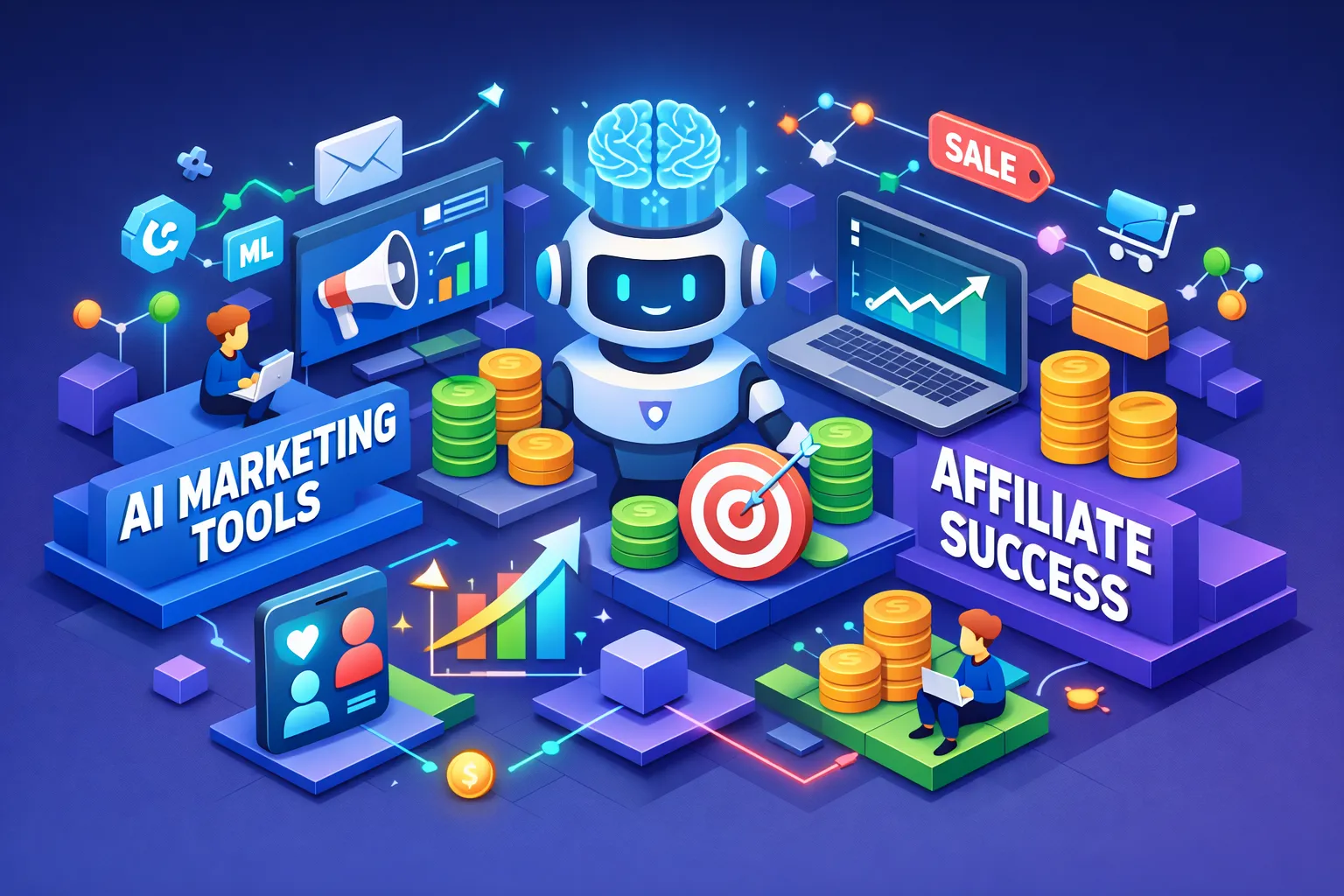
<p>AI marketing tools have multiplied faster than most affiliates can evaluate them. New platforms launch every week, each promising to automate something that already works fine without automation. The real problem isn’t finding <strong>AI-powered marketing tools</strong> for your affiliate campaigns. It’s knowing which ones actually move the needle and which ones just add another monthly charge to your credit card statement.</p>
<p>At <strong>InternetMoneyPro</strong>, we’ve tested and integrated AI-powered marketing tools across every stage of the affiliate funnel, from first draft to final conversion. What we’ve learned is consistent: the tools matter less than the system you put them in. This article covers four core functions where AI delivers measurable results for affiliates, content creation, analytics, campaign automation, and ad optimization. It also covers the ROI data, the risks most marketers skip past, and why running too many tools is costing you more than it’s saving.</p>
<h2>AI-Powered Marketing Tools for Affiliate Content Creation</h2>
<p>Not all AI writing tools are built for affiliate content. General-purpose tools produce general-purpose copy, which is a problem when your job is to connect a specific audience to a specific offer with language that converts. The AI content creation tools below earn their place because they solve a real affiliate workflow problem, not because they have the longest feature list.</p>
<h3>Jasper for on-brand affiliate copy at scale</h3>
<p>Jasper is the strongest option for affiliate teams or solopreneurs producing high-volume content across multiple formats. Its Brand Voice feature learns your tone from uploaded samples and applies it consistently across ads, emails, and blog posts. The Studio feature lets you build custom agentic workflows, so the tool doesn’t just write copy, it executes structured content pipelines with minimal input from you. With more than 100 templates and a starting price of $69 per month for the Pro plan, it makes sense for anyone writing enough content that consistency and speed are real bottlenecks.</p>
<h3>ChatGPT and ContentShake AI for research-first drafts</h3>
<p>ChatGPT works best as a fast ideation and drafting layer. It’s versatile, responds quickly to detailed briefs, and handles outline generation and angle exploration better than most dedicated tools. ContentShake AI is the better choice when SEO optimization and keyword intent are the priority. It pulls directly from Semrush’s database of over 26 billion keywords, generates topic ideas with search volume and intent data, and exports finished drafts to WordPress or Google Docs. For affiliates running content-driven SEO campaigns, ContentShake reduces tool-switching by combining research and writing in one workflow. For affiliates who need fast drafts they’ll refine manually, ChatGPT’s Plus plan at $20 per month gets the job done.</p>
<h3>What to look for beyond the feature list</h3>
<p>AI content creation tools are only as good as the brief you give them. A writing tool without a clear audience and offer focus produces generic copy that sounds fine but doesn’t convert. This is the part most tool reviews skip. The tool isn’t the variable, your input is. If you don’t know exactly who you’re writing for and what action you want them to take, no AI writing tool fixes that gap.</p>
<h2>Analytics Platforms That Show You Where the Money Is</h2>
<p>Traffic numbers are vanity metrics for affiliates. What you need is conversion data tied to specific content, keywords, and traffic sources. The AI marketing platforms worth your attention are the ones that close the gap between what’s generating clicks and what’s actually generating commissions.</p>
<h3>Semrush for keyword intelligence and content gaps</h3>
<p><a href=”https://www.semrush.com/blog/best-ai-content-marketing-tools/” target=”_blank” rel=”nofollow”>Semrush</a>’s Keyword Magic Tool remains the most practical starting point for affiliates building content strategies around search intent. When paired with ContentShake AI, it creates a direct line from keyword data to published content without requiring a separate SEO tool for each step. That efficiency matters when you’re operating as a one-person shop or a small team. The added value of seeing competitor content performance while building your own briefs is something general-purpose analytics platforms don’t replicate well.</p>
<h3>HubSpot’s AI analytics for campaign-level insight</h3>
<p>HubSpot’s AI-powered campaign reporting, contact scoring, and predictive insights are genuinely useful, but they’re built for scale. The free tier covers basic functionality. The Professional tier starts around $800 per month for the Marketing Hub, which puts it in the range of teams running significant campaigns with budget to match (<a href=”https://www.eesel.ai/blog/hubspot-ai-pricing” target=”_blank” rel=”nofollow”>see HubSpot AI pricing</a>). Its value is highest when used as part of a connected stack where marketing, sales, and contact data live in the same system. As a standalone analytics layer for a solo affiliate, the cost-to-output ratio doesn’t hold up.</p>
<h2>Campaign Automation: AI for Email Marketing and Funnel Management</h2>
<p>Email automation is where affiliates either compound their results or leak conversions. Behavior-triggered sequences, lead nurturing flows, and purchase-based segmentation are all achievable without a developer. The two platforms below suit different affiliate profiles, one built for complex multi-offer funnels, the other optimized for e-commerce buyer behavior.</p>
<h3>ActiveCampaign for behavior-triggered email sequences</h3>
<p>ActiveCampaign’s visual workflow builder handles complex multi-step funnels without requiring technical knowledge. It supports over 75 native triggers, predictive sending, and more than 900 integrations, which means it connects to most affiliate tools you’re already using. The built-in CRM add-on matters specifically for affiliates who want to track the full path from lead acquisition to commission. Deliverability rates run around 92%, which is meaningfully higher than the category average. Starting around $29 per month for up to 500 contacts, it scales affordably for most affiliate operations. For a side-by-side look at <a href=”https://www.activecampaign.com/compare/klaviyo” target=”_blank” rel=”nofollow”>ActiveCampaign vs Klaviyo</a>, the vendor comparison highlights the areas each platform prioritizes.</p>
<h3>Klaviyo for e-commerce affiliate campaigns</h3>
<p>Klaviyo is the stronger choice for affiliates promoting physical products, subscription boxes, or e-commerce brands. Its predictive lifetime value scoring, purchase-history segmentation, and native SMS-email coordination are built specifically for buyer behavior patterns. A free tier supports up to 250 contacts, giving new affiliates room to test before committing. Where it gets expensive is at scale, and it’s less flexible than ActiveCampaign for non-e-commerce funnels.</p>
<h3>Setting up automation without a developer</h3>
<p>Both platforms are designed for non-technical users. The learning curve is real but manageable. The more important point is this: marketing automation AI is only as smart as the data going in. If your audience segmentation is vague or your lead source tracking is incomplete, the automations produce mediocre results regardless of how sophisticated the platform is. Audience clarity and clean data are the actual inputs. The tool executes what you set up.</p>
<h2>How AI-Powered Marketing Tools Improve ROI: What the Data Actually Says</h2>
<p>The performance benchmarks from AI marketing implementations are worth knowing before you make any commitments. They’re also worth reading honestly, without the hype layer most tool vendors apply.</p>
<h3>Numbers worth knowing before you commit</h3>
<p>A UK retailer documented ROAS improving from 1.8:1 to 4.2:1 over six months using AI ad optimization tools, alongside a 133% revenue increase and customer acquisition cost dropping from £37 to £18 (as reported by Smart Insights, 2024). According to McKinsey’s 2023 personalization research, e-commerce personalization campaigns have yielded ROI above 600% over 12-month periods. AI-optimized ad campaigns have pushed click-through rates up 85% year over year while reducing cost per click by 33%, per WordStream’s industry benchmarks. An influencer platform case study published by Influencer Marketing Hub reported $720,000 in additional revenue on a $190,000 investment, a 324% ROI. These are real outcomes from real implementations, but they reflect best-case conditions, not averages.</p>
<h3>Why most affiliates don’t hit these numbers</h3>
<p>The tools don’t fail. The implementation does. The most common failure points are clean data, audience targeting, and campaign structure. An AI ad optimization tool can’t improve targeting if the audience definition is too broad. An AI email platform can’t personalize sequences if the segmentation logic hasn’t been set up. The technology is sound. The gap is almost always in how it’s configured and what strategy it’s attached to.</p>
<h2>The Real Cost of Running Too Many AI Tools at Once</h2>
<p>Here’s a pattern that shows up repeatedly among affiliates who aren’t getting results: they’re not using too few tools. They’re using too many.</p>
<h3>Tool sprawl kills focus and burns budget</h3>
<p>When your content tool, analytics platform, email system, and ad manager don’t connect to each other, you lose data continuity and optimization leverage at every handoff. You also spend more time evaluating and switching tools than mastering any single one. The cost compounds fast: subscription fees for tools you’re underusing, fragmented data that prevents accurate attribution, and the cognitive load of managing multiple platforms simultaneously. Fewer tools, used well, consistently outperform a bloated stack used poorly.</p>
<h3>Privacy risks and failure modes that don’t get discussed enough</h3>
<p>According to HubSpot’s 2023 State of AI report, 42% of marketers cite data privacy as a top AI disadvantage. That number exists for a reason. AI-generated content without human review creates plagiarism risks and potential SEO penalties from similarity scores that Google flags. Hallucinated data in automated campaigns, where the AI fabricates statistics or makes claims that aren’t true, damages trust and conversion rates in ways that take time to recover from. <a href=”https://skillsmatrixacademy.com/gdpr-ai-regulation-for-marketers/” target=”_blank” rel=”nofollow”>GDPR compliance</a> is a real operational requirement for any affiliate promoting to EU audiences, and assuming your AI vendor handles compliance on your behalf is a common and costly mistake. These aren’t reasons to avoid AI-powered marketing tools. They’re reasons to use them inside a system with guardrails and human oversight built in.</p>
<h2>Why a Focused System Beats a Bloated Tech Stack</h2>
<p>The affiliates getting real results from AI-powered marketing tools aren’t using more platforms. They’re using fewer, connected to a clear strategy, and that distinction is what separates consistent performers from <a href=”https://internetmoneypro.com/blog/why-affiliate-marketing-isnt-working” target=”_blank”>affiliates stuck in tool-evaluation mode</a>.</p>
<h3>The case for consolidating your AI workflow</h3>
<p>A focused system where copywriting, analytics, and automation all serve one offer to one defined audience is what produces the kind of numbers in the benchmarks above. High ROI results don’t come from affiliates who found a better tool. They come from affiliates whose tools are embedded in a structured campaign process with a clear audience, a clear offer, and consistent follow-through. The tools are the execution layer. The system is what drives the results.</p>
<h3>How InternetMoneyPro builds AI into a repeatable affiliate system</h3>
<p><a href=”https://internetmoneypro.com/blog/how-to-use-ai-for-affiliate-marketing” target=”_blank”>InternetMoneyPro’s training platform</a> integrates AI-powered marketing tools for research, drafting, and audience analysis directly into a structured affiliate system. Students don’t just learn which tools exist, they learn where each tool fits in a step-by-step process designed to generate first commissions within 60 to 90 days. The tools covered in this article are already mapped to specific stages in that system. Jasper for content production. Semrush for keyword research and content gaps. ActiveCampaign or Klaviyo for automated follow-up sequences. That mapping is what separates using AI from using it well. No technical background required, no existing audience needed, and no guesswork about which tool belongs where.</p>
<h2>The Tools That Matter Are the Ones That Fit Your System</h2>
<p>The best AI-powered marketing tools for affiliates in 2026 are the ones you can actually integrate into a working campaign process. Jasper for content at scale, Semrush for keyword intelligence, ActiveCampaign or Klaviyo for email automation, and HubSpot for analytics at the enterprise level are all solid choices, but only when they serve a clear offer, a defined audience, and a structured approach to driving conversions.</p>
<p>Affiliates seeing 300% sales increases and 650% ROI aren’t running more tools. They’re running smarter systems built around fewer, better-connected platforms. If your current setup is producing scattered results, the fix is usually not adding another tool. It’s building the system those platforms are supposed to serve.</p>
<p>If you want to see exactly how AI-powered marketing tools fit into a proven affiliate framework, visit <strong><a href=”https://internetmoneypro.com” target=”_blank”>InternetMoneyPro</a></strong> and walk through the system that maps every tool to a specific stage in the process.</p>
Leave a Reply