• Best AI-Powered Marketing Tools for Affiliates in 2026

    Best AI-Powered Marketing Tools for Affiliates in 2026

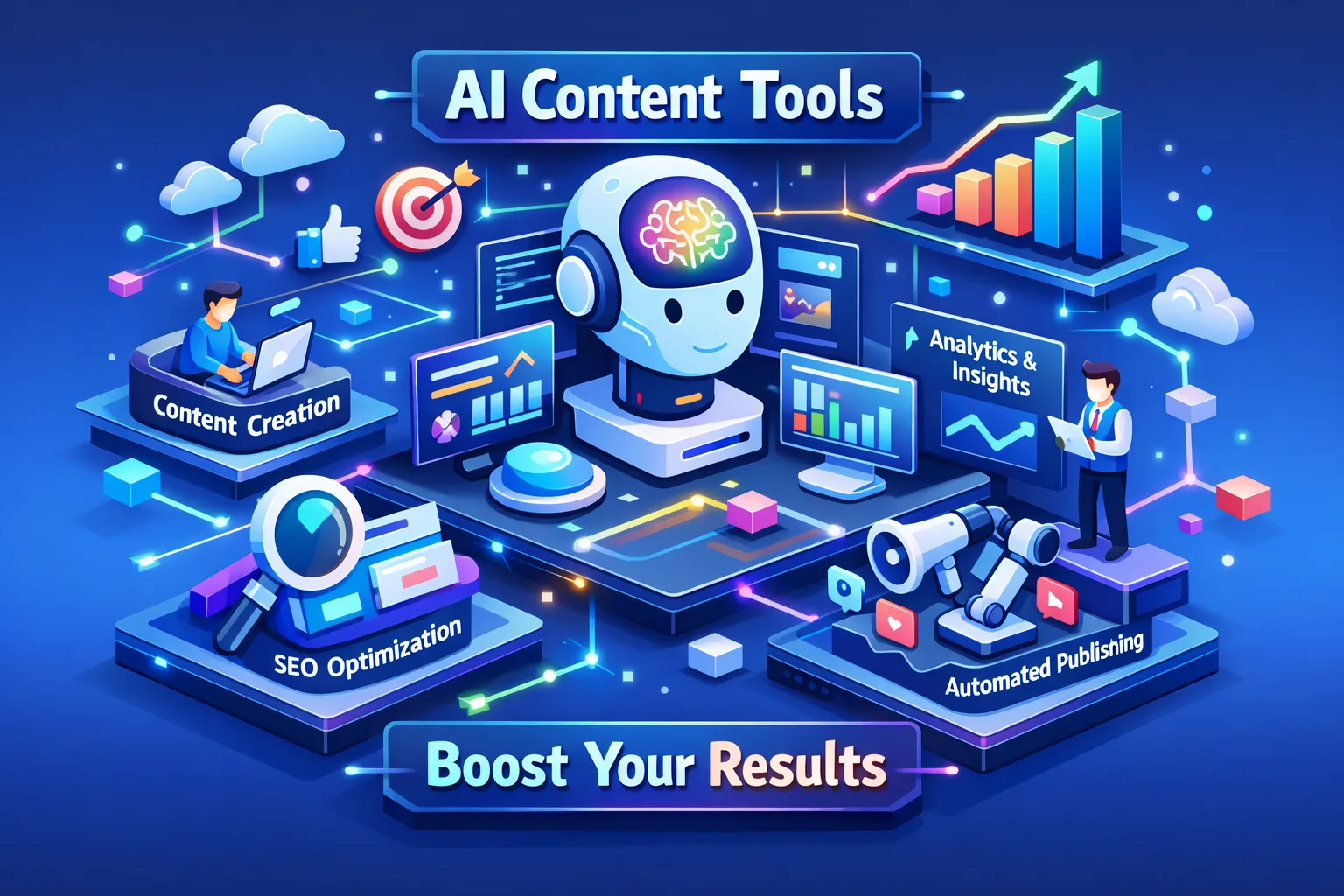
    <p>AI marketing tools have multiplied faster than most affiliates can evaluate them. New platforms launch every week, each promising to automate something that already works fine without automation. The real problem isn’t finding <strong>AI-powered marketing tools</strong> for your affiliate campaigns. It’s knowing which ones actually move the needle and which ones just add another monthly charge to your credit card statement.</p> <p>At <strong>InternetMoneyPro</strong>, we’ve tested and integrated AI-powered marketing tools across every stage of the affiliate funnel, from first draft to final conversion. What we’ve learned is consistent: the tools matter less than the system you put them in. This article covers four core functions where AI delivers measurable results for affiliates, content creation, analytics, campaign automation, and ad optimization. It also covers the ROI data, the risks most marketers skip past, and why running too many tools is costing you more than it’s saving.</p> <h2>AI-Powered Marketing Tools for Affiliate Content Creation</h2> <p>Not all AI writing tools are built for affiliate content. General-purpose tools produce general-purpose copy, which is a problem when your job is to connect a specific audience to a specific offer with language that converts. The AI content creation tools below earn their place because they solve a real affiliate workflow problem, not because they have the longest feature list.</p> <h3>Jasper for on-brand affiliate copy at scale</h3> <p>Jasper is the strongest option for affiliate teams or solopreneurs producing high-volume content across multiple formats. Its Brand Voice feature learns your tone from uploaded samples and applies it consistently across ads, emails, and blog posts. The Studio feature lets you build custom agentic workflows, so the tool doesn’t just write copy, it executes structured content pipelines with minimal input from you. With more than 100 templates and a starting price of $69 per month for the Pro plan, it makes sense for anyone writing enough content that consistency and speed are real bottlenecks.</p> <h3>ChatGPT and ContentShake AI for research-first drafts</h3> <p>ChatGPT works best as a fast ideation and drafting layer. It’s versatile, responds quickly to detailed briefs, and handles outline generation and angle exploration better than most dedicated tools. ContentShake AI is the better choice when SEO optimization and keyword intent are the priority. It pulls directly from Semrush’s database of over 26 billion keywords, generates topic ideas with search volume and intent data, and exports finished drafts to WordPress or Google Docs. For affiliates running content-driven SEO campaigns, ContentShake reduces tool-switching by combining research and writing in one workflow. For affiliates who need fast drafts they’ll refine manually, ChatGPT’s Plus plan at $20 per month gets the job done.</p> <h3>What to look for beyond the feature list</h3> <p>AI content creation tools are only as good as the brief you give them. A writing tool without a clear audience and offer focus produces generic copy that sounds fine but doesn’t convert. This is the part most tool reviews skip. The tool isn’t the variable, your input is. If you don’t know exactly who you’re writing for and what action you want them to take, no AI writing tool fixes that gap.</p> <h2>Analytics Platforms That Show You Where the Money Is</h2> <p>Traffic numbers are vanity metrics for affiliates. What you need is conversion data tied to specific content, keywords, and traffic sources. The AI marketing platforms worth your attention are the ones that close the gap between what’s generating clicks and what’s actually generating commissions.</p> <h3>Semrush for keyword intelligence and content gaps</h3> <p><a href=”https://www.semrush.com/blog/best-ai-content-marketing-tools/” target=”_blank” rel=”nofollow”>Semrush</a>’s Keyword Magic Tool remains the most practical starting point for affiliates building content strategies around search intent. When paired with ContentShake AI, it creates a direct line from keyword data to published content without requiring a separate SEO tool for each step. That efficiency matters when you’re operating as a one-person shop or a small team. The added value of seeing competitor content performance while building your own briefs is something general-purpose analytics platforms don’t replicate well.</p> <h3>HubSpot’s AI analytics for campaign-level insight</h3> <p>HubSpot’s AI-powered campaign reporting, contact scoring, and predictive insights are genuinely useful, but they’re built for scale. The free tier covers basic functionality. The Professional tier starts around $800 per month for the Marketing Hub, which puts it in the range of teams running significant campaigns with budget to match (<a href=”https://www.eesel.ai/blog/hubspot-ai-pricing” target=”_blank” rel=”nofollow”>see HubSpot AI pricing</a>). Its value is highest when used as part of a connected stack where marketing, sales, and contact data live in the same system. As a standalone analytics layer for a solo affiliate, the cost-to-output ratio doesn’t hold up.</p> <h2>Campaign Automation: AI for Email Marketing and Funnel Management</h2> <p>Email automation is where affiliates either compound their results or leak conversions. Behavior-triggered sequences, lead nurturing flows, and purchase-based segmentation are all achievable without a developer. The two platforms below suit different affiliate profiles, one built for complex multi-offer funnels, the other optimized for e-commerce buyer behavior.</p> <h3>ActiveCampaign for behavior-triggered email sequences</h3> <p>ActiveCampaign’s visual workflow builder handles complex multi-step funnels without requiring technical knowledge. It supports over 75 native triggers, predictive sending, and more than 900 integrations, which means it connects to most affiliate tools you’re already using. The built-in CRM add-on matters specifically for affiliates who want to track the full path from lead acquisition to commission. Deliverability rates run around 92%, which is meaningfully higher than the category average. Starting around $29 per month for up to 500 contacts, it scales affordably for most affiliate operations. For a side-by-side look at <a href=”https://www.activecampaign.com/compare/klaviyo” target=”_blank” rel=”nofollow”>ActiveCampaign vs Klaviyo</a>, the vendor comparison highlights the areas each platform prioritizes.</p> <h3>Klaviyo for e-commerce affiliate campaigns</h3> <p>Klaviyo is the stronger choice for affiliates promoting physical products, subscription boxes, or e-commerce brands. Its predictive lifetime value scoring, purchase-history segmentation, and native SMS-email coordination are built specifically for buyer behavior patterns. A free tier supports up to 250 contacts, giving new affiliates room to test before committing. Where it gets expensive is at scale, and it’s less flexible than ActiveCampaign for non-e-commerce funnels.</p> <h3>Setting up automation without a developer</h3> <p>Both platforms are designed for non-technical users. The learning curve is real but manageable. The more important point is this: marketing automation AI is only as smart as the data going in. If your audience segmentation is vague or your lead source tracking is incomplete, the automations produce mediocre results regardless of how sophisticated the platform is. Audience clarity and clean data are the actual inputs. The tool executes what you set up.</p> <h2>How AI-Powered Marketing Tools Improve ROI: What the Data Actually Says</h2> <p>The performance benchmarks from AI marketing implementations are worth knowing before you make any commitments. They’re also worth reading honestly, without the hype layer most tool vendors apply.</p> <h3>Numbers worth knowing before you commit</h3> <p>A UK retailer documented ROAS improving from 1.8:1 to 4.2:1 over six months using AI ad optimization tools, alongside a 133% revenue increase and customer acquisition cost dropping from £37 to £18 (as reported by Smart Insights, 2024). According to McKinsey’s 2023 personalization research, e-commerce personalization campaigns have yielded ROI above 600% over 12-month periods. AI-optimized ad campaigns have pushed click-through rates up 85% year over year while reducing cost per click by 33%, per WordStream’s industry benchmarks. An influencer platform case study published by Influencer Marketing Hub reported $720,000 in additional revenue on a $190,000 investment, a 324% ROI. These are real outcomes from real implementations, but they reflect best-case conditions, not averages.</p> <h3>Why most affiliates don’t hit these numbers</h3> <p>The tools don’t fail. The implementation does. The most common failure points are clean data, audience targeting, and campaign structure. An AI ad optimization tool can’t improve targeting if the audience definition is too broad. An AI email platform can’t personalize sequences if the segmentation logic hasn’t been set up. The technology is sound. The gap is almost always in how it’s configured and what strategy it’s attached to.</p> <h2>The Real Cost of Running Too Many AI Tools at Once</h2> <p>Here’s a pattern that shows up repeatedly among affiliates who aren’t getting results: they’re not using too few tools. They’re using too many.</p> <h3>Tool sprawl kills focus and burns budget</h3> <p>When your content tool, analytics platform, email system, and ad manager don’t connect to each other, you lose data continuity and optimization leverage at every handoff. You also spend more time evaluating and switching tools than mastering any single one. The cost compounds fast: subscription fees for tools you’re underusing, fragmented data that prevents accurate attribution, and the cognitive load of managing multiple platforms simultaneously. Fewer tools, used well, consistently outperform a bloated stack used poorly.</p> <h3>Privacy risks and failure modes that don’t get discussed enough</h3> <p>According to HubSpot’s 2023 State of AI report, 42% of marketers cite data privacy as a top AI disadvantage. That number exists for a reason. AI-generated content without human review creates plagiarism risks and potential SEO penalties from similarity scores that Google flags. Hallucinated data in automated campaigns, where the AI fabricates statistics or makes claims that aren’t true, damages trust and conversion rates in ways that take time to recover from. <a href=”https://skillsmatrixacademy.com/gdpr-ai-regulation-for-marketers/” target=”_blank” rel=”nofollow”>GDPR compliance</a> is a real operational requirement for any affiliate promoting to EU audiences, and assuming your AI vendor handles compliance on your behalf is a common and costly mistake. These aren’t reasons to avoid AI-powered marketing tools. They’re reasons to use them inside a system with guardrails and human oversight built in.</p> <h2>Why a Focused System Beats a Bloated Tech Stack</h2> <p>The affiliates getting real results from AI-powered marketing tools aren’t using more platforms. They’re using fewer, connected to a clear strategy, and that distinction is what separates consistent performers from <a href=”https://internetmoneypro.com/blog/why-affiliate-marketing-isnt-working” target=”_blank”>affiliates stuck in tool-evaluation mode</a>.</p> <h3>The case for consolidating your AI workflow</h3> <p>A focused system where copywriting, analytics, and automation all serve one offer to one defined audience is what produces the kind of numbers in the benchmarks above. High ROI results don’t come from affiliates who found a better tool. They come from affiliates whose tools are embedded in a structured campaign process with a clear audience, a clear offer, and consistent follow-through. The tools are the execution layer. The system is what drives the results.</p> <h3>How InternetMoneyPro builds AI into a repeatable affiliate system</h3> <p><a href=”https://internetmoneypro.com/blog/how-to-use-ai-for-affiliate-marketing” target=”_blank”>InternetMoneyPro’s training platform</a> integrates AI-powered marketing tools for research, drafting, and audience analysis directly into a structured affiliate system. Students don’t just learn which tools exist, they learn where each tool fits in a step-by-step process designed to generate first commissions within 60 to 90 days. The tools covered in this article are already mapped to specific stages in that system. Jasper for content production. Semrush for keyword research and content gaps. ActiveCampaign or Klaviyo for automated follow-up sequences. That mapping is what separates using AI from using it well. No technical background required, no existing audience needed, and no guesswork about which tool belongs where.</p> <h2>The Tools That Matter Are the Ones That Fit Your System</h2> <p>The best AI-powered marketing tools for affiliates in 2026 are the ones you can actually integrate into a working campaign process. Jasper for content at scale, Semrush for keyword intelligence, ActiveCampaign or Klaviyo for email automation, and HubSpot for analytics at the enterprise level are all solid choices, but only when they serve a clear offer, a defined audience, and a structured approach to driving conversions.</p> <p>Affiliates seeing 300% sales increases and 650% ROI aren’t running more tools. They’re running smarter systems built around fewer, better-connected platforms. If your current setup is producing scattered results, the fix is usually not adding another tool. It’s building the system those platforms are supposed to serve.</p> <p>If you want to see exactly how AI-powered marketing tools fit into a proven affiliate framework, visit <strong><a href=”https://internetmoneypro.com” target=”_blank”>InternetMoneyPro</a></strong> and walk through the system that maps every tool to a specific stage in the process.</p>
  • facebook ads ai: 7 tools to boost creatives, targeting & ROI

    facebook ads ai: 7 tools to boost creatives, targeting & ROI

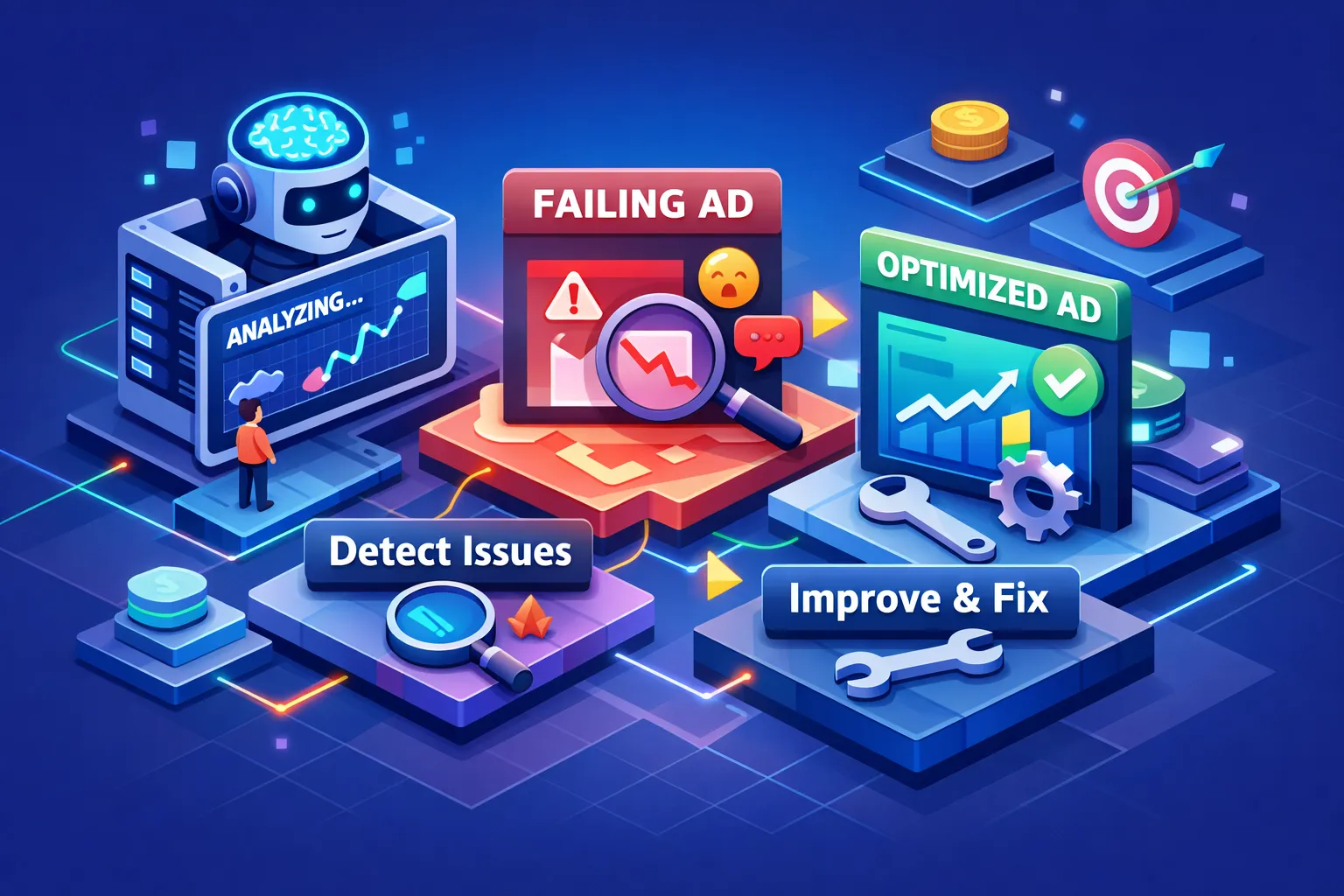
    facebook ads ai reveals which creatives drive growth and which drain budget. AI tools for Facebook ads, from Meta Advantage+ to third-party ad generators and autonomous media buyers, make creative testing, targeting, and bidding faster. Below you’ll find seven practical tools and a single-offer playbook that improve creative automation, dynamic creative optimization, and bidding so you can scale with clearer results.

    Quick summary

    • Seven tools to try: Meta Advantage+, InternetMoneyPro templates, AI ad generators, creative automation and DCO platforms, Madgicx, AdStellar, and Revealbot.
    • Single-offer playbook: choose one offer and one clear KPI (target CPA or ROAS), and record baseline metrics before changing creative.
    • Clean signals first: install Meta Pixel and Conversions API, map purchases and value, and verify deduplication so Meta can learn properly.
    • Tight seed audiences: use past buyers, recent converters, and high-intent engagers; prioritize recency and intent over audience size.
    • Creative inventory and DCO: provide 6 to 15 varied assets (photos, short videos, UGC, headlines, and captions) and enable dynamic creative to test hooks quickly.
    • Bidding and cadence: use one bid objective across tools, run three- to seven-day learning tests, then follow an eight-week plan to scale.

    Quick start: single-offer playbook with facebook ads ai

    Start small to get clear signals. Begin with one offer and a single measurable goal, choosing a product or promotion with a reliable landing page and known conversion flow. Record baseline metrics (average order value, conversion rate, and EPC) so you can measure improvement after changing creative and audience settings.

    Feed the algorithm clean signals from day one by installing the Meta Pixel and setting up the Conversions API, mapping purchase, value, currency, and content_ids for proper deduplication and revenue tracking. Verify event delivery in Events Manager and fix missing-parameter warnings before you push budget so the learning phase does not waste time or money.

    • Map purchase, value, currency, and content_ids
    • Enable server-side Conversions API and deduplication
    • Use Test Events and Events Manager verification

    Once those basics are in place, use Advantage+ or your chosen prospecting approach to gather initial conversion data and keep setup mistakes to a minimum with proven templates. If you’re rebuilding campaigns from scratch and need a step-by-step reset, see Starting Over With Affiliate Marketing: The Second Attempt Blueprint | InternetMoneyPro. Then structure your creative inventory so dynamic creative optimization (DCO) has the variations it needs to surface winners across placements.

    Audience segmentation: feed the AI signals it needs

    Signal quality matters more than scale. Prioritize first-party signals such as past buyers, recent converters, and high-intent engagers, and export lists from the last 30 to 90 days. Segment those lists by action—recency and intent matter more than raw size—because a broad seed dilutes signal and makes lookalikes noisy.

    Use Meta Advantage+ for prospecting when you have moderate data and want the system to find patterns. Choose manual lookalikes when you have a proven, high-value segment and need tighter control over match rate and exclusions. For a practical walkthrough on setting up Meta’s automated prospecting, see this Meta Advantage+ guide. Send CRM lists, lead-form results, and offline conversions into Ads Manager via the Conversions API so events tie back to revenue and include order IDs where possible for accurate value attribution. Integrate creative automation and DCO so the ad platform can match creative variants to audience signals across placements and surface winning combinations faster.

    Turn data into a testing plan: export your best 30- to 90-day buyers, segment engagers by action, send order IDs through the Conversions API, and run parallel tests of automated audiences versus lookalikes. Monitor match rates and conversion value and scale the approach that consistently raises ROAS. When you settle on reliable seeds, move to creative testing with a clear bid objective.

    Creative automation and dynamic creative optimization

    Build a diverse creative inventory the algorithm can learn from. Aim for 6 to 15 assets—photos, short videos, UGC clips, distinct headlines, and 4 to 6 caption variants—and include different hooks or value propositions so the system has meaningful permutations to test.

    Feed those assets into an AI ad generator or creative hub and enable dynamic creative optimization so the platform assembles permutations automatically instead of relying on manual A/B tests. Consider the top AI marketing tools when choosing a creative hub. Score creatives on hard metrics over a 7- to 14-day window and prune consistent underperformers. Track click-through rate, conversion rate, and cost per acquisition, keep the top performers, and rotate fresh variants to prevent fatigue while aiming for three to six winners.

    Treat automated tools as assistants that surface likely winners rather than as decision-makers to trust without review. Review winning combinations, validate attribution, and update creative briefs where needed. Once hooks and formats prove reliable, pair them with tight audiences and a single bid objective before scaling.

    Bid automation and smart scaling with AI media buyers

    Translate your business goal into one bid objective and apply it consistently across tools. Use target CPA for a stable cost per acquisition or target ROAS for revenue-weighted growth. Set the same goal across platforms so signals do not conflict and facebook ads ai can optimize toward a single outcome.

    Add third-party platforms like Madgicx, AdStellar, or Revealbot when you need autonomous bidding, cross-account scaling, or richer rule logic than Ads Manager provides. These tools can reallocate budgets and execute advanced rules, but factor vendor costs, often $49 to several hundred per month or a small percent of spend, into your CAC math before enabling automation.

    Protect scaling with guardrails: daily caps, emergency pause rules, and rollback triggers to prevent automation from compounding mistakes. Include a manual override in your SOP, for example pause any auto-scale that increases spend more than 30 percent in 48 hours and require a 24-hour review before resuming. Pair these rules with a creative cadence so fresh ads support higher spend without degrading returns.

    Measure, attribute and benchmark: stop guessing performance

    Map key events such as purchases, leads, and value to the Conversions API and verify deduplication with the browser pixel so you recover conversions lost to privacy changes and sharpen optimization signals. Madgicx’s write-up on the Facebook Conversions API is a helpful technical reference if you need troubleshooting steps or implementation tips: Madgicx — Facebook Conversions API. Audit Events Manager weekly to catch drops, mismatches, or parameter changes before they skew reporting.

    Treat directional benchmarks as rough guides, not guarantees. Reported uplifts vary by vertical, so validate numbers for your product; some advertisers report ROAS gains from 30 percent up to 150 percent and CPA drops of 20 percent to 40 percent after adding new tooling. Report absolute CPA and profit, not just relative lifts, and avoid declaring winners until you see stable performance across at least 50 conversions or two full learning cycles. Use three- to seven-day windows for routine decisions and scale only after targets hold for consecutive days.

    When measurement and attribution are reliable, automated insights become usable for scale decisions. The following section presents an eight-week test plan that applies these principles step by step.

    8-week step-by-step test plan using facebook ads ai

    Start with a data-first approach in Weeks 1 and 2: prepare your creative inventory, install the Meta Pixel and Conversions API, and map key events so signals are clean before you spend. Launch a broad learning campaign sized to capture about 50 conversions in the test window; a simple rule of thumb is to multiply your target CPA by 50 to estimate the initial budget. Track early signals, confirm event delivery, and pause anything that shows missing parameters or poor match rates.

    Weeks 3 and 4 focus on creative triage and audience work. Review ad-to-conversion paths, pause low-performing variants, and tighten or expand audiences based on where conversions come from. Use creative automation platforms to generate new variants and feed winning elements back into learning campaigns while keeping a shortlist of assets to rotate into scale tests.

    Weeks 5 and 6 are for safe automation and controlled scaling. Turn on automated bidding or add a rules engine such as Revealbot with conservative caps and pacing to protect CPA, and increase budgets in measured steps, for example 20 to 30 percent every 48 to 72 hours once CPAs stabilize. Monitor attribution shifts so you can roll back quickly if costs drift above target.

    Weeks 7 and 8 consolidate winners and expand systematically: move spend into top-performing creatives and audiences, add retargeting flows, and test lookalikes or adjacent segments at small scale. Lock dashboards and export raw data for a post-test analysis that feeds the next cycle. The plan succeeds when facebook ads ai has a single offer, clean events, and disciplined goals, so start Week 1 with the objective of reaching those 50 conversions.

    Taking facebook ads ai from tools to ROI

    Tools only matter if they move the bottom line. facebook ads ai multiplies results when you pair it with the single-offer playbook, tight seed audiences, and DCO-driven creative testing. For a systems-level perspective on building repeatable affiliate funnels and workflows, see What an Affiliate Marketing System That Works Actually Looks Like | InternetMoneyPro. When measurement is accurate and goals are consistent, the system surfaces the combinations that improve profit.

    More practical templates, case studies, and ongoing advice are available on The Blog | Real Answers for Real Affiliate Marketers | InternetMoneyPro.

  • Generative AI for marketing: 12 use cases + 30-day playbook

    Generative AI for marketing: 12 use cases + 30-day playbook

    Generative AI for marketing can be the fastest lever affiliates use right now to automate content, personalize ads, and shorten launch cycles. At InternetMoneyPro we ran pilots that turned those capabilities into repeatable steps focused on measurable wins you can run this month.

    You will walk away with three practical assets: a prioritized list of generative ai for marketing use cases that move affiliate funnels, a simple ROI checklist and payback formula, and a week-by-week 30-day playbook you can run immediately. The examples include AI-generated content, personalization patterns, automation setups, and prompt templates that cut creative setup time. Follow conservative benchmarks from recent pilots to model expected lift and start capturing predictable gains this quarter.

    The bottom line

    Start small and keep decisions simple so you get fast feedback and avoid wasted spend. Prioritize personalized ads, dynamic visuals, recommendation-driven commerce, and automated engagement for measurable lifts.

    • Start small: pick one offer and run a controlled pilot with clear success criteria.
    • Prioritize use cases that map to clicks, conversions, revenue, or hours saved.
    • Measure payback: calculate payback days and projected ROI before you scale.
    • Engineer prompts to speed iteration: generate three headlines and one short ad per offer.

    Expect visible progress within 60 to 90 days when you follow a repeatable system and focus on one offer at a time. Use the playbook below to move from experiment to scale.

    Main content

    Generative AI changes how marketers create, test, and deliver messages by making creative work repeatable and measurable. Top applications are personalized content creation, dynamic ad generation, product visualization, and automated customer engagement using tools like Google Gemini, DALL·E, and modern large language models. These approaches scale output while keeping manual effort low. For a broad catalog of real-world examples you can adapt, review Google Cloud’s collection of generative AI use cases.

    Focus on four starting points and measure lift by cohort or channel: personalized ad campaigns, dynamic creative optimization, product visualization, and customer engagement automation. Personalized campaigns match headlines and imagery to segments at scale, dynamic creative optimization assembles and tests many variations, product visualization produces lifestyle assets for ads and listings, and automated engagement handles FAQs, upsells, and micro-conversations. Set up tests so you can attribute gains to specific changes in creative or targeting.

    High-value roles

    Start with plays that answer direct business questions: get more clicks, lift conversion, scale creative output, or reduce response time. Personalized ads and creative at scale often deliver the clearest wins because small relevance improvements compound across volume. The repeatable pattern is simple: segment audiences, generate variants, and let data pick winners. If your affiliate channels are underperforming, our post Why Affiliate Marketing Isn’t Working for You (And the Real Fix) outlines common failures and the practical fixes we use in pilots.

    Product visualization and storefront personalization are powerful conversion levers, and turning catalogs into short videos or lifestyle images shortens the path to purchase. Customer engagement automation extends reach without adding headcount when you embed LLM-driven assistants on high-intent pages. Run narrow pilots, measure CTR and conversion lift, and scale templates that show clear payback.

    Operational tasks

    Real-world use cases cluster around three operational tasks where generative ai for marketing replaces manual scale work with predictable outputs: making creative repeatable, turning catalogs into commerce assets, and automating conversations. Each task maps to straightforward KPIs so teams can test quickly and scale what works. Below are practical notes and realistic expectations for each play.

    Personalized ad campaigns and creative generation: Map core audience segments, generate three headlines and three image variants per segment, pair with two CTAs, and run A/B tests. Track CTR, CPA, and conversion rate by segment to compare performance across cohorts. A properly configured pipeline can replace months of manual design with a small set of high-quality variants.

    Product visualization and commerce optimization: Prioritize SKUs by margin and traffic, generate lifestyle images or 6 to 15 second videos, and replace static assets in top listings to test impact. Measure changes to search position and conversion after swapping richer visuals into pages with the most traffic. When done at scale, tailored visuals often shorten the purchase decision and lift daily revenue.

    Conversational and recommendation systems: List common purchase intents and friction points, craft prompts for micro-conversations, and embed LLM-powered assistants on high-intent pages. Measure session-to-conversion, cart recovery, and average order value to see direct revenue impact. Keep a human reviewer in the loop during early testing to catch quality issues and handle edge cases.

    Practical use cases

    Here are the most practical generative ai for marketing use cases you’ll test in pilot work. Each maps to a clear metric: clicks, conversions, revenue, or hours saved. Use this list to prioritize pilots based on data readiness and expected payback.

    • Personalized ad copy and creative variants
    • Dynamic creative optimization (DCO) across formats and placements
    • Product visualization: lifestyle images and short videos
    • Catalog-to-content automation for listings and feeds
    • Recommendation-driven commerce and cross-sell engines
    • LLM-powered chat assistants for high-intent pages
    • AI-generated landing page variants and funnels
    • Audience segmentation and persona synthesis from first-party data
    • Email subject lines and personalized email bodies
    • Social content repurposing and short-form scripts
    • Localized creatives and regional messaging at scale
    • Automated creative pipelines with prompt templates and governance

    Personalized ad campaigns tend to show the fastest ROI because they directly improve relevance and CTR at scale. Case pilots often report double-digit CTR lifts and reduced creative production time when teams replace manual design cycles with model-driven variants. Prioritize pilots that target pages or ad sets with enough volume to show meaningful changes within a week.

    Automation and solid prompt engineering keep creative fresh while lowering operational load. Chat assistants, localized variants, and dynamic ad combinations require governance and quality checks to maintain brand voice and legal compliance. Start with templates, iterate on prompts, and only expand successful flows into your content library.

    How to prioritize and test

    Match the play to your biggest bottleneck: if acquisition falters, start with personalized ads and dynamic headlines; if conversion lags, prioritize product visuals and automated recommendations. Score opportunities by data readiness, expected ROI, and hours saved to decide what to build first. A simple scoring matrix keeps choices objective and repeatable.

    Run short A/B tests with clear sample sizes and a human-in-the-loop for quality control. Iterate on prompts and templates rather than rebuilding flows from scratch to accelerate results. Track conversion lift, cost-per-acquisition, and creative velocity to judge whether a template is worth scaling. For guidance on which KPIs to track and how to structure measurement, see Google’s deep dive on measuring gen‑AI success: a KPIs deep dive.

    Ship small and measure payback days before you increase spend. Establish governance upfront for copyright, consent, and brand review to avoid rework. Let real results guide scaling decisions rather than chasing every new tool.

    Take action with generative AI for marketing

    Below is a concise operational checklist, a simple payback formula, and a 30-day playbook you can execute without heavy technical overhead. Collect baseline metrics and model expected incremental revenue before you allocate media spend. Use short tests to protect budget while you validate templates.

    ROI checklist: Collect baseline CPA, baseline conversion rate, average order value, gross margin per order, daily traffic to test pages, creative and tool setup costs, and planned media spend. Plug these values into a simple model to project incremental revenue and time to payback. Use conservative estimates so you can make quick scale/no-scale decisions after a week of results. For industry perspectives on AI ROI and benchmarks, review Snowflake’s analysis of ROI for generative agentic AI and the Marketing AI Institute’s AI ROI report.

    Payback formula: Payback days = (one-time setup cost + test media spend) / (incremental gross profit per day). Incremental gross profit per day = expected daily incremental conversions × (average order value × margin). For a quick ROI check, projected ROI (%) = (incremental revenue − incremental cost) / incremental cost × 100.

    Prompt rules: keep tasks specific, set tone and constraints, and ask for multiple variations. Example headline prompt: “Generate three headlines under 35 characters for [product] targeting [audience], emphasize [benefit], include urgency if applicable.” Example short ad prompt: “Write one 25-40 word social ad for [product], include clear CTA and one primary benefit, conversational tone.” For images, try: “Produce a 4:5 lifestyle image of [product] being used by [persona] in [setting], natural lighting, focus on usage context.”

    30-day playbook: run these weekly tasks to generate content, test, and scale winners. Keep each pilot narrow and focused on measurable pages or ad sets. Prepare tracking before launch so results are attributable from day one.

    • Week 1: Plan and baseline, choose one offer, capture baseline metrics, map audience segments, and rank three pilot pages or ad sets by traffic and impact.
    • Week 2: Create and set up, generate three headlines, three image/video variants, and one short ad per segment; build two variants for an A/B test and prepare tracking (UTMs, conversions).
    • Week 3: Run and optimize, launch tests, monitor performance daily for anomalies, iterate on top-performing creative with one or two prompt adjustments, and keep human review in place.
    • Week 4: Analyze and scale, calculate payback days and projected ROI, scale winners, and add successful templates to your content library.

    Execution beats chasing every new tool. If you want a guided template and diagnostic framework, see our How to Use AI for Affiliate Marketing: A Real Daily Workflow for step-by-step checklists and AI-enhanced prompts to help beginners reach their first commissions within 60 to 90 days. For broader resources and ongoing support, visit Affiliate Marketing That Actually Works | InternetMoneyPro.

  • AI in marketing automation: Personalize offers at scale

    AI in marketing automation: Personalize offers at scale

    AI in marketing automation can personalize affiliate offers at scale without increasing your creative backlog. It uses dynamic content, predictive segmentation and live offer routing to map signals like behavior, recency, estimated lifetime value and intent to the right creative and landing page. The result is a clear mental model for where to plug an AI module into your funnel and which signals actually move conversions, so affiliate programs can reduce wasted creative spend and capture more conversions.

    This guide shows how AI automation replaces slow A/B cycles with real-time swaps of headlines, CTAs and offers based on context and intent. That approach improves relevance, reduces the number of manual variations to maintain and speeds iteration when predictive workflows handle segmentation and routing. It also highlights practical AI use cases and conversational tools so you can pick the parts to try first.

    Quick summary

    • Signals, scores, routing: Score visitors in real time using behavioral clicks, recency, estimated LTV and intent. Use that score to map visitors to creatives and landing pages with matching intent and predicted value.
    • Prioritize revenue playbooks: Select one or two high-impact use cases that directly drive conversions and run fast tests. Keep experiments tight and measure revenue lift before scaling.
    • Start a focused pilot: Run a single-offer experiment, define three signals, build a simple score and route the top segment for seven days. Measure revenue lift before you scale.
    • Measure few KPIs: Track incremental revenue, conversion lift, CAC and CLV. Keep the metric set small so decisions are clear and fast.
    • Guard data and governance: Do a data audit, assign gatekeepers and embed privacy checks because dirty data and legal oversights kill pilots faster than bad models. Document data flows and vendor responsibilities before production.

    How AI personalizes affiliate offers at scale

    Dynamic creative optimization implements routing by swapping headlines, CTAs, images and offers across pages, emails and ads based on context and signal strength. Predictive segmentation makes the swaps measurable and repeatable because models reshape segments as new behavior and transaction data arrive. Small percentage uplifts become meaningful revenue when a high-intent visitor is routed directly to a high-converting affiliate funnel.

    InternetMoneyPro’s adaptive promotion module watches clicks, conversions and revenue in real time and swaps affiliate promos automatically. It flags broken links or weak creatives with a diagnostic framework and helps beginners reach first commissions within a 60 to 90 day timeline when the system is followed. Setup is designed to be repeatable, and the next section explains how to wire this module into a typical funnel and measure lift.

    Top AI use cases that move the needle

    Prioritize playbooks that increase revenue rather than only saving time. Start with one or two use cases, test them quickly and scale what drives measurable returns. Treat these as parts of an AI in marketing automation stack that routes intent into offers and measures results.

    Predictive segmentation and lead scoring move visitors into tailored affiliate promos based on intent and predicted value. Use behavioral, transactional and recency signals to prioritize segments by expected revenue impact. Start with behavior-based segments that map cleanly to a specific offer so you can test one segment, one creative and one CTA before measuring lift.

    Generative content increases creative velocity for ads, emails and landing pages so teams can produce headline and hook variants quickly. Humans should review outputs for brand voice and compliance, and that review lets you run more tests without slowing down. Use this prompt template to generate intent-tailored headline variants: “Write 10 short headlines for [offer] targeting users who [behavioral signal], tone: [brand voice], include one curiosity-led and one price-led option.”

    Conversational AI captures mid-funnel interest, qualifies intent, recommends offers and delivers tracked affiliate links. Build simple flows for qualification, offer recommendation, link delivery and tracking, and tie chat events back to your promotion engine for clearer attribution and higher lead capture. Instrument these playbooks in measurement and rapid experiments to iterate on the highest-impact patterns first.

    Choosing platforms for AI in marketing automation

    Choose a platform based on scale, team skills and how much complexity you can tolerate. Broadly, options fall into full-suite enterprise stacks, mid-market/SMB platforms, or best-of-breed point tools you stitch together. Data ownership and operational capacity determine how quickly you can run AI-driven marketing workflows, so map those constraints before shortlisting vendors.

    Enterprise suites such as Salesforce Einstein and Adobe handle deep data fusion and real-time predictions, but they require a CDP and a team to manage governance and integrations. Expect high integration costs and the need for specialized operations. Choose these only if your organization has the budget and processes to match.

    Mid-market tools like HubSpot, Klaviyo and Braze trade raw power for speed and usability. They offer visual journey builders, prebuilt models and lower technical debt, which makes them a good fit for fast wins with limited developer resources. Choose these when you need quick ROI and fewer engineering cycles.

    Before you buy, verify integration and data posture. Must-haves include:

    • Clean global identifiers for contacts
    • A CDP or unified contact store
    • Event-level tracking across channels
    • Stable attribution and timestamped events
    • Reliable API or batch feeds with known latency

    Latency and bad joins will destroy model accuracy, so simulate a one-week feed to validate quality and timing. Map vendor shortlists to concrete use cases so you can shortlist vendors quickly and practically.

    A practical implementation checklist for SMBs and enterprises

    Run a focused 90-day pilot around a single, measurable win for SMBs. Week 1 should be a data audit to confirm customer IDs, email hygiene and a clean conversion metric. Week 2 is hookup, connecting a lean AI marketing tool, mapping fields and validating test events. Weeks 3 to 6 run one use case such as dynamic email offers, then measure and iterate.

    In weeks 7 to 12, measure lift and scale the winning variant. Track KPIs such as open rate, click-to-conversion, incremental revenue per recipient and cost to acquire the incremental customer. Set a minimal acceptance threshold, for example 10 to 15 percent relative lift or payback within the pilot period. Keep tooling minimal to avoid integration drag and aim for one clear ROI result you can present to stakeholders.

    For enterprises, treat governance as a product requirement from day one. Run a guarded scale after a contained pilot, validate results with parallel holdouts and KPI gates, and require data access controls, model audit logs, versioning and legal signoffs for privacy and vendor risk. Enforce KPI gates at each phase so any drift triggers rollback or deeper review.

    Assign four core roles early and lock responsibilities for the pilot and scale. Clear ownership speeds decisions and prevents gaps during experiments. Below are the roles to assign.

    • Marketing owner: defines the use case, success metric and creative variants. Approves final creative and go/no-go decisions.
    • Ops/analytics: builds experiments, runs holdouts and reports KPIs. Validates tracking, reports and cohort comparisons.
    • IT/infra: secures connectors and enforces access controls. Monitors uptime and API performance.
    • Compliance reviewer: signs off on data use and legal risk. Reviews vendor contracts and privacy requirements.

    Choose vendors on practical criteria such as robust data connectors, model transparency, uptime SLA and predictable cost per tested variant. Favor solutions that expose confidence intervals and logs rather than opaque scoring, train teams on failure modes and how to read model outputs, and build dashboards that show holdout comparisons and attribution. The following section explains how to instrument KPIs and build dashboards that prove value.

    KPIs and measurement: prove ROI from AI-driven automation

    Choose a small set of priority KPIs and stick with them. Focus on incremental revenue, conversion lift, customer acquisition cost, changes in customer lifetime value and time saved per campaign converted to dollar savings. Capture efficiency gains by multiplying hours saved by fully loaded hourly cost and add reduced tool or media spend to put automation gains on the income statement. Align the primary metric with your acquisition or monetization goal so experiments drive the right decision.

    Design experiments that show causal lift using simple, repeatable frameworks. Use randomized holdouts and stable attribution windows, and define run-length up front to avoid seasonal noise. Compare your AI workflow against the existing baseline and report lift as both relative percent and absolute dollars per cohort, since small consistent lifts across multiple tests beat a single headline result.

    Build a lean dashboard that answers whether the change moved the business. Track baseline versus AI lift, CPA or CAC, revenue per visit, revenue per user, CLV delta, content velocity, tool adoption rate and time-saved dollars. Sample fields to plug into a sheet include test name, cohort size, attribution window, baseline conversion rate, AI conversion rate, absolute revenue lift, hours saved and net ROI. Run pilots with weekly check-ins and move to monthly reviews as you scale, using template formula cells for percent lift, dollar lift and payback time so stakeholders can review results quickly.

    Pitfalls, privacy and governance: avoid common failures

    Common failures are where small pilots fail when teams treat AI in marketing automation like a magic button instead of an engineering problem. Dirty data, over-automation and legal oversights turn pilots into noise quickly, so assign concrete gatekeepers and run validation tests before scaling. Apply guardrails to stop common failures and keep experiments honest.

    Data issues are the usual killers: duplicate IDs, stale events, missing revenue joins and misrouted affiliate links create false positives and inflate lift estimates. Fix these by canonicalizing identifiers at ingest, adding sanity validation checks and running a seven-day reconciliation to spot drift. Use automated alerts for sudden event volume changes and maintain a running list of known data exceptions. Real data hygiene beats clever models every time.

    Privacy and compliance are mandatory because profiling rules change legal exposure under GDPR and CCPA. Require consent checks before personalization, minimize the data fed into models and run a DPIA before any model accesses personal data, then log the DPIA outcome. Insist vendors sign clauses for purpose limitation, data deletion on demand, breach notification timelines and subprocessor transparency, and audit vendors annually.

    Keep humans in the loop for brand-sensitive decisions such as creative, pricing or promotional changes. Add review gates and an explicit rollback plan, instrument alerts for anomalous model behavior and set automated throttles so experiments scale slowly. Prefer small, revenue-focused pilots with manual approvals, measure lift with holdouts and expand only after consistent ROI. Keep operations simple: pick one offer, test it, measure and scale predictably.

    AI in marketing automation: make personalization scale

    Personalization at scale should be a repeatable system rather than a spray-and-pray tactic. Use signals, scores and routing to turn behavioral data into clear actions by tracking clicks and recency, weighting estimated lifetime value and routing top leads to the most relevant offers. Prioritize revenue-first playbooks and measure them quickly so decisions are clear.

  • Predictive Sales AI: Plan Your Affiliate Commission Timeline

    Predictive Sales AI: Plan Your Affiliate Commission Timeline

    Missed paydays are a common problem when forecasting relies on spreadsheets and gut calls. predictive sales ai uses machine learning on historical conversions, engagement, campaign activity, and external signals to forecast revenue and deal outcomes. The models update as new data arrives so forecasts reflect recent campaign behavior and shifting audience intent. For affiliates the practical output is a daily or weekly commission projection you can schedule around and act on before a payday slips away.

    The bottom line

    Here are the essentials to decide quickly whether to test predictive sales ai on your funnels. Use these points to plan a focused pilot and judge results fast.

    • Core benefit: predictive sales ai turns historical signals into scheduled commission projections so you can act before paydays slip away. It replaces guessing with probability-based revenue estimates you can use to time promos and prepare cash flow.
    • Necessary inputs: feed clean conversion timestamps, campaign and UTM IDs, click/postback data, traffic volumes, and average order value. Connect tracking, ad, and payout systems so the pipeline stays reliable.
    • How to act: convert probabilities into expected revenue, then schedule promos, reallocate spend, or pause low-return funnels. Make one change at a time and measure results against your baseline.
    • Vendor checklist: prioritize integrations, explainability, retraining cadence, and measurable ROI over slick demos. Ask for short integration timelines and clear export options.
    • Pilot steps: export 30–90 days of data, define KPIs, run a 4–8 week pilot, and compare predicted versus actual commissions. Use those results to validate ROI before you scale.

    What predictive sales ai does for affiliate marketers

    For affiliate marketers, predictive sales ai turns raw event streams into ranked commission forecasts with confidence scores you can use to prioritize work this week. Models learn which campaigns, creatives, and audiences drive revenue, send alerts when a promotion shows early slippage, and produce daily or weekly commission curves you can schedule around. Below are the core capabilities you will use and how each translates into immediate decisions.

    For a practical daily workflow, read How to Use AI for Affiliate Marketing: A Real Daily Workflow.

    • Probability-to-revenue forecasts: expected commission and a confidence range by campaign so you schedule promos on the highest-return days. Use expected revenue to set realistic cash-flow targets and size daily spend.
    • Predictive lead scoring: ranks audiences by conversion likelihood so you focus creative and spend on top segments instead of pushing broad lists. Score thresholds tell you when to scale aggressive traffic versus when to nurture.
    • Scenario testing: simulates shifts in ad spend, promo timing, or EPC so you can reallocate budget before running long tests. Run quick “what-if” runs to see how modest changes affect weekly commissions.
    • Revenue intelligence: detects trend changes and early slippage so you stop losses by pausing or reworking low-return funnels. Alerts shorten the time between spotting a drop and taking corrective action.

    How predictive models map to affiliate commissions

    Predictive sales ai converts a predicted conversion probability into a dollar figure you can bank. Apply the predicted conversion rate to your traffic and average order value, then multiply by the commission rate to get expected commissions. For example: expected commissions = visitors × predicted conversion rate × average order value × commission rate, so 10,000 visitors × 1.5% × $100 AOV × 30% commission equals $4,500 for the period.

    Well-built systems commonly reduce forecast error by 20–50% and can lift conversion when scoring focuses spend on high-propensity audiences, though outcomes depend on data quality and funnel maturity. For affiliates, the most meaningful metrics are reduced variance in weekly payouts and higher incremental commissions from prioritized segments—use those to compare vendors or in-house builds.

    What data and integrations you need for reliable predictions

    Good predictions start with the right raw signals. Capture conversion timestamps, campaign and UTM IDs, click IDs where available, payout per conversion, transaction value, landing page, device, and the attribution window for click and view lookback. Store both the raw event stream and cleaned transaction records so you can audit, retrain, and resolve mismatches without losing fidelity.

    Each field matters because models learn which combinations of signals lead to revenue. Campaign and click IDs map outcomes back to creative and placement, while payout and timestamps let the model convert probabilities into expected revenue per event. Keep naming consistent so the model can group performance cleanly.

    Behavioral and intent signals often lift model performance faster than demographic attributes. Track page depth, time on page, email opens and clicks, repeat visits, and relevant product usage events; these inputs help the model detect real buying intent rather than surface-level traits. Treat intent signals as first-class features when you build training datasets to capture short-term shifts.

    Integrations tie the pipeline together: connect GA4, Meta Ads, affiliate network APIs or postbacks, payment processors like Stripe, and your CRM or a well-structured spreadsheet. Reliable server-side tracking or postbacks are essential to avoid lost conversions and broken attribution. If you use a CRM, confirm compatibility so predictions flow into workflows and rule-based automation. See CRM fields that will impact your predictive lead scoring model for a practical list of fields that improve scoring.

    How to evaluate predictive sales ai vendors for affiliate use

    Start with a practical checklist to cut through sales decks quickly. If you plan to use predictive sales ai for affiliate commissions, focus on integrations, explainability, and measurable ROI rather than marketing fluff.

    • Native integrations with affiliate networks: direct connectors or easy CSV imports avoid custom engineering. Native mapping of click, lead, and commission fields prevents manual reconciliation work.
    • Model explainability and refresh cadence: ask how often models retrain and whether scores are interpretable so you know why a lead or campaign ranks highly. Interpretable scores help you translate predictions into concrete actions.
    • Scenario testing: the vendor should let you run “what if” scenarios for traffic changes, promo codes, or EPC shifts before you commit budget. That capability reduces the cost of experimentation.
    • Commission projection dashboards: dashboards must translate probability into projected commissions by campaign, publisher, or date range so you can plan payouts and promos. Look for clear export and scheduling options.
    • Data security and privacy: require SOC2 or equivalent and clear data retention and export policies. Know where your data lives and how you get it back if you leave.
    • Transparent SLAs and support: require an SLA for uptime and data latency, plus a clear escalation path for issues. For small teams, a reachable technical contact speeds troubleshooting.

    Red flags include opaque black-box scoring, long integration lead times, or vendors insisting all data stay proprietary. Avoid mandatory enterprise contracts or long engineering queues that slow pilots; insist on timelines, a technical contact, and a rollback plan before signing. These steps keep small operations moving at pace. For background on forecasting methods and expectations, see SuperOffice’s guide to predictive sales forecasting.

    Expect three pricing shapes: enterprise quotes, per-user SaaS, or capped SMB tiers, and factor hidden costs like integration engineering, data warehousing, and tagging maintenance into your pilot budget. Run a short vendor test with a historical backtest and holdout period, measure MAPE (mean absolute percentage error) and conversion uplift, validate on fresh data, and require a demo that loads your sample export to show commission projections. Demand a 30-day pilot with clear exit criteria so you can move on quickly if the uplift does not materialize.

    Implementation roadmap and pilot checklist to measure ROI

    Phase 1 (weeks 0 to 2): prepare data and define KPIs. Map fields across your ad, tracking, and payout systems, remove duplicates, and confirm postback reliability so every conversion maps to an ID. Document attribution windows and record baseline KPIs such as weekly commissions, average order value, conversion rate, and churn where relevant. Set clear KPI targets to judge success, for example a 10 percent conversion uplift or a MAPE under 15 percent.

    Phase 2 (weeks 3 to 6): run a focused pilot and measure accuracy. Run the model on one funnel, one traffic source, and one vendor to keep variables controlled, and compare predicted commissions to actuals over a predefined holdout period. Track MAPE and conversion uplift and use simple A/B tests that compare model-driven actions versus control, measuring lift with statistical significance. Treat these results as the primary estimate of incremental lift for your ROI calculation.

    Phase 3 (weeks 7 to 12): scale and automate when the pilot hits targets. Automate real-time scoring, push predictions into scheduling and ad rules, and add monitoring dashboards with weekly variance alerts so you catch drift early. Train the people who will act on predictions and set a quarterly review cadence to recalibrate models and refresh data mappings. Automation without governance creates hidden risk, so maintain clear ownership and runbooks.

    Follow a structured playbook like MIT Sloan’s AI playbook: 6 steps to launching predictive AI projects to reduce implementation risk and keep pilots focused.

    Calculate affiliate ROI as (incremental commissions minus total tool and integration cost) divided by total cost. Estimate incremental commissions from model-backed A/B tests or reliable backtests and include one-time integration fees in total cost. For example, an extra $1,500 in monthly commissions at a $300 monthly cost equals a 400 percent return. Use these pilot phases and ROI checks to decide whether to scale or iterate on the model and integrations.

    Common pitfalls and practical tips for steady commissions

    Poor data hygiene, missing postbacks, mixed attribution windows, and ignored seasonality are the usual reasons forecasts fail. Dirty data creates noise, missing postbacks drop conversions off the record, inconsistent windows hide conversion timing, and seasonality shifts baseline conversion rates. Fix these issues quickly by standardizing field names, restoring postbacks, aligning attribution windows, and applying a simple seasonality multiplier to recent averages.

    Three quick wins move the needle without new software: add clear payout values to tracking so commission math is accurate at source; tag campaigns with consistent UTM naming to group performance cleanly; and run a short backtest in a spreadsheet using the formula above to validate assumptions. Use this plug-and-play pilot checklist over the next 7 to 14 days: collect the last 12 weeks of conversion data, map campaign IDs and postbacks, run the backtest to check lift, pick one funnel to optimize, set KPI targets, and agree on clear success thresholds. Keep the scope tight: one funnel, one hypothesis, and one decision at the end so the pilot stays fast and conclusive.

    If these problems sound familiar, see Why Affiliate Marketing Isn’t Working for You (And the Real Fix) for practical remediation steps that many affiliates overlook.

    Plan your affiliate commissions with predictive sales ai

    Predictive sales ai gives a practical way to turn uncertainty into a schedule you can act on. Feed clean conversion history and engagement metrics into a predictive model, then use expected conversions multiplied by your payout to produce projected commissions you can budget around. The result is simple: you stop guessing and start planning, and clean, connected data plus the right integrations make the math reliable.

    Take the next step: export your last 30–90 days of conversions and traffic into a CSV, then plug those numbers into the free Predictive Sales AI workbook on InternetMoneyPro to forecast your next payouts and pick a single action to scale first. For an overview of predictive sales AI concepts and how teams use them, see this predictive sales AI guide from monday.com. If you prefer built-in projections and a guided 60–90 day plan, sign up for InternetMoneyPro’s predictive dashboard and follow the pilot roadmap above to measure ROI quickly. Start with a tight pilot, measure lift, and scale what works.

  • AI market research tools to find profitable affiliate niches

    AI market research tools to find profitable affiliate niches

    ai market research tools cut niche discovery from weeks to hours by ingesting surveys, transcripts, social posts, search trends, and web pages, then surfacing the signals you need. They run automated thematic analysis to pull out recurring phrases and demand cues, and they produce four outputs affiliates use most: thematic summaries, audience personas, trending topics, and verbatim question language. Those outputs turn noisy data into clear content ideas and monetization tests you can run the same day.

    The right ai market research tools give you content angles in the audience’s own language, faster niche validation, and clearer monetization signals. Consumer insights and market intelligence tools pair with AI survey analysis and social listening to reveal CPC trends, product mentions, and recurring pain points, and synthetic-persona tools speed persona refinement. Keep the process simple: validate one product and one audience, then follow InternetMoneyPro’s system, which puts research first, content second, and conversion testing last.

    Quick summary

    • Speed up discovery: ai market research tools compress weeks of manual work into hours by surfacing themes, personas, trends, and verbatim questions you can use the same day. That lets you run focused monetization tests and drop niches that lack demand.
    • One audience, one product: validate a single audience and one product at a time to avoid scattered efforts and wasted content. Follow a repeatable flow: research, then content, then conversion testing.
    • Monetization signals: prioritize niches with roughly 500 monthly searches, viable CPC, visible paid ads, and 50+ substantive reviews. Recurring pain language in forums or comments is a useful tiebreaker.
    • Match tools wisely: choose tools by required output, team size, and budget rather than hunting for an all-in-one platform. Prefer per-seat plans for steady teams, per-project pricing for one-offs, and balance automation with human review.
    • Run a quick pilot: run a 7–14 day pilot or a 30-minute seed-keyword scan, list three niche ideas, and apply diagnostic checks before committing to long-form content. Controlled pilots show whether a tool actually speeds decisions.

    How ai market research tools speed up niche discovery

    Thematic summaries surface recurring problems and possible solutions, audience personas map who to speak with and how to frame messages, trending topics point to rising content and product angles, and verbatim questions give you the exact words your audience uses. For example, a theme like “cheap travel tech that lasts” becomes a content angle such as “best durable travel routers under $X,” which you can test by promoting one portable router in a short paid traffic test. That loop converts raw insights into monetization experiments you can run confidently.

    Before you create long-form content, run quick checks for monetization signals like search intent, paid ads, and reviews. Use these threshold tests:

    • Search volume: aim for about 500 monthly searches for a target query or clear buyer modifiers. Lower volumes make paid tests harder and reduce content ROI.
    • Paid demand: look for consistent paid ads for the product or category across search and social. Paid ads signal commercial intent and make paid traffic testing straightforward.
    • Review volume: target at least 50 substantive reviews across major retailers or marketplaces. High review counts suggest a product people buy and discuss, which supports content funnels.
    • Recurring pain language: expect repeated, specific complaints or needs in forums, comment threads, and social posts. Those verbatim phrases become headlines and FAQ-style content that attract buyers.
    • Affiliate paths: confirm available affiliate programs and CPC data that make paid tests viable, ideally $0.75 or higher for commercial intent. If affiliate links or merchant programs are missing, the niche may be hard to monetize at scale.

    Give the most weight to search intent and paid ads, treat reviews as a medium-strength signal, and consider affiliate program availability a minimum requirement. If a niche fails these checks, skip it and move on quickly and use the next section to find tools for those scans.

    Top 13 ai market research tools to test in 2026

    Quick shortlist: below are thirteen tools worth testing with a one-line fit so you can pick by task. The list focuses on practical use cases so you spend trial time on tools that match your goals rather than testing every vendor. Pick two or three to pilot based on the outputs you need.

    • Perplexity.ai provides quick web intelligence and context-aware answers for competitor and trend queries. Use it to surface mentions, recent articles, and citations during initial scans.
    • Aomni aggregates B2B signals and builds concise briefing reports. It fits teams focused on vertical or enterprise affiliate offers.
    • GWI Spark runs global consumer surveys and surfaces audience segments and data-backed personas. Use it when you need survey-backed profiles rather than ad-hoc synthesis.
    • Touchstone combines qualitative and quantitative research to run repeatable studies and hypothesis tests. It’s useful for affiliates who want audit-ready themes and controlled comparisons.
    • Condens is a qualitative repository that stores recordings, tags quotes, and aids synthesis from interviews. It helps when you collect interviews, usability sessions, or in-depth forum threads.
    • Quantilope runs automated quantitative surveys and advanced analysis at scale. Choose it when you need fast, repeatable survey outputs and statistical reliability.
    • ChatGPT is a flexible LLM well-suited for qualitative analysis, rapid coding, and iterative idea refinement. Use it as a synthesis engine when paired with structured inputs.
    • Claude is a flexible LLM for qualitative analysis, rapid coding, and idea refinement, and it works well as an alternative synthesis engine depending on your prompt workflows.
    • Dovetail is a qualitative repository that uses tags to build theme inventories from interviews. It makes it easy to capture, search, and export verbatim quotes for content briefs.
    • Thematic analyzes feedback to find patterns across reviews, support tickets, and surveys. Use it to surface high-frequency complaints and feature requests for content angles.
    • AILyze automates multilingual thematic processing for large verbatim sets. It’s useful for affiliates targeting non-English markets or global audiences.
    • Hotjar captures session replays and basic behavior analytics for simple funnels. Use it to confirm whether content pages turn visitors into clickers and buyers.
    • Browse AI offers low-code scraping to pull price, mention, and marketplace signals in real time. Use it to track product listings, competitor pricing, and stock changes.

    Feature map: match tools to four core needs: transcription, thematic analysis, social listening, and persona generation rather than hunting for a single all-in-one product. Most practical setups combine a scraper, a qualitative repository, and an analysis engine to cover capture, synthesis, and insight delivery. Think in terms of a compact stack that captures raw data, synthesizes themes, and produces publishable outputs.

    • Transcription and verbatim capture: Dovetail, Condens, and AILyze handle interview and multilingual verbatim capture, while Hotjar records session transcripts. These tools ensure you preserve timestamps and original phrasing for headline mining.
    • Audit-ready theme clusters: Thematic, AILyze, Dovetail, and Touchstone produce clustered themes that you can audit and export. They help you move from raw quotes to prioritized content ideas.
    • Social and web scraping in real time: Perplexity.ai for quick web intelligence, Browse AI for scraping, and Aomni for industry signals. Add a social listening platform when you need high-volume coverage across networks.
    • Data-backed persona generation: GWI Spark provides survey-backed segments, Quantilope produces profiling outputs, and Perplexity.ai answers targeted persona queries. Use these to create focused messaging templates you can test quickly.

    Starter combinations depend on budget and bandwidth. Solo operators should pair an LLM with a web intelligence tool such as ChatGPT or Claude plus Perplexity.ai, then add Hotjar or Browse AI for behavior and web signals. Small teams get value from a qualitative repository plus web intelligence, for example Dovetail or Condens with Perplexity.ai and Hotjar to create clear workflows for interviews, synthesis, and behavior analysis. Research-heavy or enterprise affiliate operations should choose GWI Spark, Quantilope, and a social listening platform for scale and auditability, trading cost for rigor.

    Choose one shortlist this week, note the gaps, and stitch outputs into a repeatable research brief so you can move from insights to publishable content. A tight pilot reveals whether a stack actually shortens your time to a validated topic.

    How to match tools to your team, budget, and goals

    Start by benchmarking the output you need and define a minimum viable output for validated topics per month, persona detail, and acceptable time-to-insight. A simple throughput formula helps: required reports per month equals ideas needed divided by ideas returned per report. Set a firm pilot period, such as two weeks or 30 days, and agree clear success criteria for both volume and quality before committing to a paid plan.

    Match budgets to features so you only buy what you need. Use these common bands to guide selection and scale up as you validate ROI.

    • $0–$100/mo: freemium and low-cost options for scraping, basic LLM analysis, and exports. Expect limited integrations and manual workarounds.
    • $100–$1,000/mo: mid-tier market research software with integrations, scheduled reports, and survey features. These plans usually automate workflows and reduce manual stitching.
    • $5,000+/yr: enterprise plans that include custom panels, scale, and SLAs. Some vendors charge hundreds to thousands per month or use custom pricing.

    Factor team skills and integrations into the purchase decision. Decide whether a non-technical content lead can use the tool or you need a dedicated researcher, and verify API access, CMS plugins, and export formats like CSV or JSON. Choose tools that support prompt-driven LLM workflows and push insights directly into your content calendar so findings become publishable stories rather than another silo. Pick a solution that meets your minimum output, fits your budget band, and plugs into existing workflows before running a tightly scoped pilot.

    Pricing, accuracy, and human-in-the-loop tradeoffs

    When comparing ai market research tools you will encounter four common pricing models: per seat, per project, usage-quota, and enterprise or custom. Per-seat plans work for small, consistent teams, per-project pricing fits one-off studies, usage-quota models help teams with variable volume, and enterprise plans cover integrations and SLAs. Watch for hidden costs such as data overage fees, seat add-ons, and professional services that can double your bill.

    Vendors differ on accuracy and on how much human review their outputs need. Automated thematic analysis works well for high-volume verbatims, but models can miss sarcasm, niche jargon, and mixed-language transcripts, so include a human validation step to confirm top themes before you publish or run paid traffic. In demos, evaluate controls and exportability so you can audit results, and ask the vendor to run a free analysis on a small sample of your data to verify accuracy for your use case.

    • What data sources do you ingest and how often are they updated?
    • Can we export raw transcripts, timestamps, and citations for downstream analysis?
    • Is there an audit trail for how themes were derived and edited?
    • What SLAs exist for processing speed and uptime?
    • What privacy, retention, and compliance terms apply to our data?

    End the demo by asking the vendor to run a sample analysis and compare it to a manual review. That test reveals whether the tool needs human augmentation or fits your workflow, and once you confirm accuracy and cost you can use the pilot checklist below to prove value quickly.

    Pilot checklist: run a 7-step test that proves value fast

    Run a focused pilot to prove whether an ai market research tools subscription speeds decisions and uncovers publishable topics. Keep the scope tight and the clock short: one hypothesis, one dataset, two tools, and a clear decision rule at the end.

    1. Define a niche hypothesis and 2–3 research questions tied to business outcomes.
    2. Gather one dataset: 10–20 forum posts, 5 interview transcripts, and relevant search/query logs.
    3. Run the identical dataset through two tools for side-by-side comparison.
    4. Capture outputs: themes, verbatims, personas, and keyword lists.
    5. Score outputs for relevance, accuracy, and actionability on a 0–5 rubric.
    6. Convert top themes into 3 content headlines and run a small paid or organic test.
    7. Compare time-to-insight and cost per validated topic, then decide to scale or stop.

    Measure time-to-insight, number of validated topics, content metrics such as click-through rate and time on page, and cost per insight. A meaningful lift happens when cost per validated topic falls below expected revenue per topic. For example, a $500 monthly tool cost and $50 revenue per validated topic require ten validated topics to break even. Use identical inputs, a shared scoring sheet, and export-ready outputs so the content team can act immediately.

    Watch for common pitfalls such as tiny datasets, mismatched input formats, ignored exportability, and missing scoring rubrics. If scoring shows clear wins on relevance and time saved, scale the test. If it does not, iterate on inputs or tool selection before spending more.

    How InternetMoneyPro’s market research AI recommends profitable affiliate niches

    InternetMoneyPro begins by defining one audience and focuses the analysis on that customer. The platform ingests search trends, forum threads, short-form video topics, and first-party survey responses so outputs prioritize relevant signals. It surfaces recurring themes and monetization signals, then ranks niche opportunities by content ease and a clear monetization path.

    For example, a software affiliate team that once took three weeks for exploratory research completed the same study in three days using InternetMoneyPro paired with AI survey analysis tools. The study produced eight high-intent topics, and two turned into a two-week content sprint that generated the team’s first commissions within 45 days. The repeatable benefit was faster testing and clearer direction, which reduced blind bets.

    Operationally, import chosen themes into the platform’s content templates, apply the provided headlines and funnel blueprints, and schedule a 60 to 90 day measurement window to track traffic and conversion metrics. Use synthetic persona outputs to refine messaging and iterate on content until you earn your first commissions, and apply a diagnostic stop/go framework to avoid wasting time on weak angles. Scale winners by focusing on one product and one audience at a time.

    How ai market research tools speed your niche wins

    ai market research tools turn messy data into clear niche opportunities you can act on, surfacing themes, personas, and monetization signals that move you from insight to publishable content faster. Pick a seed keyword, run a 30-minute scan, shortlist the top three niche ideas, and use the 7-step pilot above to validate one niche within 60 to 90 days.

  • Using AI Competitor Analysis to Dominate Your Niche

    Using AI Competitor Analysis to Dominate Your Niche

    AI competitor analysis lets affiliates stop guessing and focus on tactics that actually convert. Without a repeatable process, switching between ideas wastes clicks and commissions; AI-driven competitive intelligence uncovers real gaps in messaging, missing features, and price tiers, then converts those signals into content hooks and bonus offers that raise conversions. For example, if a competitor has no clear guarantee, you can lead with a stronger promise and lift click-through rates by roughly 1.5x. Use the steps below to deploy a tested workflow this week.

    Automation delivers measurable outcomes. In one example, automated alerts improved win rates by about 25 percent and saved roughly 10 hours per rep each month by flagging feature changes and feeding insights into affiliate creatives. The sections that follow provide recommended market-intelligence tools, alert setup guidance, and prompts and workflows that turn signals into tests and sales. Start hunting gaps you can test this week rather than reacting to competitor moves after the fact.

    Quick summary

    Use a limited scope, a repeatable workflow, and alerts that return only the signals you can act on. The list below gives the practical starting points to run a week-long test.

    • Start small: Pick one product, three competitors (direct, indirect, emerging) and two measurable KPIs to stay focused this week. Keep the scope tight so you can move from insight to experiment within days.
    • Follow the workflow: Define objectives, gather data, analyze gaps, test positioning, and iterate. Run this five-step process end-to-end so results become repeatable rather than random.
    • Choose tools wisely: Use free alerts and lightweight scrapers on a budget; upgrade only when signal volume demands it. Spend on tools that reduce manual work, not on features you won’t use.
    • Automate monitoring: Build narrow recipes that push only meaningful changes as alerts so reps save time and act fast. Avoid noisy feeds by setting precise thresholds and change types.
    • Exploit gaps: Map each competitor gap to a content play, a paid test, and an offer tweak, then test one play this week. Scale the winners and drop the rest quickly.

    Why AI competitor analysis matters for affiliates

    Many affiliates guess positioning and churn through tactics without ever finding repeatable wins. AI competitor analysis gives clear, actionable gaps to exploit, cuts through noise, and creates a repeatable path from insight to conversion. Those gaps typically fall into messaging, features, or price tiers and each maps to a concrete tactic you can test.

    Examples show how to translate gaps into tests. If a competitor lacks a clear guarantee, lead with a stronger promise to boost CTR and conversions, and if they charge for a feature you include, bundle it as a limited-time bonus. When competitors ignore the mid-market tier, target middle-value buyers with tailored reviews and comparison content.

    AI uncovers patterns manual checks miss by scanning unstructured sources such as reviews, ads, social posts, job listings, and change histories. Automated monitoring surfaces recurring complaints, new ad angles, and subtle feature shifts faster than manual analysis, creating an early-mover advantage. The next section maps a practical five-step workflow you can run this week to turn those alerts into tests and revenue.

    A 5-step AI competitor analysis workflow you can run this week

    Run a narrow, practical five-step workflow this week: define objectives, gather data, analyze gaps, test positioning, and iterate. Keep scope tight so the work stays actionable and you can move from insight to experiment within days rather than months.

    Step 1: Define objective, competitors, and KPIs. Focus on one product line and three competitors: direct, indirect, and an emerging player. Choose two to three measurable KPIs to track, such as traffic share, messaging sentiment, or price moves, and use a simple template so you don’t overreach. An example: target persona — SMB marketing manager for B2B SaaS; desired metrics — landing CTR 6 percent, demo request rate 2 percent, trial-to-paid 12 percent.

    Step 2: Pick sources and crawl ethically. Focus on public signals you can collect legally: pricing pages, top SERP results, paid ads, social posts, user reviews, job listings, and press. Use simple collection tools like Visualping for page changes, a Search API for SERPs, and CSV exports from platforms for reviews. Set cadence by importance, for example daily for pricing, weekly for messaging, and monthly for share estimates, and respect rate limits and terms of service.

    Step 3: Extract, structure, and feed the AI model. Turn raw copy into structured rows with page metadata, timestamps, source, and short excerpts. Prefer JSON for automation and CSV for human review; many platforms can ingest structured feeds directly into competitor profiles to skip manual reformatting. Clean data first, then compare and keep consistent field names so downstream prompts and dashboards remain reliable.

    Step 4: Analyze and rank opportunities. Score items by messaging alignment, pricing delta, feature gap, and sentiment on a 0-10 scale; treat totals above 24 as high priority and 12-24 as medium. Use a prompt or template such as: “Compare our positioning to Competitor X on messaging, pricing, and features. Produce five ranked opportunity ideas with evidence and a suggested experiment for each.” Feed that output to prioritize one or two experiments this week and assign owners for quick execution.

    Step 5: Report, act, and iterate. Send an automated morning brief to Slack and maintain a Google Sheet or dashboard of ranked opportunities, then turn an insight into a content or paid test within 72 hours. Run a two-week experiment to prune false positives and iterate on winners. After each cycle, update competitor profiles so the next round of prompts uses fresh evidence and tighter hypotheses.

    Pick the right tools for your budget and needs

    On a shoestring budget you can still track meaningful signals and act on them. Use Google Alerts and Visualping’s free plan to catch pricing and copy changes, plug Search Console into a free SERP scraper to spot ranking dips, and run short SpyFu or Semrush trials to grab ad creative and keyword lists. Expect some manual steps such as collecting ad screenshots, stitching keyword lists, and checking backlinks.

    With $50-$300 per month you buy time and better context. SpyFu uncovers historical PPC and ad-copy timelines, Semrush highlights keyword gaps, Ahrefs gives cleaner backlink context, and Similarweb adds traffic-signal validation. These tools reduce scraping and spreadsheet work, so you spend fewer hours collecting data and more time testing hypotheses with model-generated prompts that create tactical tasks.

    Spend $300+ per month when you need scale rather than features alone. Platforms like Crayon, Klue, and Panoramata add battlecards, integrations, noise filtering, and daily rollups that pay off when you run multiple offers or multi-region campaigns. Typical triggers are concurrent funnels, a dedicated growth or sales ops person, or a need for daily battlecards and alerts tied to SLAs.

    InternetMoneyPro sits between the low and mid tiers and is designed for affiliate marketers who want a shortcut to testing. It includes pre-built scorecards, model-ready prompts for affiliate funnels, and playbooks that convert gaps into 60-90 day commission tests so you don’t rebuild basic analysis from scratch. The next section provides prompts, templates, and output formats you can paste into your workflows.

    Prompts, templates and output formats that actually work

    Structured extraction templates turn messy pages into repeatable fields and reduce incorrect assertions by forcing models to cite source lines. Request outputs in JSON or CSV with keys such as competitor, page_url, theme, headline_quote, inferred_positioning, and price_tier so each claim links back to evidence. Consistent formats make downstream automation reliable and easier to audit.

    Begin with a prompt pattern that requires exact output. For USPs and audience extraction, ask: “From these excerpts, list three primary USPs and the most likely target audience. Return JSON: {usps:[{text,confidence}], target_audience:{segment,indicators}, source_lines:[…]}.” Requiring source lines forces the model to link each claim to evidence and reduces unsupported statements.

    For side-by-side comparisons, request a strict JSON array with fields feature, competitor_status, your_status, delta_notes, and evidence. For example: “Compare features X, Y, Z across Competitor A and our product. Return JSON: [{feature,competitor_status,your_status,delta_notes,evidence}].” That JSON can feed dashboards or automation tools, where delta_notes become alert rules and evidence populates citation columns in your sheet.

    Keep prompt design simple: provide clear source text or excerpts, require an exact output format, include a minimal example of correct output, and limit each call to one page or competitor. Use few-shot samples for tricky mappings and stepwise prompts only when layered reasoning is necessary. Tag these as “AI competitor analysis prompts” for cataloging and reuse so teammates can copy and paste them without reworking.

    Pricing summary: “Produce CSV rows with competitor, plan_name, monthly_price, annual_price_equiv, notable_limits, source_line”. Always validate outputs by checking that every claim includes a source_line before pushing changes to live creatives.

    Automate monitoring: recipes with agents and integrations

    Automation turns noisy signals into timely actions when you keep recipes narrow and revenue-focused. Watch a few pages or price points that matter to your offer, then push only the changes that require human attention. Small, focused recipes reduce false positives and keep your team actionable.

    Visualping plus Zapier and Slack is a fast recipe for pricing and messaging shifts. Visualping detects page changes, Zapier parses the HTML diff and runs a prompt to classify the change, and Zapier posts a short summary to Slack for your team to act on. Keep triggers tight, for example price drops greater than 5 percent, hero messaging changes, or batched minor content edits.

    Datagrid agents paired with HubSpot turn discovery into a sales motion. Deploy agents to scrape competitor pricing pages and product tiers, then push events to HubSpot that auto-create tasks or tag deals. If a new pricing tier appears, that event can create a HubSpot task assigned to an account executive and send a Slack ping so the opportunity becomes a measurable action.

    For lower costs use n8n to schedule scrapes, compare snapshots, call an AI model for analysis, append results to a Google Sheet, and notify Notion. For API-based scale, use vendor APIs or tools like Competely to build a competitive price table that feeds ad decisions while respecting rate limits and ethical scraping rules. Finally, map alert severity to SLAs and ownership so responses remain predictable and fast.

    Turn signals into sales: a lean playbook for affiliates

    Map a single gap to three tactical plays and pick one you can execute this week. For each gap run a content play, a paid play, and an offer play so you test messaging, traffic angle, and economics simultaneously. That structure keeps experiments small and measurable.

    Three tactical plays

    • Content play: Publish a long-form comparison that captures organic intent and anchors your affiliate link. Use clear headings and a direct call-to-action that pushes readers to your tracked offer.
    • Paid play: Adjust the ad angle and stack the landing page with proof points and one clear CTA. Focus ad tests on headline and value proposition to isolate what moves CTR and CPA.
    • Offer play: Change the bonus or guarantee so the affiliate proposition is more compelling than buying direct. Make the bonus specific, time-limited, and easy to deliver.

    For example, if the messaging gap is “product too technical,” publish a comparison titled “Simple setup vs complex tools,” run ads with the promise “5-minute setup,” and offer a 30-minute onboarding call as an affiliate bonus to reduce friction. Measure CTR, landing-page conversion, average order value, and CPA; run A/B tests with two variants for two business weeks or until each variant reaches about 1,000 unique visitors or roughly 100 conversions.

    Delegate routine steps: have a VA run daily scrapes, paste outputs into templates, run the prompt, post a one-paragraph brief, and create a 72-hour task to build the content or ad.

    Finish strong: use AI competitor analysis to stop guessing and start winning

    You don’t need more tactics; you need a repeatable process that finds what works and lets you scale it. AI competitor analysis gives that clarity: map competitors, measure what matters, copy the parts that drive conversions, and iterate based on results. InternetMoneyPro gives the templates, prompts, and scorecards to move beginners and solopreneurs from random tests to predictable affiliate revenue.

    Your next move is concrete: pick one product, list three competitors, and write two measurable KPIs. Run Step 1 and collect the first round of data with a free or trial tool; if you want pre-built templates and prompts, use InternetMoneyPro to speed setup and start tests that aim for your first commissions in 60-90 days.

  • Top 7 Free AI Marketing Tools for Affiliate Marketers

    Top 7 Free AI Marketing Tools for Affiliate Marketers

    Free AI marketing tools can speed up an affiliate funnel or waste weeks when you hit hidden paywalls. Many affiliates try the obvious free options and leave disappointed because they skip four practical checks: content quality, commercial rights and watermark rules, integration capability, and meaningful usage caps. This guide walks through those checks and shows how to pick free-plan tiers that actually move the needle for a single offer instead of producing demos or boilerplate copy.

    Free tiers often hide limits that break workflows: message cycles, image credits, automation task caps, and tiny email audience thresholds are common culprits. Run a 48-hour checklist to probe those limits and apply simple workarounds so you can stay in the no-cost AI marketing software lane while you validate an offer. When free content or social tools stop scaling, try a short paid trial from a single provider to test advanced templates and automation before committing to a plan.

    Quick summary

    • Treat free tiers as short test drives. Run a 48-hour checklist to confirm a tool supports a live affiliate campaign.
    • Confirm commercial usage and watermark rules before publishing ads or landing pages to avoid legal or quality issues.
    • Exercise message cycles, image credits, automation caps, and export limits so hidden paywalls don’t break a live workflow.
    • Choose one best free tool per task, like writing, visuals, or automation, rather than trying to replace your full stack with freebies.
    • Wire GA4 and Search Console to your affiliate links and run a seven-day comparison to see which tool actually moves the needle.

    Top 7 free ai marketing tools for affiliate marketers

    1. ChatGPT — fast ideation, outlines, headlines, and short email drafts; useful for initial structure and CTA testing on a free tier with message limits.
    2. Writesonic — SEO-aware templates and editorial scoring to speed on-page structure and meta creation on a limited free quota.
    3. Canva — free layout, resizing, and template batching for ad creatives and landing visuals; best used as the assembly tool for final exports.
    4. FreeGen.app — watermark-free image generation (verify current license) for concept images that you then polish in a layout tool.
    5. Mailchimp — free AI subject-line suggestions and basic automation flows to run starter email sequences and measure opens/clicks.
    6. Zapier — easy glue to connect forms, ChatGPT outputs, Mailchimp, and Sheets; design automations to conserve free task limits.
    7. n8n — self-hosted automation option for affiliates who need near-unlimited workflows and control when free hosted tiers become restrictive.

    How to choose free ai marketing tools that actually move the needle

    Treat free plans as short trials, not full purchases. Four practical checks predict whether a tool will be useful: content quality, commercial rights and watermark rules, integration capability, and meaningful usage caps. These checks show if a tool can scale an affiliate funnel or if it will simply be an experiment. Focus on these checks rather than on long feature lists or marketing claims.

    Test content quality by generating assets you actually need: headlines, a short email sequence, an ad image, and a landing-page subhead. Score each output for clarity, audience fit, and conversion potential. Save multiple versions externally so you can compare changes and not lose work to message limits.

    Confirm commercial rights and watermark rules before you publish or run ads. If a free tier applies watermarks or blocks commercial use, you will need a different source for final assets. Also check integrations: if a tool cannot pass data to your CRM or automation stack it creates manual work that kills efficiency.

    Watch for limits that break workflows and test them in your first 48 hours. Look for chat rate limits, image-credit ceilings, automation task caps, and API throttles that prevent bulk work. If you hit a barrier, batch tasks, rotate tools, or export raw outputs for local processing to keep moving. Use a short paid trial only to validate advanced templates or automation before committing to a long-term plan.

    Content creation: best free ai marketing tools for writing and SEO

    When you need usable copy on a budget, the right free AI marketing tools turn a blank page into something you can publish. Focus on tools that handle distinct tasks like ideation, SEO structure, and quick editing, then stitch their outputs together into a finished piece.

    ChatGPT is a reliable starting point for outlines, product reviews, and email drafts. Its free tier handles ideation, tone variations, and headline testing but has message limits and less robust reasoning, so save versions externally and use tight prompts. Use ChatGPT to build structure and CTAs, then move drafts into a different editor for final polish.

    Writesonic adds SEO-aware templates and editorial scoring that speed on-page structure and meta creation. The free quota is smaller than older plans, but for short to medium posts it produces SEO-friendly drafts faster than manual formatting. For writers focused on search, Writesonic is a strong free-plan option to move from outline to publishable draft.

    Turn outputs into measurable results with a seven-day writing sprint that keeps work compact and repeatable. The schedule below moves a short affiliate piece from outline to published and tracked in a week.

    1. Day 1: Outline in ChatGPT and pick primary keywords.
    2. Days 2-3: Draft in Writesonic and edit for voice.
    3. Day 4: Create headlines and CTAs in ChatGPT and finalize the subhead.
    4. Day 5: Repurpose into social posts and short snippets.
    5. Day 6: Schedule posts, add UTMs, and set tracking.
    6. Day 7: Review analytics and iterate based on early signals.

    The micro plan creates a repeatable content routine using no-cost AI tools and a tight measurement loop. After distribution, use tracking to confirm which versions and channels actually convert.

    Visuals and design: free image tools that let affiliates advertise

    Good visuals increase click-throughs, and the right free tools let you create ad-ready assets without a design team. Treat Canva’s free plan as your layout and batching tool: it provides thousands of templates, easy ad-sized exports, and simple text-to-image options for quick concepts. Don’t expect Pro-level generation inside the free plan; use Canva mainly to assemble, resize, and brand images created elsewhere.

    For raw image generation, FreeGen.app often delivers watermark-free images that can be used commercially, so it pairs well with Canva. Generate several concept variations there, then bring the best options into Canva for layouts, overlays, and export sizes. Always verify current commercial license terms and keep a screenshot of the license in case policies change.

    1. Session 1: Generate six image concepts in FreeGen with different compositions and color palettes to create layout options.
    2. Session 2: Pick two Canva templates and add minimal branded text, keeping font sizes and spacing consistent for reuse.
    3. Session 3: Export ten ad sizes, upload them to an A/B ad test, and lock the best template for future batches.

    Prioritize templates over perfect art and verify commercial rights before you publish. Use FreeGen for creative ideas and Canva to execute and scale layouts, then read the tracking and analytics section so you don’t spend before you know what works.

    Email automation: free ai features that grow small lists

    Mailchimp’s free plan includes AI subject-line suggestions and basic automation flows, making it a sensible starter ESP among free AI marketing tools. Those features provide creative help and measurable sequences without upfront cost, but list size and gated features limit scale. Start with tight segmentation and rule-based tags to keep your audience focused and avoid paid upgrades while you test offers.

    Pair Mailchimp with Zapier to build a lean lead-capture funnel that stays inside free tiers. Keep the flow minimal so signals arrive quickly: a landing form triggers a Zap, Zapier creates the subscriber with a source tag, and Mailchimp fires a one-email welcome automation that records opens and clicks. That structure lets you measure early engagement without complex setups.

    1. Landing page form (or Typeform) submits to Zapier.
    2. Zapier adds the contact to Mailchimp and applies a tag like source=fb or campaign=leadmagnet.
    3. Mailchimp automation: send welcome email, wait 48 hours, then tag based on clicks or nonopens.

    Deliverability is essential. Authenticate your sending domain with SPF and DKIM, use a consistent FROM name, and warm sending gradually to avoid bounces. Don’t stuff affiliate links into the first email and check the ESP’s affiliate-content policy before you send. Use opens and clicks to calculate early ROI, then run subject-line A/B tests and refine segmentation to improve deliverability and conversions.

    Automation and integrations: glue tools that save hours

    Glue tools connect scattered apps into single flows so you stop copying and pasting between platforms. A handful of automations will save hours and let solopreneurs feel far more productive. Start with simple connections and scale only when data shows they pay for themselves.

    Zapier is the easiest glue for non-technical affiliates. Its free tier links ChatGPT outputs, forms, Mailchimp, and Sheets with minimal setup and reliable behavior. The main constraint is task limits, so design automations that fire only after leads pass a quality threshold to preserve free tasks for high-value events.

    If limits or cost become a problem, consider n8n or Make. n8n offers a self-hosted option and near-unlimited automations if you can run a server, which gives control and auditing. Make provides a visual builder and a useful free tier for moderate workflows, so move to these tools when Zapier’s simplicity becomes a bottleneck.

    Build three core automations in the first week to cover lead capture, content reach, and measurement. These lightweight flows handle the routine work so you can focus on testing and optimization.

    1. Form → Mailchimp tag: capture and qualify leads automatically.
    2. Publish post → social snippets: repurpose long content into platform-ready posts.
    3. Conversion event → Google Sheet log: create a simple attribution ledger for later analysis.

    These automations are compatible with most free marketing stacks and keep manual work to a minimum. Wire these flows into your content calendar and tracking so data starts informing production decisions. When a workflow consistently saves time and improves conversion, consider moving it to a paid plan or self-hosted solution.

    Measure what matters: free analytics and SEO tools for affiliates

    Set up GA4 conversions, tie Search Console queries to pages that host affiliate links, and use Google Keyword Planner for quick intent checks. Tracking the conversion event for your affiliate link is the single most important step you can take this week. That setup gives the raw signals you need to decide quickly when testing free AI marketing tools.

    Use a tight KPI template for the first 30 days so you stop guessing and start learning. Track small, actionable numbers that show whether content and creatives actually move money. The list below covers the essentials to review each day during a live test.

    • Sessions
    • Click-through rate on promos
    • Email open rate
    • Lead-to-sale conversion
    • Revenue per visitor

    Watch for privacy and data-retention issues when testing free tools. Many free services retain inputs and use them to train models, so never paste PII, payment details, or unreleased funnel copy into those interfaces. When in doubt, redact sensitive information or keep assets in local documents until you move to a paid plan with clearer data controls. Logging these constraints prevents costly leaks or policy conflicts later.

    If you want a guided path through those tests, How to Use AI for Affiliate Marketing: A Real Daily Workflow | InternetMoneyPro walks beginners through exact steps to turn these tools into predictable commissions within 60-90 days. The system focuses on promoting a single offer to a defined audience and uses AI tools to speed research and content creation. Sign up to get the step-by-step checklist and sprint template, then apply it to your first campaign.

    Choose free ai marketing tools that actually move the needle

    Turn short experiments into repeatable results: pick one tool per task, run a seven-day comparison, publish a single affiliate piece using the winner, then track clicks and conversions to iterate. Treat free plans as short trials and scale only the tools that show measurable impact. If you’re rethinking your approach, see Starting Over With Affiliate Marketing: The Second Attempt Blueprint | InternetMoneyPro for a structured reset.

  • Affiliate Marketing System Guide: Step-by-Step Setup

    Affiliate Marketing System Guide: Step-by-Step Setup

    Key takeaways

    Pick a single niche and one product type that addresses a real problem. Validate two offers quickly so you avoid spending time on low-intent traffic. That discipline keeps your content aligned with buyers instead of browsers.

    Pick a niche and the right affiliate programs

    Pick one precise audience and a single solution type that solves a clear pain point. Leave this step with two validated offers and a tight audience profile so your content targets buyers, not browsers. Run two quick checks before you write: a 30 to 90 minute keyword-intent scan and a brief social poll or forum check to confirm buyer interest.

    Compare beginner-friendly affiliate programs on payout, cookie length, and approval friction. Good starting options include:

    • Bluehost, $65+ per referral, 90-day cookie, easy approvals
    • Shopify, $150 fixed bounty, 30-day cookie, straightforward
    • Semrush, $200 per sale or $10 per trial, 120-day cookie
    • HubSpot, 30 percent recurring, 90-day cookie, higher approval scrutiny
    • Thinkific, 30 percent recurring, 90-day cookie, creator-friendly
    • Amazon Associates, 1 to 10 percent, short cookie, simple approval

    Cookie windows determine how long you earn after a click, and some networks add payout friction with tax forms or manual approval for higher tiers. Pick a primary offer and a backup using repeatable criteria: favor free trials, high bounties, or recurring plans; check refund rates when possible; and prefer cookie windows of 60 days or longer unless a very large bounty offsets a short window. Use the quick checklist below to decide whether an offer fits your niche and channel.

    • Does the offer match buyer-intent keywords you validated?
    • Is the cookie 60 days or longer, or is the bounty large enough to offset a short cookie?
    • Are approval and payout rules straightforward?

    How affiliate marketing commission models affect earnings

    Choose the commission model early because it shapes payout size, payment timing, and who carries conversion risk. That decision affects test budgets, the channels you use, and the metrics to track. Make the choice part of offer selection rather than an afterthought.

    CPS, or cost per sale, pays a percentage or fixed fee after a purchase and typically offers higher income per conversion. CPA and CPL pay for actions or leads and yield more predictable but usually lower per-action payouts. Revenue share gives a recurring percentage and fits subscription products where lifetime value matters.

    Use EPC to compare offers. EPC equals conversion rate times average order value times commission rate and gives a per-click dollar estimate. For example, a 1 percent conversion rate, $100 average order value, and 20 percent commission yields about $0.20 per click, while a 5 percent conversion rate, $500 AOV, and 10 percent commission produces roughly $2.50 per click. Estimate EPC to set paid-test budgets and organic expectations before you move into tracking and attribution setup.

    Set up tracking, links, and attribution

    Broken links and missing attribution waste content and ad spend, so build a reliable click-to-sale path in 60 to 90 minutes. Choose a link manager that fits your technical comfort: LeadDyno, Tapfiliate, Geniuslink, and ThirstyAffiliates work well for beginners. For more advanced needs, InternetMoneyPro can centralize links, UTMs, and conversion logs to simplify reporting.

    Adopt a clear UTM convention so reports stay readable; for example, utm_source=publisher&utm_medium=site&utm_campaign=productname&utm_term=audience&utm_content=creative1. Place client-side pixels on the final thank-you page and fire server-side events from your backend for transaction confirmation and refunds to avoid ad-blocker loss. Run an end-to-end test: create a test affiliate link, complete a sandbox purchase or trial sign-up, verify the order appears in both the network report and your tracker, then issue a test refund and confirm the reversal.

    Create content that converts: SEO, email, and paid

    Write pages that directly match buyer intent: reviews, head-to-head comparisons, and how-to tutorials. These formats answer specific purchase questions and present a clear next step. Treat each page as a performance asset with one conversion goal and a tracking event so you can measure impact.

    Use repeatable templates to scale without guessing. For reviews, open with the buyer problem and product fit, support claims with screenshots or short data points, and finish with a tracked CTA. For comparisons and tutorials, lead with the buyer profile, show concise features or steps, and make the recommended action obvious.

    Mine long-tail buyer-intent keywords from search suggestions, Q&A sites, and SERP gaps, then cluster phrases into awareness, evaluation, and purchase buckets. Use AI to generate outlines but add personal tests or quotes so the voice stays human. A useful prompt to start with is: “Generate 20 long-tail buyer-intent keywords for [product], label intent (awareness/eval/purchase), suggest a title for each, and estimate competition level.”

    Launch a simple email funnel while running a focused paid creative test. A basic sequence includes a welcome message with a quick tip and product mention, a follow-up case study with a soft CTA, and a final comparison email with a clear buy link. For paid tests, run three creatives with two headlines each, point them to one control landing page, and start with $5 to $20 per day for seven days to gather reliable signals.

    If your niche is pet care, consider the buyer journey and merchandising differences for consumables, accessories, and recurring supplies — and see practical guidance on how to find the best deals on pet care supplies online to better position offers and content.

    Launch, measure, and optimize your first campaign

    With tracking and buyer-focused content in place, run a short soft launch to collect reliable signals. Use a 5 to 7 day window to test link flow, publish baseline content, send a small email blast, and run a paid test with $50 to $200. That compact test period provides actionable trends without overspending.

    Monitor click-through rate, conversion rate, EPC, and ROI closely and calculate EPC as total earnings divided by total clicks. Expect organic search and email to yield higher conversion rates and EPC than paid ads; paid channels deliver volume faster but can start with lower conversion quality (see conversion rate benchmarks for reference).

    Apply simple rules:

    • If CTR is under 0.5% and CR is under 1%: pause the creative and rewrite the headline.
    • If CTR is 0.5%–1.5% and CR is 1%–3%: swap creatives and run a landing page A/B test.
    • If EPC exceeds your target CPA by 20% and ROI is above 30%: scale budget and extend the test.

    Run two quick optimization loops:

    1. Change creatives first (headlines, images, copy) and measure performance for several days.
    2. A/B test the landing page next (one variable at a time: headline or CTA).

    Prioritize headline, CTA clarity, and page speed as the highest-impact levers and limit multivariate tests to two variables while increasing test duration rather than budget. Once you identify winners, codify what works and prepare to scale.

    Scale, automate, and protect long-term margins

    Scale only when the data supports it. Increase budgets by 20 to 30 percent per step when ROI and conversion rates are stable, then recheck KPIs after a cohort period. Focus spend on channels with the highest EPC and run ad saturation checks to avoid audience fatigue.

    Automate manual bottlenecks like link templates, onboarding emails, scheduled payouts, and creative drops so partners perform consistently. Protect margins with fraud and payout controls such as minimum hold periods, refund monitoring, traffic quality checks, and reputation screening. Pause and investigate if you see sudden, unexplained spikes in conversion rate, clusters of first-time transactions from the same IPs, or repeated coupon abuse.

    Manage partners with scorecards and tiered commissions that reward performance rather than raw volume. Run a short diagnostic each week to identify the weakest lever, whether creative, landing page, audience, or payout, and apply a focused correction. What an Affiliate Marketing System That Works Actually Looks Like | InternetMoneyPro provides offer scoring, diagnostic frameworks, UTM templates, and a conversion dashboard to reduce spreadsheet work during the build phase.

    Final steps to launch your affiliate marketing system

    A practical action today is to run a 30 to 90 minute keyword-intent check for one niche, list five buyer-intent keywords, and pick one affiliate offer to promote. Create a tracking link, record the commission model, and either copy the short decision checklist in this guide or download InternetMoneyPro’s checklist to get your first measurable experiment live within a week.

    For deeper reading on commission models and how to choose the right structure for your program, see this guide on how to choose the right commission model. If you plan to promote hosting or technical services, review the Bluehost affiliate program to understand typical bounties, cookie windows, and approval rules.

  • Best Free AI Tools for Digital Marketing Beginners

    Best Free AI Tools for Digital Marketing Beginners

    Best free AI tools for digital marketing reduce content creation time and lower testing costs so you can launch faster with less risk. For beginners, the wide range of free tools often looks promising until usage caps slow progress and campaigns never finish. This guide gives a simple decision framework to stop testing random apps and start producing measurable results in 60-90 days. It shows how to choose a small, repeatable tool stack that targets one clear outcome.

    Start with three moves: pick tools by outcome, match free-tier limits to your publishing cadence, and run a short A/B test. This article compares free content generators, SEO utilities, image and video creators, and automation/email tools so you can build a lean stack: 1 writing tool, 1 SEO tool, 1 visual tool, and 1 automation or email tool. It also highlights open-source options for no-cost extensions when you need them. By the end you’ll have a 3-5 tool shortlist to test for one goal: traffic, conversions, or list growth.

    Quick summary

    • Pick one outcome: choose traffic, conversions, or list growth and align every tool to that measurable goal. Keep that metric front and center so you can trace improvements back to a single action.
    • Build a lean stack: limit yourself to 3–5 free tools—writing, SEO, visual, plus automation or email—so you finish campaigns instead of chasing new apps. Give each tool a defined role to avoid overlap and wasted time.
    • Match free-tier cadence: check usage caps and pick tools whose limits match how often you publish to avoid paywalls mid-test. If a tool’s quota blocks your workflow, swap it for one with a higher allowance or an open-source option.
    • Run fast tests: run a 14–30 day micro-test—a single post, email sequence, or ad—and track one key metric to validate the stack. Small, quick tests deliver clear signals you can act on without long delays.
    • Fix with diagnostics: when results lag, run a short diagnostic to find the weakest funnel step and patch it. Repeat the test until improvements are consistent and measurable.

    How to pick 3-5 tools from the best free AI tools for digital marketing

    Begin by choosing one measurable outcome—traffic, conversions, or list growth—and assemble a minimal toolkit: one writing tool, one SEO tool, one visual tool, plus one automation or email tool. A compact stack keeps your first 60-90 day plan focused and reduces the overhead of moving between dozens of apps.

    Pick tools based on the outcome, not on feature checklists. For blog traffic, pair a content generator with an SEO research tool; for affiliate conversions, prioritize email automation and short-video creative. Treat each tool as a funnel component so you can measure where gains come from and stop chasing features.

    Verify free-tier limits before you commit and make sure quotas match your publishing rhythm. Validate your picks with a simple 30-day 2×2 test: run equivalent pages or email sequences with Stack A and Stack B, track publish velocity, engagement, and conversions, then iterate on the winner. Use the diagnostic checklist below when results stall.

    • Traffic: confirm traffic sources and volume trends, and look for sudden drops or weak channels. Note which channels deliver qualified visitors and which send low-engagement traffic.
    • Engagement: check click-through rate, time on page, and email open rates to judge content relevance. Low engagement usually signals mismatched topics, weak headings, or poor hooks.
    • Conversion: review CTA placement, page load times, and form flows for friction that blocks action. Small layout or copy changes often fix major conversion leaks.
    • Deliverability and automation: confirm emails reach inboxes and automations trigger as expected. Test sequences with real addresses and monitor for bounces, unsubscribes, or missed steps.

    The sections below map specific tool pairings and workflows so you can assemble and test your stack today. Use them to build a simple 60-90 day plan and run an initial micro-test.

    Best free AI tools for content creation (blogs, email, ad copy)

    Decide which outcome your content must drive and pick the writing and SEO combo accordingly. For traffic-focused work, pair an AI writer with a free SEO tool; for conversions, prioritize email drafts and short-video scripts.

    Practical free choices: ChatGPT for versatile drafting and quick polish, Claude for longer-form drafts with larger context windows, and Gemini for research and fact pulls. Copy.ai and Machined work well for short ads and subject-line templates, though their free tiers limit long-form allocations. Check free caps and choose combinations that support your publishing cadence to avoid interruptions.

    Use a compact workflow to get a live funnel quickly: research keywords and questions for 15 minutes with Gemini or ProductRank.ai; create a 300-500 word outline and first draft in Claude or ChatGPT for 30 minutes; then generate three short emails and subject-line variants in ChatGPT or Copy.ai and queue them in your automation tool for 15 minutes. That 60-minute cycle produces a measurable test you can iterate on based on real engagement data.

    Free AI SEO tools and research workflows

    Build an SEO stack that ties AI research directly to on-page actions. Use Google Keyword Planner for volume ranges, AnswerThePublic for question maps, free Semrush queries for competitor ideas, and tools like ProductRank.ai or AI Search Grader to check how models interpret user intent. These resources deliver topic ideas, question clusters, and quick priority signals so you can move from idea to draft fast.

    Start research with one primary keyword and a short list of related questions. Run Keyword Planner for volume, AnswerThePublic for common queries, and Semrush’s free keyword volume checker for related topics, then feed those seeds into ProductRank.ai or AI Search Grader to confirm intent. Hand the results to your AI writer so the draft answers user questions and uses H2s that match search intent and likely snippets.

    For a curated list of the industry’s best AI SEO tools and how they fit into a workflow, consult that guide to help pick an analyzer that matches your scale and budget.

    Turn the draft into an optimized post using AIOSEO as a verification layer. Ask ChatGPT to rewrite H1s, H2s, and meta descriptions to include target phrases and user-focused questions, then run the on-page analyzer and address its suggestions. Draft, rewrite headings and meta with AI, run the analyzer, and publish in a tight cycle.

    Finish with a short technical audit using Screaming Frog or Google Search Console and prioritize fixes by traffic impact. Run a 30-60 minute crawl and a GSC check, identify the top three fixes by traffic risk, then spend an hour implementing and re-testing. That closes the loop from AI research to measurable on-page gains ready for promotion.

    Free AI image and video tools for social and ads

    Create shareable social or ad assets without a big production budget by using free AI tools to go from brief to publishable in under an hour. Pick tools that match the format you need—templated promos, vertical edits, or image generation—so you can test quickly and learn which creative works. The goal is fast, testable creative that you own or can license correctly.

    Free tiers vary in export quality and rights, so confirm terms early. Use FlexClip or InVideo for fast templates and integrated stock, CapCut for vertical edits and captions, and Leonardo.ai or Pixlr for image generation and touch-ups. If you need full ownership or no-license restrictions, choose open-source options like ComfyUI or Stable Video Diffusion.

    Follow a tight 45-minute build to get a platform-ready 30-second ad live: draft a three-line script and a hook in ChatGPT or your writer for 10 minutes, generate images or short clips in Leonardo.ai or ComfyUI and collect stock clips inside FlexClip for 20 minutes, and assemble, add captions and a clear CTA in FlexClip or CapCut then export in 15 minutes. Queue an A/B test to evaluate creative variants quickly and learn which elements drive clicks. Keep exports at ad-spec resolution and test without watermarks on paid builds.

    Before running paid traffic, use a publish checklist: no watermark, explicit commercial license, ad-spec resolution, and cleared rights for any stock clips. If an item fails, switch to open-source assets or licensed stock to avoid ad rejections and legal risk. After your creative is live, map assets into the ad build and tracking setup so you can measure each variant’s performance.

    Free automation, email, and analytics to glue the stack

    Treat automation as the glue that moves people from content to conversion. Use Zapier’s free tier to connect forms, WordPress or landing pages, HubSpot Free CRM or Mailchimp, and a Google Sheet as a backup. Build a simple flow where a form submission creates a contact, triggers a welcome email, and adds the contact to a short nurture sequence. Keep automations small, test with real leads, and watch each step so failures don’t siphon conversions.

    For integrations with WordPress and common apps, review the Zapier WordPress integration to see templates and connection options that reduce setup time.

    For email and contact management, HubSpot Free handles contact records and basic sequences while Mailchimp works well for smaller lists and simple automations. Draft welcome and nurture emails with ChatGPT, Claude, or Gemini and paste them into your platform. Monitor open and click rates as upgrade signals and revise copy when metrics lag. Use a Google Sheet backup to capture leads if automation breaks.

    Measure page sessions, email click-through rate, and conversion rate per funnel so you focus on impact. Hook Google Analytics and Google Search Console to see which pages and keywords drive value, and use ProductRank.ai or AI Search Grader for model-based intent signals. Build a weekly dashboard in Looker Studio or a shared Google Sheet so the team can spot drop-offs fast. A reliable flow looks like: form → Zapier → CRM → welcome email → 2-3 nurture emails → tracked conversion.

    Three plug-and-play affiliate workflows you can copy

    Pick a single workflow and follow it start-to-finish instead of chasing new tactics. Use the best free AI tools for digital marketing for research and drafts while keeping strategy focused on one offer and one funnel. These flows are designed for beginners and map directly to measurable checkpoints so you can tell when to scale or diagnose. Track those checkpoints and move only when a metric shows consistent gains.

    Blog-first affiliate funnel (60-90 day roadmap): choose one offer, publish a pillar post and two supporting posts, and gate a lead magnet that routes to your affiliate link. Use Gemini for research and fact-checking, Claude or ChatGPT for long-form drafts, AIOSEO for on-page optimization, and FlexClip for a 30-second promo video. Measure at 30, 60, and 90 days—sessions, leads, and affiliate clicks—and iterate pages or CTAs based on the pages that drive the most conversions. For a deeper blueprint of a working affiliate approach, read What an Affiliate Marketing System That Works Actually Looks Like.

    Email-first short funnel for cold traffic: create a compact lead magnet, capture emails with HubSpot Free or Mailchimp, write a five-email nurture sequence in ChatGPT, and automate delivery with Zapier so traffic triggers the flow instantly. Promote with low-budget paid placements or organic posts and focus on open rate, click-through rate, and last-click conversions. Use those metrics to refine subject lines, sequencing, and offer positioning until the funnel converts reliably.

    Test and diagnose with How to Use AI for Affiliate Marketing, InternetMoneyPro’s free AI toolkit to run a workflow sandbox using templates for outlines, email sequences, and a tracking sheet. The toolkit includes a diagnostic checklist with checkpoints for 7-90 day runs and practical steps toward first commissions. When a metric lags, follow the diagnostic to fix the specific step and repeat the test for faster improvement.

    Next steps with the best free AI tools for digital marketing

    Pick a lean stack and focus on outcomes. Select 3-5 tools that cover content, SEO research, and quick drafts, then stop adding new apps until your micro-test completes. Align each tool to one measurable goal—traffic, conversions, or list growth—so you can see what actually moves the needle. This focus reduces wasted time and speeds learning.

    Take one concrete action today: choose your outcome, select three tools from this article, and run a 14-day micro-test. Create one blog post, email sequence, or ad draft with those tools, publish it, and track a single key metric against a baseline. If results stall, run the diagnostic checklist, fix the weakest step, and test again. For more practical guides and ongoing updates, visit The Blog for real-world playbooks and examples.